Nauru Is Now Naoero as the Pacific Nation Reclaims Its Traditional Name
Nauru has officially become the Republic of Naoero, restoring the Pacific island nation’s traditional name and updating its international identity.
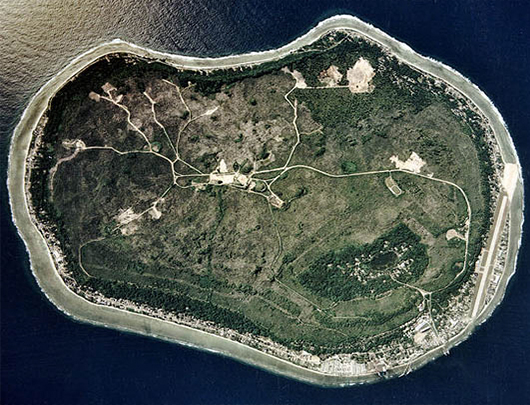
The Pacific island country long known internationally as Nauru has officially changed its name to the Republic of Naoero, restoring the spelling and pronunciation used in its national language.
The shortened name will now be Naoero, pronounced approximately “Now-ero,” while the country’s international code will change from NRU to NRO. Its citizens will officially be referred to as dei-Naoero rather than Nauruan.
President David Adeang first proposed the constitutional change in January 2026, arguing that the internationally familiar name Nauru did not fully represent the country’s language, heritage and identity. Parliament later approved the amendment unanimously following a required 90-day waiting period, and Speaker Marcus Stephen certified it on May 13.
The government initially indicated that a national referendum could be held to complete the process. However, officials later decided that a public vote was unnecessary because Naoero was not a newly invented name requiring public acceptance. It was already used by local communities and appeared on the national coat of arms.
Why Naoero Is Replacing Nauru
The government said Nauru became the widely used international name largely because foreigners found the traditional pronunciation difficult. The change is therefore being presented as a return to an identity that was never completely lost rather than a conventional national rebranding exercise.
Adeang described the move as a new chapter based on national pride, unity and responsibility. Officials said international organizations and foreign governments had already been formally informed and were beginning to update their records.
The United Nations noted that it received notification of the change on June 26. Government agencies in Australia and New Zealand, along with diplomatic representatives from countries including the United States and China, have also begun using Naoero.
The transition will eventually affect the names of national aircraft, ships, official documents and international databases. Travelers may encounter both Nauru and Naoero during the transition as airlines, maps, booking systems and government websites update their information.
A Small Nation With a Complicated History
With approximately 12,000 residents, Naoero is the world’s third-smallest country by population after Vatican City and Tuvalu. The remote coral limestone island lies in Micronesia in the central Pacific.
Germany colonized the island in the 19th century, and it was later administered by Australia before gaining independence in 1968. Large phosphate deposits made the country extraordinarily wealthy during the 1970s, but the decline of the mining industry brought severe economic problems by the 1990s.
Today, Naoero faces another long-term challenge. Its small size and low-lying coastal areas make it highly vulnerable to rising seas and other effects of climate change. The government has introduced a paid citizenship program intended to attract overseas investment and help finance the relocation of infrastructure and communities away from threatened coastal zones.
Naoero joins a growing list of countries that have adopted names more closely connected to local history or pronunciation. Swaziland became Eswatini in 2018, while Turkey requested international use of Türkiye in 2022.
For visitors and the wider travel industry, the practical change may appear gradual. However, for the people of Naoero, the new official designation represents something larger: the restoration of a name that remained part of everyday national identity even while the rest of the world used another one.
Disclaimer: TravelCapybara is an independent media brand owned and operated by NuvexMedia LLC, publishing travel news, destination guides, research, and insights. NuvexMedia LLC may invest in or collaborate with companies across the travel, hospitality, technology, and digital media sectors. These relationships do not influence TravelCapybara’s editorial coverage. While we strive for accuracy, travel requirements, prices, schedules, availability, and local conditions may change without notice. Readers should independently verify information before making travel or purchasing decisions. This content is for informational purposes only and does not constitute professional advice. © 2026 NuvexMedia LLC. All rights reserved.