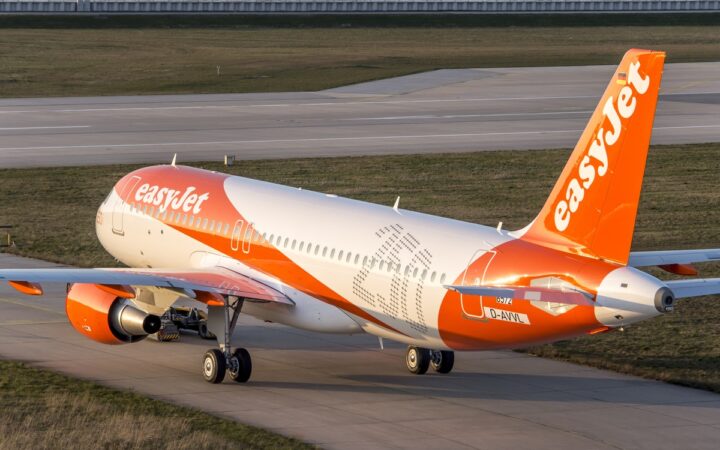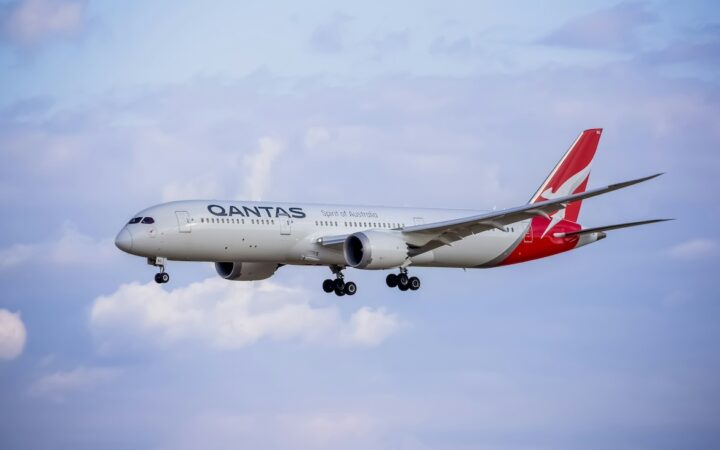
Qantas has moved one step closer to operating the world’s longest scheduled passenger flights after a specially modified Airbus A350-1000ULR completed a nonstop test journey from Melbourne, Australia to Toulouse, France lasting more than 24 hours.
The aircraft, carrying the test registration F-WULR and the name Vega, departed Melbourne on Monday evening and landed at Airbus’ facilities in Toulouse on Tuesday morning after 24 hours and 24 minutes in the air. Airbus said the jet covered 23,075 kilometers without stopping, making the flight longer in both time and distance than the famous Boeing 777-200LR record flight from Hong Kong to London in 2005.
Rather than taking the more direct westbound route across the Indian Ocean, the A350 flew east over the Pacific, North America, Canada and the Atlantic before reaching France. The unusual routing helped test the aircraft’s endurance under demanding long-range conditions and turned the flight into a major online event. More than 3.6 million people followed its progress on Flightradar24, making it one of the most-tracked flights in the platform’s history.
A Major Test for Project Sunrise
The marathon journey forms part of the certification program for Qantas’ Project Sunrise, the airline’s plan to connect Australia’s east coast with London and New York nonstop. Qantas expects to begin Sydney-London services in 2027, with New York flights planned later.
The specially developed A350-1000ULR includes an additional 20,000-liter fuel tank that extends its range to around 18,500 kilometers for passenger operations. Qantas has ordered 12 aircraft, with the first due for delivery in April 2027.
There were no regular passengers aboard the test flight. Airbus flight crews, engineers and two Qantas pilots monitored key systems including fuel supply, cabin pressure, climate control and aircraft handling. Water-filled barrels and test equipment were used to simulate the weight and heat generated by passengers, baggage and cargo.
The aircraft will continue through further certification work, including braking, takeoff speed, handling and long-range proving tests, before it can enter commercial service.
Why Qantas Is Sacrificing Seats for Comfort
Project Sunrise is not simply about proving that an aircraft can remain airborne for nearly a full day. Qantas also has to convince passengers that a 19- to 22-hour journey can be tolerable.
The airline will fit only 238 seats into an aircraft type that can normally carry around 350 passengers. The low-density layout includes six first-class suites, 52 business-class flatbeds, 40 premium economy recliners and 140 economy seats.
Qantas says this will give travelers more personal space than on a typical long-haul aircraft. The reduced seat count also leaves room for dedicated wellness areas, while lighting, meal timing and cabin conditions are being designed to reduce fatigue and jet lag.
The nonstop Sydney-London route would remove the need for a stop in Singapore or Perth and could cut several hours from the overall journey. Qantas expects flights to take roughly 19 to 21 hours, depending on winds and routing.
The Melbourne-Toulouse test was longer than the future scheduled route, but it offered an important demonstration of the aircraft’s capabilities. If certification and delivery stay on schedule, Project Sunrise could turn one of aviation’s most ambitious ideas into a daily commercial service by late 2027.
Disclaimer: TravelCapybara is an independent media brand owned and operated by NuvexMedia LLC, publishing travel news, destination guides, research, and insights. NuvexMedia LLC may invest in or collaborate with companies across the travel, hospitality, technology, and digital media sectors. These relationships do not influence TravelCapybara’s editorial coverage. While we strive for accuracy, travel requirements, prices, schedules, availability, and local conditions may change without notice. Readers should independently verify information before making travel or purchasing decisions. This content is for informational purposes only and does not constitute professional advice. © 2026 NuvexMedia LLC. All rights reserved.