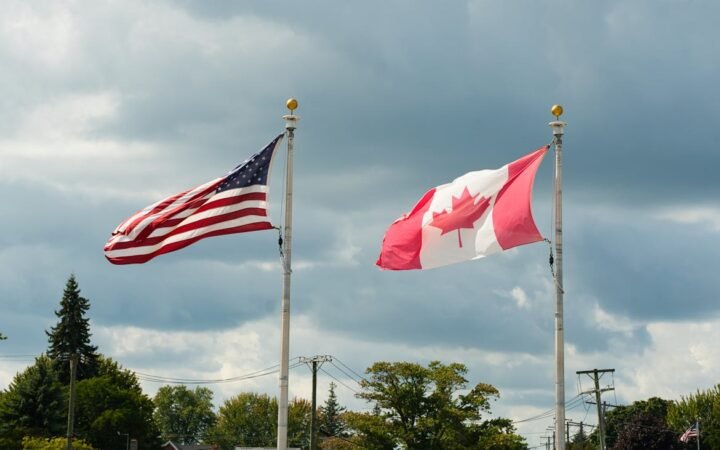
Brand USA is preparing a targeted tourism campaign for Canada as the United States looks to recover one of its most important international visitor markets. The campaign is being developed after a difficult year for cross-border travel, with inbound visits from Canada falling 20.9% in 2025, according to U.S. government data.
The decline pushed Canada out of its usual position as the largest source of international visitors to the United States, placing it behind Mexico. For U.S. destinations, the loss is significant. Canadian travelers have long been a core audience for border states, warm-weather markets, national parks, shopping destinations, city breaks and winter sun escapes.
Brand USA CEO Fred Dixon said at the U.S. Travel Association’s IPW conference in Fort Lauderdale that the organization is working to understand where Canadian travelers are now, what is shaping their destination choices and how the U.S. can make them feel welcome again. The campaign is expected to launch in Brand USA’s next fiscal year, though no budget has been set.
Canada Needs a Different Message
Brand USA has said its broader “America the Beautiful” platform, which targets several international markets, is not the right fit for Canada. Chief marketing officer Leah Chandler said the organization had to be realistic about messaging and avoid investing in a campaign that might not resonate with Canadian travelers.
That distinction matters because the Canada slowdown is not only about cost or travel logistics. The drop has been linked in part to political tension, including resentment over tariffs and remarks by President Donald Trump about Canada becoming the 51st U.S. state. Those issues created a different emotional environment than in other long-haul markets, where the U.S. may still be perceived mainly through attractions, culture and major events.
Brand USA is now conducting quantitative surveys and planning focus groups in Toronto, Montreal and Vancouver. Officials have emphasized that Canada is not a single uniform market. Messaging that works in Ontario may not work in Quebec or British Columbia, and regional differences will likely shape how the campaign is built.
Early research suggests that younger Canadians may be more open to U.S. travel than older generations. That could influence the campaign’s tone, media strategy and choice of destinations, especially if Brand USA focuses first on travelers who are more willing to be persuaded.
Rebuilding Confidence in a Critical Market
The campaign is expected to move cautiously, with Brand USA likely testing messages before expanding them more widely. That approach reflects the sensitivity of the market and the need to avoid generic destination advertising that ignores the reasons some Canadians are staying away.
The goal is not simply to promote U.S. landmarks. It is to rebuild trust and remind Canadians that the country wants them back. Dixon noted that even after the steep decline, about 16 million Canadians still visited the U.S. last year, showing that the market remains large and commercially important.
For U.S. tourism businesses, the stakes are high. Canadian visitors support hotels, restaurants, attractions, retailers, ski resorts, beaches and events across the country. A sustained decline would be especially painful for destinations that rely heavily on short-haul cross-border demand.
The campaign also arrives as the U.S. prepares for major tourism opportunities, including the 2026 FIFA World Cup and America’s 250th anniversary. If Brand USA can repair sentiment in Canada, those events could help convert interest into trips.
The challenge is that recovery will require more than a slogan. Canadian travelers need to feel that the U.S. is accessible, good value and genuinely welcoming. Brand USA’s campaign will test whether careful, market-specific messaging can reopen a relationship that has become more complicated than geography alone.
Disclaimer: TravelCapybara is an independent media brand owned and operated by NuvexMedia LLC, publishing travel news, destination guides, research, and insights. NuvexMedia LLC may invest in or collaborate with companies across the travel, hospitality, technology, and digital media sectors. These relationships do not influence TravelCapybara’s editorial coverage. While we strive for accuracy, travel requirements, prices, schedules, availability, and local conditions may change without notice. Readers should independently verify information before making travel or purchasing decisions. This content is for informational purposes only and does not constitute professional advice. © 2026 NuvexMedia LLC. All rights reserved.