Airbnb is moving further beyond its original home-rental model, adding independent hotels, rental cars, grocery delivery, luggage storage and more AI-powered tools as it tries to become a broader platform for travel and living. CEO Brian Chesky has described the company’s long-term ambition as building something like an “Amazon for services,” at least across the categories tied to trips, stays and everyday mobility.
The latest expansion gives travelers more ways to book and manage parts of a trip without leaving the Airbnb app. Independent and boutique hotels are being added in select cities, including major urban markets such as New York, Paris, London, Madrid, Rome and Singapore. Airbnb is also introducing hotel search filters and prompts that appear when a traveler’s trip type may be better suited to a hotel, such as a short stay, a business trip or a last-minute booking.
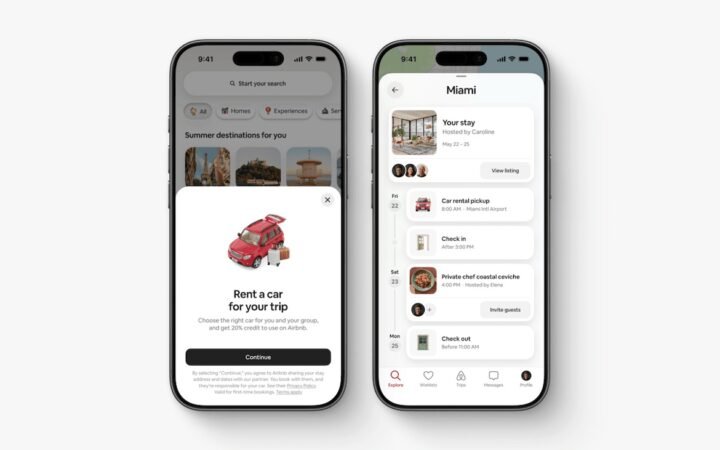
The move marks a strategic shift for Airbnb as it tries to capture more of the traveler journey. A guest who once used Airbnb only to book a home or apartment can now use the app to arrange airport pickup, rent a car, store luggage, order groceries or book experiences. The company is also adding landmark visits with local guides and thousands of food experiences, bringing it closer to businesses such as Viator, GetYourGuide, Expedia and Booking Holdings.
Hotels Give Airbnb a New Growth Path
Hotels are especially important because they help Airbnb compete in cities where short-term rental rules have limited supply. In markets such as New York and Singapore, adding hotels gives Airbnb a way to remain relevant even where apartment-style stays are restricted. It also gives users more options for trips where a traditional rental may not be the most practical choice.
Airbnb is offering incentives to encourage adoption, including platform credits of up to 15% on hotel bookings and credits for first-time car rental bookings. The company is not calling this a formal loyalty program, but the approach could help condition travelers to return to the app for more than lodging.
Rental cars are another major step. Airbnb said about a quarter of its guests rent a car during a stay, but those transactions have historically happened elsewhere. By bringing cars into the app, Airbnb is entering a travel category long used by legacy online travel agencies to bundle trip components and keep customers inside their ecosystems.
The larger pattern is clear: travel platforms are converging. Uber is adding hotel and travel products, while Airbnb is moving into transportation, local services and trip logistics. Both companies want to own more of the traveler’s daily decision-making.
AI Becomes Part of the Booking Experience
Airbnb is also expanding its use of AI, though it is not leaning heavily into a classic trip-planning chatbot. Instead, the company is applying AI to specific parts of the user experience. Its support chatbot can now resolve some booking issues directly in chat, and Airbnb plans to bring voice capabilities to the assistant later this year.
The company is also adding AI-generated review summaries, allowing guests to quickly understand what past travelers say about location, amenities, family-friendliness and other categories. Another feature will compare properties saved in a wishlist and summarize differences to help travelers make a final choice.
For hosts, AI is being used to simplify onboarding. A host can add an address, and the system can help fill in listing details more quickly. That may reduce friction for new supply at a time when Airbnb is trying to broaden inventory across homes, hotels and services.
Chesky has said travel demand remains resilient, though economic uncertainty and the Iran war have affected some booking patterns, with travelers planning more last-minute trips. Airbnb’s bet is that a wider product range will make the platform more useful in uncertain conditions. If travelers want flexibility, value and convenience, Airbnb wants to be the place where more of those choices happen.
Disclaimer: TravelCapybara is an independent media brand owned and operated by NuvexMedia LLC, publishing travel news, destination guides, research, and insights. NuvexMedia LLC may invest in or collaborate with companies across the travel, hospitality, technology, and digital media sectors. These relationships do not influence TravelCapybara’s editorial coverage. While we strive for accuracy, travel requirements, prices, schedules, availability, and local conditions may change without notice. Readers should independently verify information before making travel or purchasing decisions. This content is for informational purposes only and does not constitute professional advice. © 2026 NuvexMedia LLC. All rights reserved.