Expedia Group is moving deeper into AI-powered travel distribution with a new set of B2B tools designed to help partners build, sell and service more complete trip experiences. The company announced the updates at its Explore 26 partner conference in Las Vegas, positioning artificial intelligence as the next major phase of travel technology after the internet and mobile.
The push includes an in-development AI toolkit for partners, a new Intelligent Experience Platform, expanded merchandising tools, media network upgrades and broader mobility products. Expedia Group B2B already serves 75,000 partners across industry verticals and 200,000 travel advisors, while processing 21 billion API calls per day. The new tools are meant to make that infrastructure easier for partners to plug into branded travel products.
A key piece of the strategy is Expedia’s planned B2B Model Context Protocol server, expected to go live in the coming months. MCP is a technical standard that allows AI agents to connect with outside business systems and data. In practical terms, it could let partners’ AI agents access Expedia’s travel inventory through structured connections rather than custom integrations built one by one.
AI Becomes the New Travel Interface
Expedia’s AI strategy is not limited to one chatbot or one planning feature. The company is building tools across partner workflows, customer discovery and servicing. Its Intelligent Experience Platform is designed as a set of composable AI components that partners can use to launch travel experiences powered by Expedia Group data and intelligence.
That matters because travel distribution is becoming more fragmented. Consumers may discover destinations through social media, compare stays in a hotel app, ask an AI assistant for ideas and book through a partner platform. Expedia wants its inventory and services to be available wherever those decisions happen.
The company is also working with Meta on in-feed travel planning, allowing travelers to begin asking questions or planning trips directly from ads. The feature builds on earlier Trip Matching work with Instagram and reflects a broader shift in traveler behavior. People increasingly use social platforms for inspiration, but still leave those platforms to research pricing, availability and booking options. Expedia is trying to shorten that path.
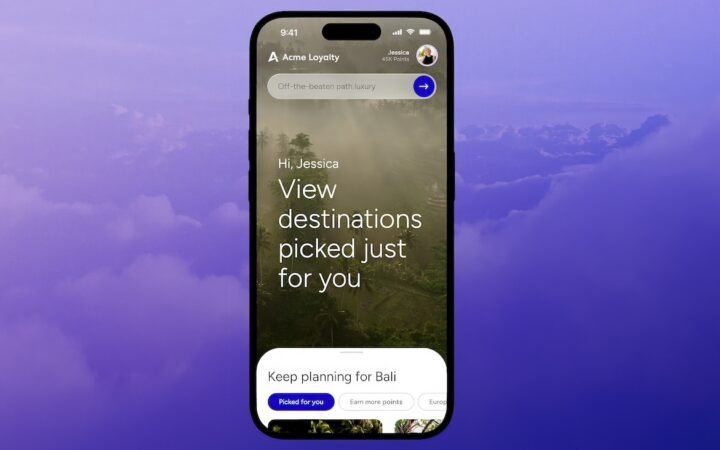
The same logic applies to its broader AI updates. Expedia plans tools such as natural-language activity planning, AI property comparison, property question answering and package price insights. These features are intended to reduce friction in the research process and help travelers move from vague ideas to bookable itineraries.
B2B Expansion Moves Beyond Lodging
Expedia Group is also expanding the supply it can offer partners. Its agreement to acquire CarTrawler would add a major B2B car rental and ground transport platform, following the company’s recent acquisition of Tiqets, an activities and experiences marketplace. Together, those moves support Expedia’s plan to expand Rapid API beyond lodging into cars, flights, activities and trip protection.
That is strategically important because partners increasingly want to capture more of the traveler journey. A bank, airline, retailer or loyalty program may not want to become a travel company, but it may want to offer hotels, rental cars, activities and insurance through its own customer experience. Expedia is trying to provide the infrastructure behind that.
The company is also expanding merchandising and media tools for partners. Rapid API partners will be able to use a new merchandising API and a B2B Partner Portal account to plan and track marketing strategies. Expedia Group Advertising is also adding richer ad formats and AI-powered campaign tools through its Travel Media Network.
Trust and servicing remain central to the pitch. Expedia says its B2B network handles more than 7 million servicing calls a year and offers 24/7 native voice support in 25 languages. It has also emphasized its Responsible AI Council, which reviews high-risk AI deployments before they scale.
For the travel industry, Expedia’s announcements show where distribution is heading. The next competitive layer may not be a search box or app tab, but the infrastructure that lets AI agents, social platforms and partner brands sell travel reliably at scale.
Disclaimer: TravelCapybara is an independent media brand owned and operated by NuvexMedia LLC, publishing travel news, destination guides, research, and insights. NuvexMedia LLC may invest in or collaborate with companies across the travel, hospitality, technology, and digital media sectors. These relationships do not influence TravelCapybara’s editorial coverage. While we strive for accuracy, travel requirements, prices, schedules, availability, and local conditions may change without notice. Readers should independently verify information before making travel or purchasing decisions. This content is for informational purposes only and does not constitute professional advice. © 2026 NuvexMedia LLC. All rights reserved.