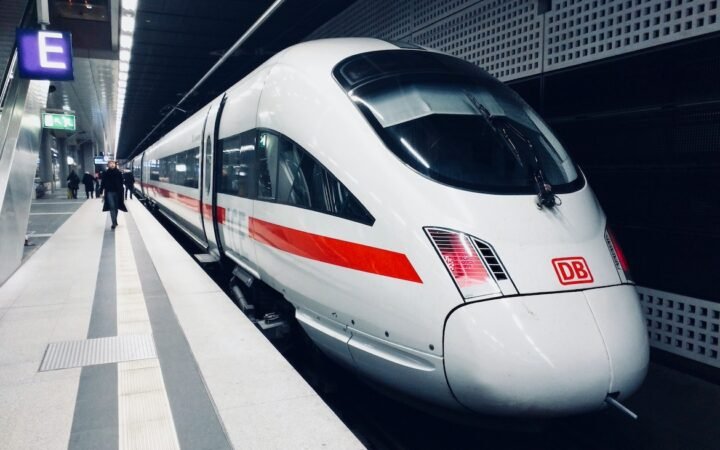
Oslo and Berlin will be linked by direct train from summer 2028, restoring a long-distance rail connection between Norway and continental Europe for the first time in more than two decades. The new route is being developed through a cross-border partnership between Norway’s Vy, Denmark’s DSB and Germany’s Deutsche Bahn.
The planned service will run from Oslo through Gothenburg, Malmö, Copenhagen and Hamburg before reaching Berlin. Stops are expected to include Moss, Fredrikstad, Sarpsborg, Halden, Trollhättan, Halmstad, Helsingborg, Lund, Copenhagen Airport, Copenhagen Central Station, Odense, Kolding and Padborg. Vy says two daily departures are planned throughout the year, with departure times and ticket prices to be announced closer to launch.
The full Oslo-Berlin journey is expected to take roughly 14 to 15 hours, while Oslo to Copenhagen should take around seven hours. For travelers in Norway, the route will make it possible to board in Oslo and reach Copenhagen, Hamburg or Berlin without changing trains. It will also create direct rail access from Gothenburg to Germany, strengthening a broader north-south travel corridor.
A New Link Across Northern Europe
The route will use Deutsche Bahn’s new ICE L trains across the full journey. The trains are expected to feature a restaurant car, family area and first-class section, giving the service the feel of a proper long-distance European rail product rather than a simple regional extension.
For Vy, the project builds on recent growth in international services. The company doubled departures to Gothenburg in 2024, tested extensions to Malmö in summer 2025 and has since added regular services during weekends and holiday periods. The Berlin route is a much bigger step, requiring coordination across three countries, several rail systems and multiple operators.
That cooperation is central to the project. Long-distance international rail routes are difficult to operate without aligned timetables, compatible rolling stock, shared commercial planning and coordinated passenger service. Vy, DSB and Deutsche Bahn are positioning the route as a model for how European operators can work together to make cross-border rail more competitive.
The timing also reflects changing travel habits. More than 20 years ago, direct rail between Norway and Copenhagen lost ground to low-cost flights. Since then, interest in lower-emission travel has grown, while travelers across Europe have shown renewed demand for rail journeys that avoid airport transfers and short-haul flights.
Rail Travel Gains Ground Against Flying
The new Oslo-Berlin route will not be faster than flying, but speed is not the only measure of its appeal. For travelers who want a lower-stress journey, city-center departures, fewer transfers and a more scenic way to cross Europe, the train offers a different kind of value.
The itinerary also links several strong city-break destinations. Oslo has become known for waterfront architecture, museums, sauna culture and access to Norway’s natural landscapes. Copenhagen adds design, food and cycling culture, while Hamburg and Berlin bring two very different versions of urban Germany. The route could make multi-city rail itineraries easier for travelers who want to move through Northern Europe without building separate train connections.
For tourism, the service may also support longer, slower trips. Travelers could use Berlin as a gateway into Central Europe or Oslo as a starting point for Norway, Sweden and Denmark. The direct connection makes those plans simpler, especially for visitors who prefer rail over aviation for environmental, comfort or logistical reasons.
The launch is still two years away, and final schedules will determine how attractive the service becomes in practice. But the strategic direction is clear. Northern Europe is rebuilding long-distance rail links that once seemed unlikely to return, and Oslo-Berlin could become one of the region’s most important new train routes.
Disclaimer: TravelCapybara is an independent media brand owned and operated by NuvexMedia LLC, publishing travel news, destination guides, research, and insights. NuvexMedia LLC may invest in or collaborate with companies across the travel, hospitality, technology, and digital media sectors. These relationships do not influence TravelCapybara’s editorial coverage. While we strive for accuracy, travel requirements, prices, schedules, availability, and local conditions may change without notice. Readers should independently verify information before making travel or purchasing decisions. This content is for informational purposes only and does not constitute professional advice. © 2026 NuvexMedia LLC. All rights reserved.