UNESCO has added several major cultural and natural landmarks to its World Heritage List, including Normandy’s D-Day landing beaches in France and Mount Olympus in Greece. The decisions were made during a World Heritage Committee meeting in Busan, South Korea, and could bring new global attention to destinations already rich in history, mythology and travel appeal.
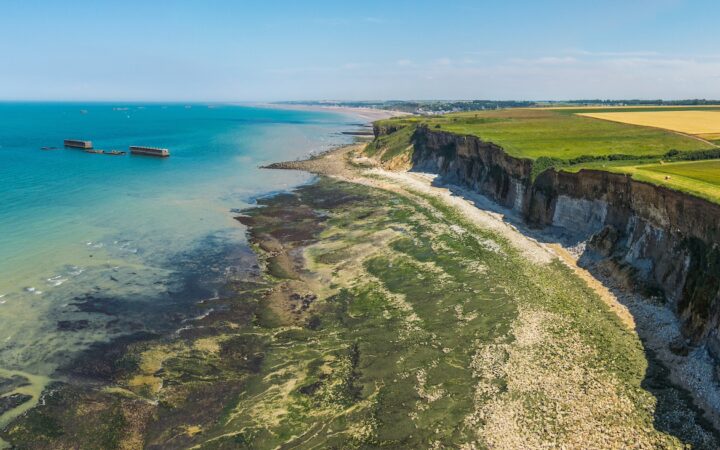
The Normandy designation covers the five D-Day landing beaches – Omaha, Utah, Sword, Gold and Juno – as well as the Pointe du Hoc assault site. These locations were central to the Allied landings of June 6, 1944, when more than 150,000 troops came ashore in northern France during the campaign to liberate Western Europe from Nazi occupation.
Mount Olympus, Greece’s tallest mountain and the mythical home of the 12 Olympian gods, was also inscribed as a mixed cultural and natural heritage site. Rising 2,918 meters from near sea level, the mountain combines ancient myth, dramatic landscapes and rich biodiversity.
D-Day Beaches and Mount Olympus Gain New Global Recognition
For Normandy, UNESCO status formalizes the global importance of a coastline already visited by travelers, historians, veterans’ families and battlefield tour groups. The sites still contain extensive wartime remnants, including German fortifications, bomb-scarred landscapes, Allied harbor structures and sunken vessels.
The designation may strengthen heritage tourism across the region, but it also adds responsibility. Preservation experts have warned that the D-Day sites face pressure from tourism, climate change, rising sea levels and nearby development. Stronger monitoring and conservation will be necessary if the beaches are to remain both accessible and protected.
For Greece, the inscription of Mount Olympus is the result of a long campaign to secure recognition for a landmark that is deeply embedded in European culture. The mountain is not only a natural wonder but also a symbolic landscape associated with Zeus, ancient religion, literature and classical mythology. Local officials have already acknowledged that World Heritage status could increase tourism and create a greater duty to protect the fragile environment.
UNESCO also added the ancient Japanese capitals of Asuka and Fujiwara to the list. The sites in Nara Prefecture preserve remains of royal palaces, government offices, Buddhist temples and tombs from the 6th to 8th centuries, when Japan’s first centralized state began to take shape.
The Danger List Shows Heritage Travel’s Other Reality
Alongside the new inscriptions, UNESCO added six sites to its List of World Heritage in Danger, showing how conflict, construction and environmental pressure continue to threaten important places.
South Sudan’s Boma-Badingilo Migratory Landscape was added on an emergency basis. The vast wetlands, flood plains and savannas host one of the world’s largest land mammal migrations and became South Sudan’s first World Heritage inscription. Lebanon’s Mount Amel Castles and Sebastia in the State of Palestine were also added on an emergency basis.
Other additions to the danger list include the Ancient City of Tauric Chersonese and its Chora in Ukraine, the Historic Inner City of Paramaribo in Suriname and Tyre in Lebanon. Concerns range from construction and excavation damage to armed conflict and loss of historic authenticity.
For travelers, the latest UNESCO decisions offer both inspiration and caution. World Heritage status can elevate destinations, encourage preservation and spread tourism benefits. But it can also increase visitor pressure on landscapes, cities and monuments already vulnerable to climate, war or unmanaged development.
The newest list updates show the dual nature of heritage travel: some places are being celebrated, while others urgently need protection.
Disclaimer: TravelCapybara is an independent media brand owned and operated by NuvexMedia LLC, publishing travel news, destination guides, research, and insights. NuvexMedia LLC may invest in or collaborate with companies across the travel, hospitality, technology, and digital media sectors. These relationships do not influence TravelCapybara’s editorial coverage. While we strive for accuracy, travel requirements, prices, schedules, availability, and local conditions may change without notice. Readers should independently verify information before making travel or purchasing decisions. This content is for informational purposes only and does not constitute professional advice. © 2026 NuvexMedia LLC. All rights reserved.