UK Begins Contactless Airport eGate Rollout for British Citizens
East Midlands Airport is first to offer contactless eGates for British citizens, with a wider rollout planned by early 2027. Travelers must still carry passports.
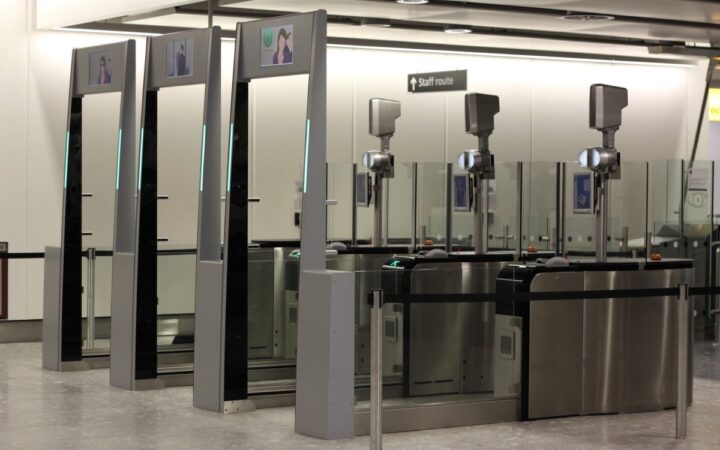
The UK has begun introducing contactless airport eGates that let eligible passengers clear passport control without placing their passport on a scanner. The rollout started at East Midlands Airport on October 6, initially for British citizens, with upgrades across the existing airport eGate network planned by early 2027.
For travelers, the change could remove an awkward step at the end of a flight: opening a passport and positioning it correctly on the reader. A valid passport must still travel with its holder, and officers can still request a scan or further checks.
How the Contactless Gates Work
The Home Office announcement describes a camera taking a live image as a passenger approaches. The system compares it with verified immigration, travel and passport information, then opens the barrier when the required checks are complete. Border Force officers continue to supervise the gates.
Officials say testing found the contactless process was up to 25% faster than scanning a passport at an eGate. That measures the gate process; it is not a promise that every arrivals queue, or the whole journey through an airport, will be a quarter shorter.
The potential benefit is easier movement through an existing checkpoint. Its impact on a particular arrival will also depend on how many passengers reach passport control together and how many lanes are operating. Travelers should continue allowing time for border control when arranging onward transport.
Who Can Use the New System?
Border Force’s contactless guidance says only a small number of the new gates are currently available at East Midlands. British citizens are the first eligible group. Other nationalities that already qualify for eGates are expected to gain contactless access later.
The planned airport rollout covers Birmingham, Bristol, Cardiff, East Midlands, Edinburgh, Gatwick, Glasgow, Heathrow, London City, Luton, Manchester, Newcastle and Stansted. The target is early 2027; the announcement does not provide a separate activation date for each airport.
Existing eGate eligibility remains unchanged. Someone who can use a conventional eGate should continue doing so, following the instructions on the day. Being eligible for the current gates does not establish that the contactless option is already available for that traveler.
What Families Should Prepare
The current eligibility rules allow British citizens with a biometric passport to use eGates from age eight, provided they are at least 120cm tall. Children aged eight to 17 must be accompanied by an adult. The contactless rollout leaves those requirements in place.
Keep each family member’s passport accessible rather than packing documents away after landing. Remove sunglasses or face coverings at passport control and move through the area together. If a gate asks for the passport to be scanned, follow that instruction; a referral to an officer may simply mean further verification is needed.
Families should check the rules for everyone traveling together, particularly where relatives hold different nationalities. A British adult’s access to a newly enabled contactless gate should not be assumed to extend automatically to every person in the group.
A Faster Checkpoint Still Requires Travel Documents
For visitors, permission to travel remains a separate question from which airport lane to use. The official ETA guidance explains that most visitors need an electronic travel authorisation or a visa, depending on their nationality and reason for coming. British and Irish passport holders are among those exempt from needing an ETA.
We previously covered the UK’s digital travel permits. The new gates are another stage of that wider border modernization, but travelers should use current government guidance to check their own documentation before departure.
Our earlier reporting on European border queues also shows why travelers need to check each destination’s procedures separately. For a UK arrival during this phased rollout, the practical approach is straightforward: bring the required documents, follow the airport signage and treat contactless processing as an available convenience rather than a guaranteed part of the trip.
Disclaimer: TravelCapybara is an independent media brand owned and operated by NuvexMedia LLC, publishing travel news, destination guides, research, and insights. NuvexMedia LLC may invest in or collaborate with companies across the travel, hospitality, technology, and digital media sectors. These relationships do not influence TravelCapybara’s editorial coverage. While we strive for accuracy, travel requirements, prices, schedules, availability, and local conditions may change without notice. Readers should independently verify information before making travel or purchasing decisions. This content is for informational purposes only and does not constitute professional advice. © 2026 NuvexMedia LLC. All rights reserved.