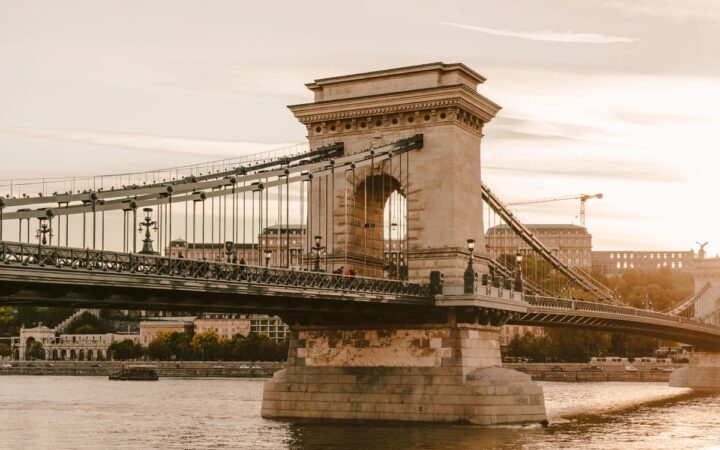
Hungary has become one of Hollywood’s established production bases, combining elaborate studio facilities with a capital that can convincingly stand in for cities across Europe and beyond. For travelers, that creates two different ways to explore its screen presence: follow recognizable Budapest locations, or head outside the city to see how film worlds are built.
The appeal reaches well beyond an attractive skyline. A long-running production incentive, experienced crews and investment in soundstages help explain why international filmmakers keep returning. Budapest’s architecture supplies the visible backdrop, while much of the work takes place behind studio doors.
Why the Cameras Keep Coming Back
Hungary’s National Film Institute sets out a 30% rebate on eligible production expenditure. The scheme has been approved through the end of 2030, giving producers a longer planning horizon than a short-lived incentive would offer. Eligibility rules apply, so the headline percentage is not an unconditional discount on every cost in a movie’s budget.
Facilities have expanded alongside that financial framework. The institute’s Fót studio announcement records the opening of four new studios in January 2025, a development it says increased national studio capacity by 22%. Workshops, service areas and adaptable outdoor sets support productions that need more than a picturesque street.
For a film crew, having stages, construction space and local expertise in the same production base can simplify a complicated shoot. For a visitor, it explains why a film made in Hungary may contain few recognizable Hungarian landmarks: the finished scene can belong to an entirely invented world.
From Dune to a City Playing Other Cities
Origo Studios lists the 2021 film Dune among its credits. Its Budapest complex advertises nine soundstages, two VFX or multimedia stages and a backlot, illustrating the scale of the infrastructure available to international productions.
That distinction matters when planning a movie-inspired trip. A studio credit does not mean a visitor can walk into a surviving set, and Hungary’s role in a production should not be confused with the fictional location on screen. The satisfying part of a Budapest visit is often spotting a real building beneath its cinematic disguise.
Kempinski Hotel Corvinus’s film-location guide provides several examples. In Red Sparrow, the Hungarian State Opera stood in for Moscow’s Bolshoi, while the Ervin Szabó Library represented the Kremlin. Evita used Budapest locations for Buenos Aires, including Keleti railway station and Andrássy Avenue.
The transformations extend to science fiction. The Bálna building became NASA headquarters in The Martian, and the former Hungarian Television headquarters on Szabadság Square appeared in Blade Runner 2049. These connections offer a fresh way to look at the city without requiring a trip organized entirely around film fandom.
A Budapest Walk With a Different Story
Build a central outing around Andrássy Avenue, the Opera and Szabadság Square, allowing time to enjoy the streets between the film references. A separate riverside stop at Bálna adds a different architectural setting. Keeping the route geographically manageable is more rewarding than trying to collect every location from several unrelated movies in a single afternoon.
Exterior sightseeing and interior access are different activities. Check the venue’s own visitor arrangements if a particular room, performance space or library interior is central to your plans. A building’s appearance in a film does not turn it into an unrestricted attraction.
Go Behind the Scenes at Korda Filmpark
In Etyek, Korda Filmpark offers a more structured introduction to production. Its guided experience lasts around two to two-and-a-half hours, combining an exhibition about filmmaking with a visit to a life-size outdoor set city.
Advance booking is required. Standard tours are conducted in Hungarian; foreign-language guiding can be arranged beforehand for an additional fee. The operator recommends the experience from around age 12, while allowing younger children who may find some of the production explanations harder to follow.
There are limits worth knowing before traveling. The working studios are not accessible through the visitor program, and the outdoor set area may be restricted by filming or severe weather. Book the tour for its filmmaking experience rather than the possibility of watching actors at work.
Make the Movies Part of a Longer City Break
Hungary’s screen appeal works best as another layer of a Budapest stay. Architecture, cafés and the Danube remain reasons to visit in their own right, with film connections adding stories to places travelers might otherwise simply photograph.
For a late-year trip, our Budapest Christmas guide offers an evening counterpart to daytime location walks. Visitors considering a heritage-hotel stay can also read our St. Regis coverage. Leave room for the city beyond the credits: the strongest film-inspired itinerary is still one you would enjoy without a camera crew in sight.
Disclaimer: TravelCapybara is an independent media brand owned and operated by NuvexMedia LLC, publishing travel news, destination guides, research, and insights. NuvexMedia LLC may invest in or collaborate with companies across the travel, hospitality, technology, and digital media sectors. These relationships do not influence TravelCapybara’s editorial coverage. While we strive for accuracy, travel requirements, prices, schedules, availability, and local conditions may change without notice. Readers should independently verify information before making travel or purchasing decisions. This content is for informational purposes only and does not constitute professional advice. © 2026 NuvexMedia LLC. All rights reserved.