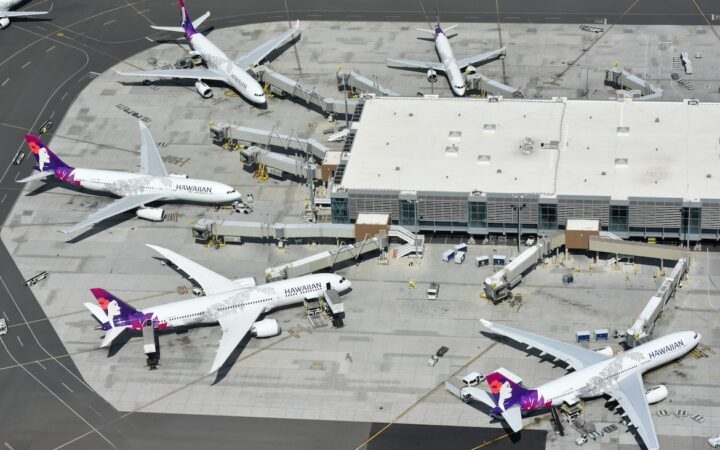
Hawaiian Airlines is preparing to retire one of the most familiar aircraft in Hawaii travel, replacing its aging Boeing 717 interisland fleet with larger Boeing 737-800 jets from sister carrier Alaska Airlines. The transition is expected to begin in 2028, marking a major operational shift for flights between Honolulu, Maui, Kauai and the Island of Hawaii.
The Boeing 717 has been the backbone of Hawaiian’s Neighbor Island network for decades. Its short-haul performance, quick climbs and ability to handle frequent daily cycles made it a strong fit for Hawaii’s unusually intense interisland flying. Hawaiian currently operates 19 Boeing 717s, with an average age of more than 24 years, according to Alaska Air Group.
Those aircraft work hard. Hawaiian’s 717s support more than 160 flight segments per day, with some jets operating many short cycles in a single day. That type of flying is demanding because each takeoff and landing adds structural stress. Salt-air conditions in Hawaii also add another operational challenge.
Why Hawaiian Is Moving to the Boeing 737-800
Hawaiian CEO Diana Birkett Rakow said Neighbor Island flying is uniquely demanding because of short segments, frequent cycles and salt-air operations. She described the Boeing 737-800 as a durable, reliable and proven aircraft with airframes and engines suited to high-cycle interisland flying.
The aircraft will come from Alaska Airlines’ existing 737-800 fleet and be repainted in Hawaiian Airlines livery. Alaska has not yet confirmed how many 737-800s will be assigned to the transition, but the plan is to create a dedicated Hawaii-based subfleet.
The choice reflects both operational and financial logic. Rather than buying new aircraft for very short flights, Alaska Air Group can use planes it already owns, maintains and understands. The 737-800s are not brand-new, with Alaska’s fleet averaging roughly 18 years old now and expected to be older by the time the transition begins. Still, they have generally flown longer mainland and transpacific routes, meaning they may have accumulated far fewer cycles than Hawaiian’s heavily used 717s.
Alaska will also begin using a 737 aircraft on three daily round trips between Honolulu and Kahului starting in October, giving travelers an early preview of the aircraft type on interisland routes before the full Hawaiian-branded transition begins.
More Seats, More Premium Space and Starlink Wi-Fi
For passengers, the biggest change will be capacity and cabin layout. Hawaiian’s Boeing 717s seat between 123 and 128 passengers, including eight first-class seats and 17 extra-legroom economy seats. The Alaska 737-800s have 161 seats, including 16 first-class seats and more than 30 premium economy-style seats.
That means first class will double on interisland flights, while extra-legroom capacity will increase significantly. The larger aircraft will also offer more cargo space, useful for bags, surfboards, golf clubs and other items common on Hawaii routes.
The onboard product will also feel more modern. The 737-800s will include Starlink high-speed Wi-Fi, power outlets and device holders at every seat. Those are real upgrades over the 717, even if many interisland flights last only 25 to 40 minutes.
There will be tradeoffs. The 737-800 has a larger cabin and more middle seats, which some travelers may notice on short flights. The 717 also has strong sentimental value among Hawaiian pilots and frequent interisland passengers who associate it with fast, reliable island hopping.
Still, the replacement decision signals that Hawaiian’s interisland network is entering a new era under Alaska Air Group. The Boeing 717 gave Hawaii a quarter-century of dependable service. The Boeing 737-800 will bring more seats, better connectivity and a different kind of interisland experience.
Disclaimer: TravelCapybara is an independent media brand owned and operated by NuvexMedia LLC, publishing travel news, destination guides, research, and insights. NuvexMedia LLC may invest in or collaborate with companies across the travel, hospitality, technology, and digital media sectors. These relationships do not influence TravelCapybara’s editorial coverage. While we strive for accuracy, travel requirements, prices, schedules, availability, and local conditions may change without notice. Readers should independently verify information before making travel or purchasing decisions. This content is for informational purposes only and does not constitute professional advice. © 2026 NuvexMedia LLC. All rights reserved.