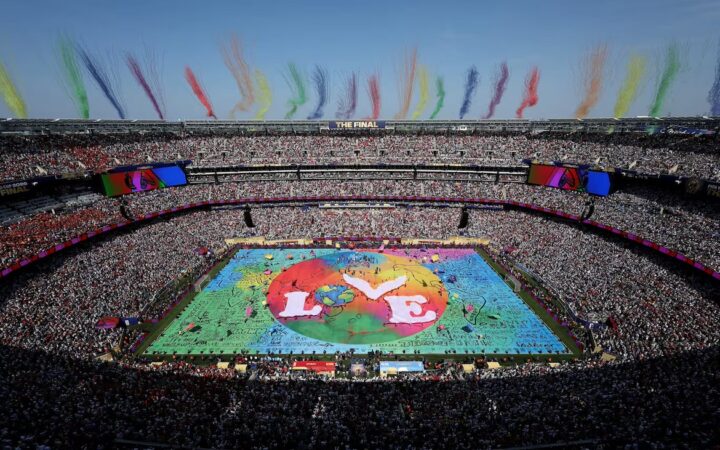
The 2026 FIFA World Cup has already changed the scale of tournament travel, spreading 48 teams across the United States, Mexico and Canada. But the next two editions may make the North American format look relatively simple. The 2030 World Cup will stretch across six countries and three continents, while the 2034 tournament in Saudi Arabia is tied to some of the most ambitious stadium concepts ever proposed for a global sporting event.
For travelers, the story is no longer just about match tickets and hotel demand. The World Cup is becoming a test of long-distance logistics, border planning, aviation capacity, climate concerns and destination infrastructure. Fans may increasingly need to think like event planners, especially if they want to follow a team across multiple host regions.
2030 Will Be the First Six-Country Men’s World Cup
The 2030 FIFA World Cup is expected to be staged mainly in Spain, Portugal and Morocco, with special centenary matches in Uruguay, Argentina and Paraguay. The format is designed to mark 100 years since the first World Cup, which was held in Uruguay in 1930.
Under FIFA’s proposed schedule, the South American centenary matches would take place on June 8 and 9, before the main opening ceremony and first matches in Morocco, Portugal and Spain on June 13 and 14. The final is expected on July 21, although FIFA has not yet released the full confirmed calendar.
Six countries have already qualified automatically as hosts: Spain, Portugal, Morocco, Uruguay, Argentina and Paraguay. The remaining 42 places are expected to be decided through continental qualifying tournaments, unless FIFA eventually moves toward an even larger format.
Fans and Teams Face a Transatlantic Tournament
The 2030 plan creates a symbolic celebration, but it also creates unusual travel demands. Teams involved in the South American centenary fixtures will need additional time to fly across the Atlantic, rest and prepare before their next group matches in Europe or Africa.
That could mean a very different rhythm from a traditional tournament. Instead of one compact host country or a tight regional cluster, the opening phase may involve long-haul flights, extended gaps between matches and more complicated planning for supporters. A journey from Buenos Aires to Barcelona, for example, can take around 13 hours by air.
The format also raises environmental questions. FIFA’s own evaluation acknowledged that the combined tournament would have a significant negative climate impact, largely because of the extra long-distance travel. That concern may become more important as future World Cups continue to expand and as more multi-country bids become the norm.
There is also the question of whether the men’s World Cup could grow again. The 2030 edition is currently set for 48 teams, the same format introduced in 2026. FIFA President Gianni Infantino has said a proposal for a 64-team tournament will be examined and discussed, though no expansion has been approved.
Saudi Arabia’s 2034 Plans Look Beyond Traditional Stadiums
After 2030, the tournament moves to Saudi Arabia in 2034. FIFA confirmed the country as host in December 2024 after it became the only bidder. Unlike 2030, the Saudi edition will be held in a single country, but its infrastructure ambitions are anything but conventional.
Saudi Arabia’s bid includes plans for 15 stadiums, with 11 of them new. The most discussed concept is NEOM Stadium, linked to The Line mega-project on the Red Sea. The bid book described a venue with a pitch more than 350 meters above the ground, a roof created from the city itself and access from multiple levels.
Other planned venues, including ROSHN Stadium and Prince Mohammed bin Salman Stadium in Qiddiya, also lean heavily into futuristic design. If completed as imagined, they would make the 2034 World Cup one of the most visually distinctive tournaments in history.
Still, the scale of the plans raises major questions about feasibility, labor, environmental impact and timing. Qatar’s 2022 tournament had to move from summer to late autumn because of extreme heat, and Saudi Arabia is expected to face similar scheduling discussions. FIFA has not yet announced the dates or full match schedule.
For travelers, the next two World Cups suggest a new era of mega-event tourism. The tournament is becoming bigger, more distributed and more tied to national development strategies. Football will remain the centerpiece, but how fans move, where they stay and what kind of host cities they encounter may become just as defining.
Disclaimer: TravelCapybara is an independent media brand owned and operated by NuvexMedia LLC, publishing travel news, destination guides, research, and insights. NuvexMedia LLC may invest in or collaborate with companies across the travel, hospitality, technology, and digital media sectors. These relationships do not influence TravelCapybara’s editorial coverage. While we strive for accuracy, travel requirements, prices, schedules, availability, and local conditions may change without notice. Readers should independently verify information before making travel or purchasing decisions. This content is for informational purposes only and does not constitute professional advice. © 2026 NuvexMedia LLC. All rights reserved.