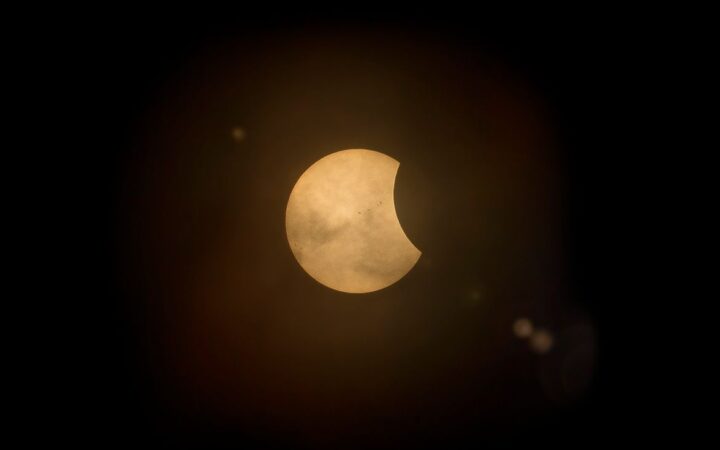
New Zealand is still almost two years away from its next total solar eclipse, but travelers are already competing for hotel rooms in one of the best places to watch it.
On July 22, 2028, the moon’s shadow will cross southern New Zealand, passing near Queenstown and placing Dunedin close to the center of the path of totality. At approximately 4:17 p.m., observers in the city could experience complete darkness for around 2 minutes and 51 seconds before sunset.
That brief window is already creating unusually early demand. Some Dunedin hotels have begun receiving eclipse reservations, while the Dunedin Leisure Lodge has reportedly sold out its dedicated eclipse package, which included viewing glasses for guests.
The event will be the first total solar eclipse visible anywhere in New Zealand since 1965. For Dunedin, it is considerably rarer. Astronomers say the last total eclipse visible from the area occurred in 1163, centuries before humans are believed to have settled New Zealand.
That means the 2028 event could effectively become the first total solar eclipse ever witnessed by people from present-day Dunedin.
The booking rush follows a pattern increasingly familiar in astro-tourism. Travelers are planning trips years ahead around narrow eclipse corridors, just as accommodation demand and hotel prices have surged ahead of the 2026 solar eclipse in Spain.
Why Dunedin Is Preparing for an Eclipse Tourism Boom
Estimates suggest tens of thousands of visitors could travel to Dunedin for the eclipse, a significant influx for a city with a population of roughly 130,000. Local forecasts have ranged from around 35,000 to as many as 50,000 additional visitors.
The city is planning to turn the astronomical event into a broader destination experience rather than treating it as a three-minute spectacle.
The eclipse arrives shortly after Matariki, the Māori New Year associated with the reappearance of the Pleiades star cluster. Dunedin is preparing a night-sky festival that will connect Matariki celebrations with astronomy and the eclipse, combining Indigenous knowledge with contemporary science.
Tūhura Otago Museum is helping lead preparations. Astronomer Ian Griffin, who has been planning around the eclipse for more than a decade, has described the event as a historic opportunity for the city.
Weather will remain the biggest uncertainty. July is winter in New Zealand, and cloud cover could prevent observers from seeing the solar corona even inside the path of totality. That risk could encourage some eclipse travelers to remain mobile, choosing locations between Queenstown, Central Otago and Dunedin based on forecasts closer to the event.
The eclipse path itself will cross a much larger section of the Southern Hemisphere, including Australia before reaching New Zealand. But Dunedin’s combination of long totality, accessible tourism infrastructure and cultural programming could make it one of the event’s most important international gathering points.
For travelers hoping to be there, the biggest lesson may already be clear. An eclipse lasting less than three minutes can create accommodation demand years in advance – and waiting until 2028 to book could be far too late.
Disclaimer: TravelCapybara is an independent media brand owned and operated by NuvexMedia LLC, publishing travel news, destination guides, research, and insights. NuvexMedia LLC may invest in or collaborate with companies across the travel, hospitality, technology, and digital media sectors. These relationships do not influence TravelCapybara’s editorial coverage. While we strive for accuracy, travel requirements, prices, schedules, availability, and local conditions may change without notice. Readers should independently verify information before making travel or purchasing decisions. This content is for informational purposes only and does not constitute professional advice. © 2026 NuvexMedia LLC. All rights reserved.