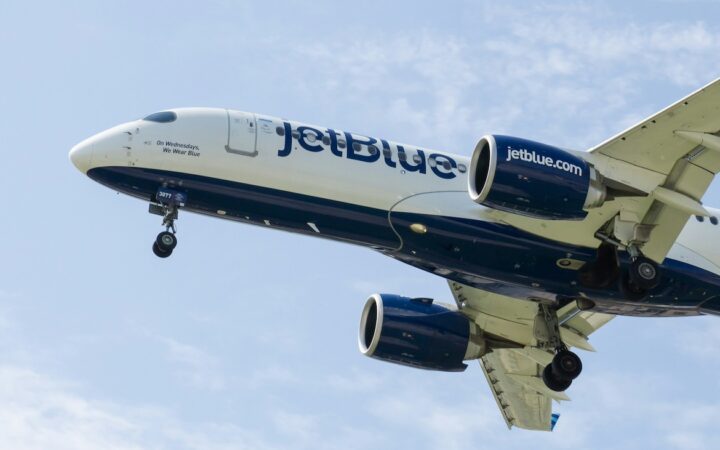
JetBlue has won the auction for Spirit Airlines’ takeoff and landing slots at New York LaGuardia Airport, paying $58.5 million for one of the rarest assets in U.S. aviation: more access to a capacity-constrained New York airport. The purchase would give JetBlue control of Spirit’s former LaGuardia rights, including 12 daily departure slots and 10 arrival slots.
Frontier Airlines was the runner-up with a $57.5 million bid, making the margin only $1 million. That close result shows how valuable the slots were to low-cost carriers trying to grow in New York, where airport capacity is tightly controlled and new opportunities are uncommon.
The deal still needs final approval. Spirit is seeking bankruptcy court approval in White Plains, New York, and the transaction also remains subject to regulatory approval by the Federal Aviation Administration. A final sale order is expected no later than early August, if the process moves forward as planned.
LaGuardia Slots Are Rare, Regulated and Expensive
LaGuardia is one of the few U.S. airports where the FAA limits takeoffs and landings through slot controls. John F. Kennedy International Airport and Ronald Reagan Washington National Airport are also tightly managed. That makes each slot a strategic asset, not just a scheduling tool.
JetBlue already had 31 combined arrival and departure rights at LaGuardia. If the Spirit sale is completed, that number would rise to 53, giving the airline enough access to consider up to 12 additional daily round trips. JetBlue said any expansion connected to the slots would likely begin in 2027.
The acquisition is notable because JetBlue has recently been selective about where it grows. LaGuardia can be expensive to operate from, but the chance to buy a block of slots at a constrained New York airport does not happen often. For an airline with a strong New York identity, the long-term value may outweigh the near-term cost.
The price also landed below some earlier expectations. Spirit had previously valued its LaGuardia slots much higher, but bankruptcy sales often reflect urgency, regulatory uncertainty and buyer limits. For JetBlue, the winning bid may look like a discount if the airline can turn the rights into profitable routes.
Spirit’s Collapse Is Reshaping Airline Competition
The sale is another consequence of Spirit’s shutdown earlier this year, after fuel costs and failed restructuring efforts pushed the ultra-low-cost carrier into liquidation. Airlines have since moved quickly to capture pieces of Spirit’s former network, aircraft demand and airport access.
JetBlue has already been expanding in markets affected by Spirit’s exit, including Fort Lauderdale, where it has planned its largest-ever schedule. The LaGuardia slot win adds a New York dimension to that strategy and gives JetBlue another way to attract travelers who want more low-fare competition at major airports.
The Port Authority of New York and New Jersey has also said the winning bidder must assume Spirit’s lease at LaGuardia’s Marine Air Terminal, also known as Terminal A. JetBlue currently operates from Terminal B, but the Marine Air Terminal has its own history and appeal. The Art Deco building opened in 1939 and was originally built for Pan American Airways’ flying boats.
If JetBlue returns to that terminal, the move would carry both operational and symbolic weight. The airline previously used the Marine Air Terminal before relocating elsewhere at LaGuardia.
For travelers, the deal could eventually mean more JetBlue flights from LaGuardia, though routes have not yet been announced. For the industry, it shows that even after Spirit’s collapse, its airport assets remain highly valuable in the fight for New York passengers.
Disclaimer: TravelCapybara is an independent media brand owned and operated by NuvexMedia LLC, publishing travel news, destination guides, research, and insights. NuvexMedia LLC may invest in or collaborate with companies across the travel, hospitality, technology, and digital media sectors. These relationships do not influence TravelCapybara’s editorial coverage. While we strive for accuracy, travel requirements, prices, schedules, availability, and local conditions may change without notice. Readers should independently verify information before making travel or purchasing decisions. This content is for informational purposes only and does not constitute professional advice. © 2026 NuvexMedia LLC. All rights reserved.