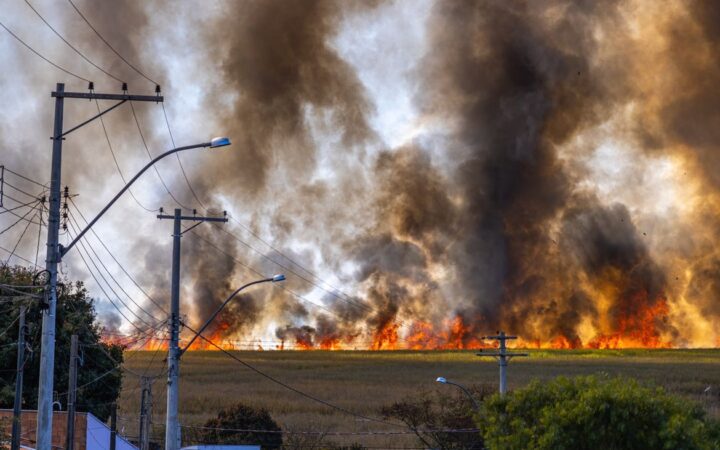
Wildfires across France and Spain have forced more than 320,000 people to leave their homes or holiday locations, creating one of the most serious travel safety situations in southern Europe this summer. The fires have affected areas near Bordeaux in southwestern France and regions around Madrid, Ávila, Toledo and Valencia in Spain, just as another heatwave threatens to make conditions worse.
In France, the worst-hit area is Gironde, where authorities said around 220,000 people had been evacuated after a fire broke out last Tuesday. The blaze has burned roughly 42,000 hectares, with thousands of evacuees now staying in temporary shelters set up in exhibition centers and sports halls across the southwest.
French officials said firefighters were able to prevent the fire from spreading overnight, but the situation remained unfavorable. Interior Minister Laurent Nuñez described the Gironde blaze as unprecedented and difficult to control because of its erratic behavior.
Bordeaux Region Faces a Major Firefighting Operation
The scale of the response in Gironde is enormous. Around 2,750 firefighters are working on the blaze, supported by 1,500 soldiers, 1,440 police officers and gendarmes, and 18 aerial firefighting assets. Local authorities said 88 firefighters had been injured since the fire began.
The region has also banned summer camps, Scout camps and holiday stays for people with disabilities, citing exceptional circumstances linked to the ongoing fires. That decision shows how quickly wildfire emergencies can affect organized travel, school holidays and group tourism.
Farmers have been helping emergency crews by providing water tanks and local knowledge of the terrain, although authorities have stressed that such support must be coordinated. Officials said generosity is welcome, but individual action near active fire zones can create new risks.
Spain’s Fires Hit Madrid, Ávila and Valencia
Spain is also facing major disruption. Wildfires have affected more than 77,000 hectares across the Madrid area and the provinces of Ávila and Toledo. Spain’s environment minister described the Ávila fire as the largest in the country’s recent history.
Around 76,000 people have been evacuated in Spain, while 30,000 others have been ordered to remain inside their homes. Some elderly evacuees from the Madrid region were reportedly allowed to return on Monday as crews worked to stabilize one of the blazes.
The Valencia region has also seen evacuations, and Spain recorded its first death in the latest fires after a man was killed in Manises, a suburb near Valencia. Prime Minister Pedro Sánchez said difficult hours remained ahead, even as overnight firefighting efforts brought some progress.
What Travelers Should Know Now
For travelers, the most important message is to follow local instructions and avoid affected areas. Fires have not reached central Madrid or central Valencia, and flights to airports including Madrid and Valencia were operating as normal at the time of reporting. However, smoke has affected air quality, and conditions can change quickly.
The UK Foreign Office has not warned against travel to Spain as a whole, but it urges travelers in affected areas to follow emergency services, call 112 if needed and monitor official updates. Regional authorities are also warning tourists to stay away from fire zones.
Insurance and refund rights will depend on the booking type. Travelers who cancel voluntarily without official advice against travel may not be entitled to a refund. Package holiday customers may have more protection if their trip is materially changed, such as if accommodation becomes inaccessible or unsafe.
With parts of Spain expected to reach 40C to 42C this week, fire risk is forecast to remain extreme. Anyone traveling to France or Spain should check local alerts daily, avoid smoke-affected areas, prepare for heat and keep flexible backup plans.
Disclaimer: TravelCapybara is an independent media brand owned and operated by NuvexMedia LLC, publishing travel news, destination guides, research, and insights. NuvexMedia LLC may invest in or collaborate with companies across the travel, hospitality, technology, and digital media sectors. These relationships do not influence TravelCapybara’s editorial coverage. While we strive for accuracy, travel requirements, prices, schedules, availability, and local conditions may change without notice. Readers should independently verify information before making travel or purchasing decisions. This content is for informational purposes only and does not constitute professional advice. © 2026 NuvexMedia LLC. All rights reserved.