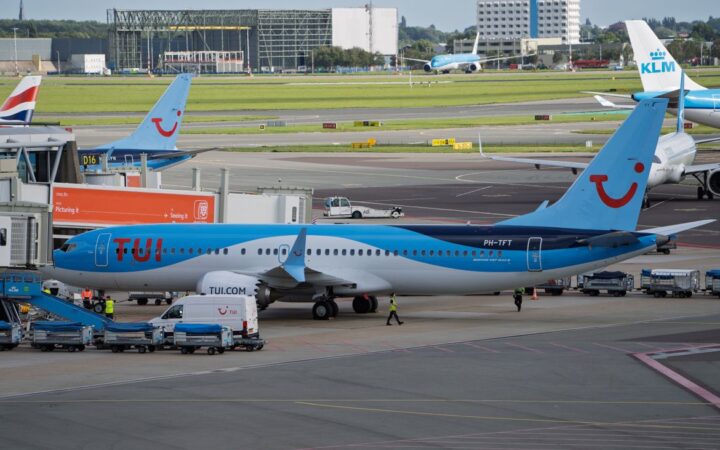
TUI says travelers are increasingly waiting until the last minute to book holidays as the Iran war, inflation and wider cost-of-living pressures make consumers more cautious about committing to trips months in advance.
Europe’s largest travel group estimates that the Middle East conflict has already cost it around €60 million in disruption and lost business. The effect has been particularly visible in destinations closer to the conflict, with demand temporarily weakening for holidays in Cyprus and Turkey after the war began.
CEO Sebastian Ebel said travel remains important to consumers, but the timing of purchasing decisions has changed. Instead of abandoning vacations entirely, more customers appear to be delaying commitments until they have greater confidence about prices, security and whether flights will operate normally.
That behavior is now producing an unusual summer pattern for TUI. Customer numbers fell 3% during the April-to-June quarter to just under 10 million, while pre-tax profit dropped 43% year over year to approximately €153 million.
TUI’s Markets + Airline division moved from a €50 million profit a year earlier to a €17 million loss, reflecting weaker holiday demand, elevated fuel costs and intense competition.
The Iran War Has Hit More Than Flight Bookings
Cruises created one of the largest direct costs.
Mein Schiff 4 and Mein Schiff 5 were operating in the Gulf when the Iran conflict escalated and were unable to continue through the Strait of Hormuz. Around 5,000 passengers had to be repatriated, while the two ships remained out of service for roughly 12 weeks.
TUI estimates that repatriation costs and lost cruise revenue accounted for around €40 million of the overall impact.
Demand has also shifted geographically. Eastern Mediterranean destinations initially suffered as travelers reassessed trips near the conflict, while TUI has seen weaker Central European demand for travel to the United States.
Despite that caution, the company says summer sales have strengthened during the past four weeks as customers who delayed making decisions finally booked.
Last-Minute Travel Is Becoming Part of a Bigger Shift
The pattern matters because tour operators traditionally benefit from customers booking well ahead, giving them greater visibility over airline seats, hotel capacity and pricing.
A shorter booking window makes demand harder to predict and forces companies to adjust inventory and prices more quickly.
That pressure also helps explain why TUI is investing heavily in technology. The company recently said AI is already helping TUI reduce costs across customer service, pricing, software development and distribution.
Changing weather patterns are adding another layer. TUI sees increasing potential outside the traditional July-August peak as travelers look for cooler conditions and potentially better value. The company is expanding destinations such as Crete deeper into November and encouraging hotels to adapt with both improved cooling and heating.
For TUI, the message from summer 2026 is increasingly clear: people still want to travel, but they are becoming less willing to commit early when geopolitical risks and household costs can change so quickly.
Disclaimer: TravelCapybara is an independent media brand owned and operated by NuvexMedia LLC, publishing travel news, destination guides, research, and insights. NuvexMedia LLC may invest in or collaborate with companies across the travel, hospitality, technology, and digital media sectors. These relationships do not influence TravelCapybara’s editorial coverage. While we strive for accuracy, travel requirements, prices, schedules, availability, and local conditions may change without notice. Readers should independently verify information before making travel or purchasing decisions. This content is for informational purposes only and does not constitute professional advice. © 2026 NuvexMedia LLC. All rights reserved.