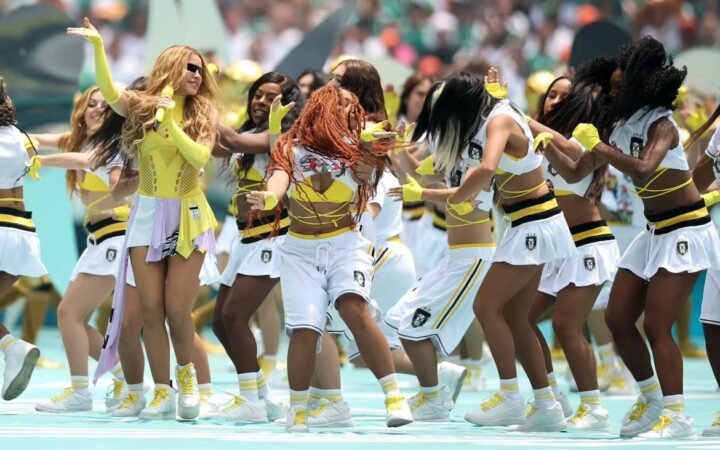
Mexico City opened the FIFA World Cup 2026 with a ceremony that felt less like a formal pre-match ritual and more like a compact cultural showcase for one of the world’s most visited capitals. Held at the Estadio Azteca, renamed Mexico City Stadium for the tournament, the event took place before Mexico’s opening match against South Africa and placed the host city at the center of global attention.
The performance most likely to travel across social media was Shakira and Burna Boy’s rendition of Dai Dai, one of the official World Cup songs. Their appearance gave the ceremony its clearest international pop moment, combining Shakira’s long association with World Cup music and Burna Boy’s Afrobeats reach. For viewers watching from abroad, it was also the kind of short, high-recognition performance that turns a sports event into a destination image.
Mexico City Turns the Ceremony Into a Travel Showcase
The opening ceremony highlighted music, dance, color and symbols tied to Mexican identity, including a visual concept inspired by papel picado. That choice mattered because Mexico City is not only hosting a football match. It is using the World Cup to present itself as a cultural capital with deep traditions, contemporary music, stadium history and large-scale event capacity.
The lineup leaned strongly into Latin American talent, with artists including Maná, J Balvin, Belinda, Danny Ocean, Lila Downs, Los Ángeles Azules and Alejandro Fernández. The ceremony moved quickly, avoiding the drawn-out feel that can make some opening shows feel disconnected from the event itself. Its pace gave fans inside the stadium a burst of entertainment while keeping the focus on the start of the tournament.
For travelers, the setting was as important as the music. The Estadio Azteca has long been one of football’s most symbolic venues, and staging the first match of the expanded 2026 tournament there gave Mexico City another major chapter in its sports tourism profile. The city already attracts visitors for food, museums, architecture and neighborhoods such as Roma, Condesa and Coyoacán. The World Cup adds another layer: global event travel.
A Tournament Opening Built Across Three Countries
The Mexico ceremony was the first of three opening events across the 2026 host nations, with Canada and the United States also set to stage their own ceremonies. That structure reflects the unusual geography of this World Cup, which is spread across three countries and multiple host cities. Instead of a single host destination, the tournament is functioning as a North American travel circuit.
For Mexico City, going first carried symbolic weight. It introduced the tournament through Mexican culture before the focus widens to other cities, stadiums and fan zones. The ceremony also showed how entertainment has become part of the travel economy surrounding major sports events. Fans do not only arrive for the match. They arrive for the atmosphere, the concerts, the public screenings, the restaurants, the street life and the sense of being inside a global moment.
That broader energy is what made the opening ceremony relevant beyond football. Shakira and Burna Boy’s Dai Dai performance will likely become the shareable clip, but the larger story is Mexico City’s role as the tournament’s first stage. For visitors, the message was clear: the World Cup is not only about teams and stadiums. It is also about cities using sport to tell the world who they are.
Disclaimer: TravelCapybara is an independent media brand owned and operated by NuvexMedia LLC, publishing travel news, destination guides, research, and insights. NuvexMedia LLC may invest in or collaborate with companies across the travel, hospitality, technology, and digital media sectors. These relationships do not influence TravelCapybara’s editorial coverage. While we strive for accuracy, travel requirements, prices, schedules, availability, and local conditions may change without notice. Readers should independently verify information before making travel or purchasing decisions. This content is for informational purposes only and does not constitute professional advice. © 2026 NuvexMedia LLC. All rights reserved.