Expedia Group is a global online travel company operating consumer marketplaces and business-to-business travel technology for lodging, flights, rentals, packages, and activities.
Publicly traded; financed through operations and capital markets
Valuation
Market capitalization varies with the Nasdaq share price
Employees
Approximately 17,000 employees
About Expedia Group
Expedia Group is a global online travel company operating consumer marketplaces and business-to-business travel technology for lodging, flights, rentals, packages, and activities. Based in Seattle, Washington, United States, it belongs to the online travel agencies and travel technology sector. The company’s role is best understood through the complete system around its customer offer: the brand, distribution, operations, technology, partners, and support processes that turn a travel need into a usable service.
The company’s development provides context for its present position. Expedia launched inside Microsoft in 1996 as an early consumer internet travel service. It later became independent and grew through product development, acquisitions, international expansion, and technology supplied to other travel sellers. That history matters because established distribution, operating knowledge, supplier relationships, and customer habits do not appear overnight. At the same time, the organization has had to adapt its original proposition to digital channels, changing traveler expectations, new competitors, and a travel economy that can shift quickly when confidence, capacity, regulation, or technology changes.
Today, its principal products and services include Accommodation, flights, packages, car rentals, cruises, activities, vacation rentals, advertising, loyalty, and B2B travel technology. The group operates brands for general travel, hotels, and vacation rentals while also providing lodging inventory, booking technology, advertising, and private-label services to airlines, banks, retailers, and loyalty programs. These offerings are not isolated items: they share customer identity, marketing, payments, inventory, service, and data. The breadth of the portfolio can make the company relevant at several points in a journey, although availability and specific terms vary by market. Travelers should always review the current product page and conditions before buying or relying on a service.
The organization serves a multi-sided customer base. Travelers use the consumer brands, property owners and suppliers distribute inventory, advertisers reach travel demand, and business partners embed Expedia Group content and booking capability in their own channels. This mix shapes product decisions because the needs of the traveler are only one part of a successful travel platform or operator. Suppliers, employees, regulators, distribution partners, local communities, and financial partners also influence whether the service is available, reliable, fairly priced, and sustainable over time. Balancing those groups is a recurring management task rather than a one-time product decision.
Its revenue model is based on merchant and agency commissions, service fees, advertising, b2b technology, and partner economics. The company earns from merchant and agency transactions, service fees, advertising, and B2B arrangements, with economics varying by product, geography, payment role, and partner contract. For readers comparing companies, the revenue model explains important behavior: who pays, when revenue is recognized, whether the company owns physical capacity, how much transaction risk it carries, and whether growth depends mainly on volume, price, subscriptions, advertising, or long-term partner contracts. Those distinctions can make two companies in the same vertical economically very different.
At an operating level, Its marketplaces aggregate broad global supply and operate across many languages and currencies, while the B2B network extends that inventory beyond Expedia-owned consumer sites. Scale can improve selection, coverage, brand awareness, purchasing power, and the amount of data available for planning. It can also raise the cost of coordination. Local rules, currencies, languages, consumer protections, accessibility requirements, taxes, and service expectations must be handled consistently without ignoring the characteristics of each destination. The quality of that execution is often more important to travelers than the company’s headline size.
Technology is part of the operating model rather than a separate feature. Search, pricing, payments, fraud controls, service automation, loyalty, experimentation, property connectivity, and APIs support a high-volume marketplace with complex cancellation and change rules. The company’s platform and tools include Consumer websites and apps, marketplace services, lodging connectivity, APIs, white-label products, advertising technology. These systems must remain available during demand spikes and disruptions, protect personal and payment data, communicate changes clearly, and give employees or partners enough context to solve exceptions. Automation creates the most value when it removes repetitive work while preserving a practical path to human support.
Within Travel Agencies, the company occupies a recognizable competitive position. Expedia Group combines large consumer brands with a substantial partner-technology business, giving it several distribution paths and a broad view of traveler and supplier demand. Competitors may challenge it through lower prices, specialized inventory, stronger local knowledge, a different ownership model, more flexible technology, or better service. The company therefore has to defend both sides of its proposition: a reason for customers to return and a reason for suppliers or partners to keep participating on attractive terms.
From the traveler’s perspective, the service should be evaluated as part of the whole trip. Customers can compare and combine multiple trip components, but the booking party, payment flow, loyalty treatment, cancellation conditions, and support path should be checked for each itinerary. A smooth purchase can still lead to a poor outcome if the underlying conditions are unclear or support is difficult to reach. Conversely, transparent information and effective disruption handling can create loyalty even when travel does not go to plan. Reviews, official notices, accessibility details, and current cancellation policies are useful checks before commitment.
Like every large travel business, Expedia Group faces structural and day-to-day risks. Competition, search and app acquisition costs, supplier bargaining power, regulation, cybersecurity, service quality, alternative accommodations, and changes in traveler demand all affect the platform. Travel demand is exposed to economic cycles and unexpected events, while reputation can change rapidly when service failures spread through social and review platforms. Long-term resilience depends on financial discipline, secure technology, capable people, dependable partners, regulatory engagement, and honest communication with customers when operations are under pressure.
Looking ahead, The group is investing in a shared technology platform, One Key loyalty, AI-assisted discovery and service, direct app relationships, vacation rentals, and scalable B2B distribution. The strongest opportunity is to use the organization’s existing reach and knowledge to make travel simpler without obscuring price, responsibility, or choice. This profile should be read as an editorial company overview rather than a promise of current availability or investment advice. Leadership, employee counts, products, market values, and policies can change, so the official links remain the appropriate source for live booking, support, and corporate information.
Click to see more
Products & Business
Business Focus
Global travel marketplaces, vacation rentals, loyalty, partner distribution, advertising, and B2B technology
Hotels.com has launched a new business travel mode that lets travelers save work-trip preferences, rebook preferred hotels faster and earn rewards from eligible business stays.
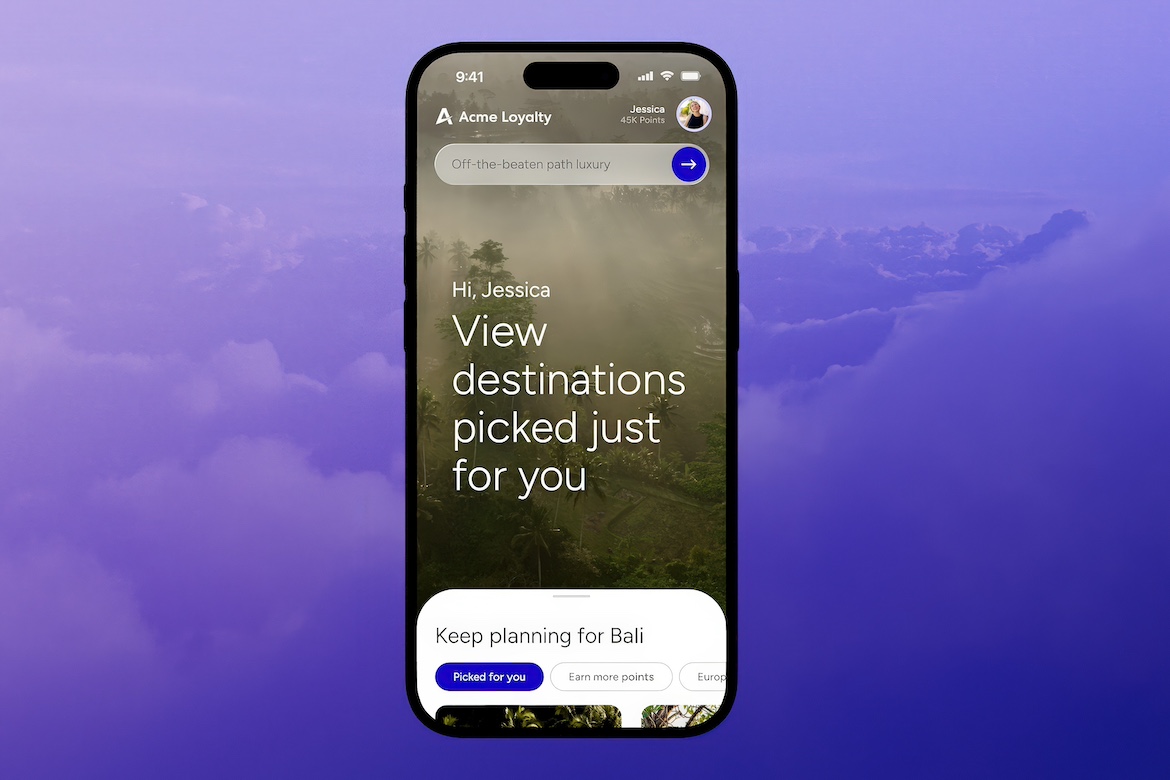
Expedia Group is preparing new AI tools for B2B partners, including agentic connections to travel inventory, expanded mobility services and social trip planning.
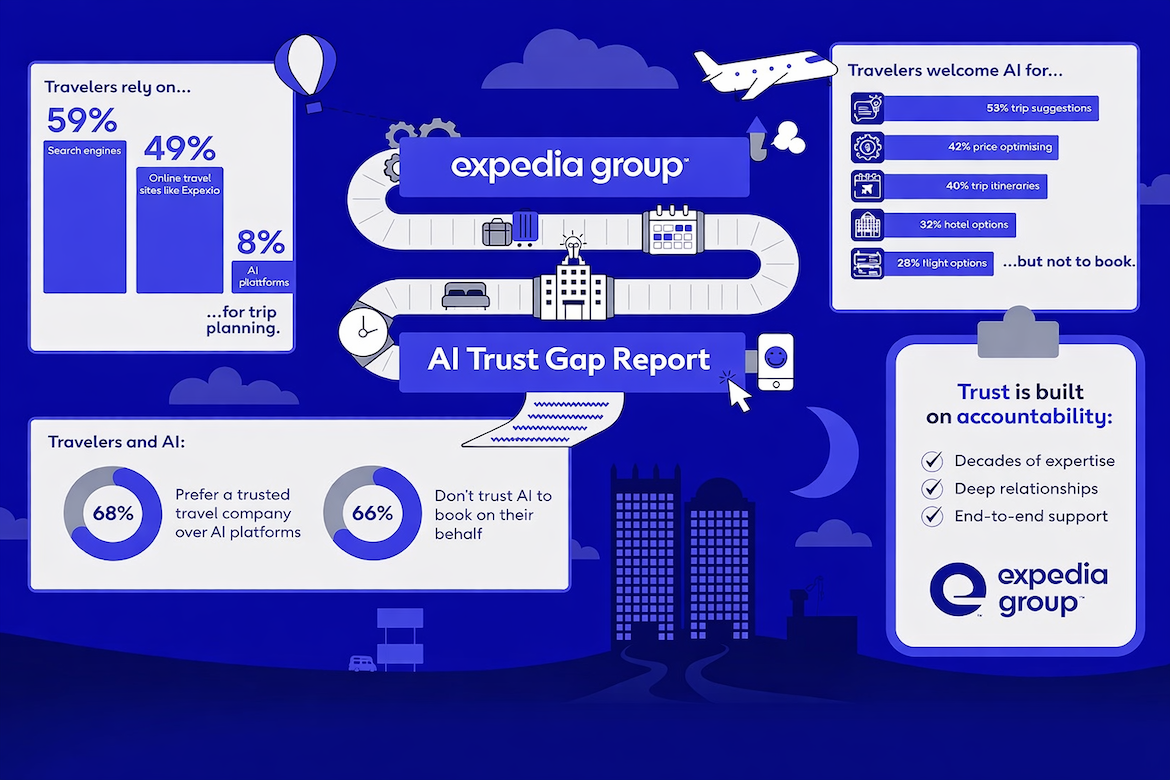
Expedia Group’s new AI Trust Gap report suggests that travelers are increasingly open to using AI for discovery and planning, but remain cautious when money, booking control, and post-trip support are involved.…
Expedia’s CFO says the company has overhauled its strategy over the past nine months, tightening performance metrics and accelerating AI-driven investments.
Expedia is aggressively integrating generative and agentic AI into its products and operations as it prepares for a shift in how travelers search, plan and book trips.
Expedia Group has appointed Google’s Xavier Amatriain as its first Chief AI Officer, marking a major shift in the company's long-term technology strategy. The move signals a deeper push into AI-driven travel…
Expedia Group has unveiled 'Comet,' a new AI-powered travel assistant developed in partnership with Perplexity, designed to help travelers plan trips faster and more intuitively.