Explore Boston in three days, from the Freedom Trail and North End to Beacon Hill, Back Bay and the harbor, with an optional fourth day in Cambridge.
Boston is easiest to enjoy when you stop treating every red-brick landmark as a separate excursion. Walk from the Common through the old downtown streets, follow the smell of coffee into the North End, then come back to the water. On another day, swap revolutionary history for Beacon Hill, the Public Garden and Back Bay. Three full days make a satisfying first visit; a fourth gives Cambridge, its museums and the Charles River room of their own.
The centre is compact, but a map can disguise how much walking a museum visit, a harbour detour and a few hills add up to. Build each day around one part of town and one visit you particularly want. Leave the rest for a bench by the water, a bakery stop and the streets between the sights.
Boston at a Glance
- How long to stay. Allow three days for downtown, the North End, Back Bay and a major museum. Add a fourth for Cambridge or, in ferry season, a harbour island.
- Where to stay. Back Bay is a useful base for a first visit, downtown puts history on your doorstep, and Cambridge works well if university museums are central to your plans.
- Getting around. Combine neighbourhood walks with the MBTA, known locally as the T. A car adds little to this itinerary once you reach the city.
- What to book first. Fix your museum entry or any guided tour before filling the day with other plans. Compare accommodation for more than one set of dates if your trip is flexible.
- What to bring. Pack comfortable shoes and a light waterproof layer. The waterfront can feel cooler than a sheltered street a few blocks inland.
Must See in Boston
Boston’s most rewarding first stops fit into three loose groups: the historic centre and North End, the parks and streets west of downtown, and the museums around Fenway. Follow those groups rather than crossing the city repeatedly. You can see several landmarks from the pavement, so save indoor visiting time for the places whose stories interest you most.
The Freedom Trail and the Old Downtown
Use the Freedom Trail to connect Boston Common, the Granary Burying Ground, the Old South Meeting House and the Old State House before continuing towards Faneuil Hall and the North End. It is a route through a living city: shops, traffic and office workers share the streets with the historic buildings. Stop to read the interpretation rather than following the pavement markers at marching pace.
Choose a couple of interiors in advance. A church, a meeting house and a small historic home tell quite different stories, and entry arrangements belong to the individual sites. Walking the route does not provide admission to everything along it. If history is your main interest, divide the downtown and Charlestown sections between two outings so that lunch and museum visits have space.
The North End
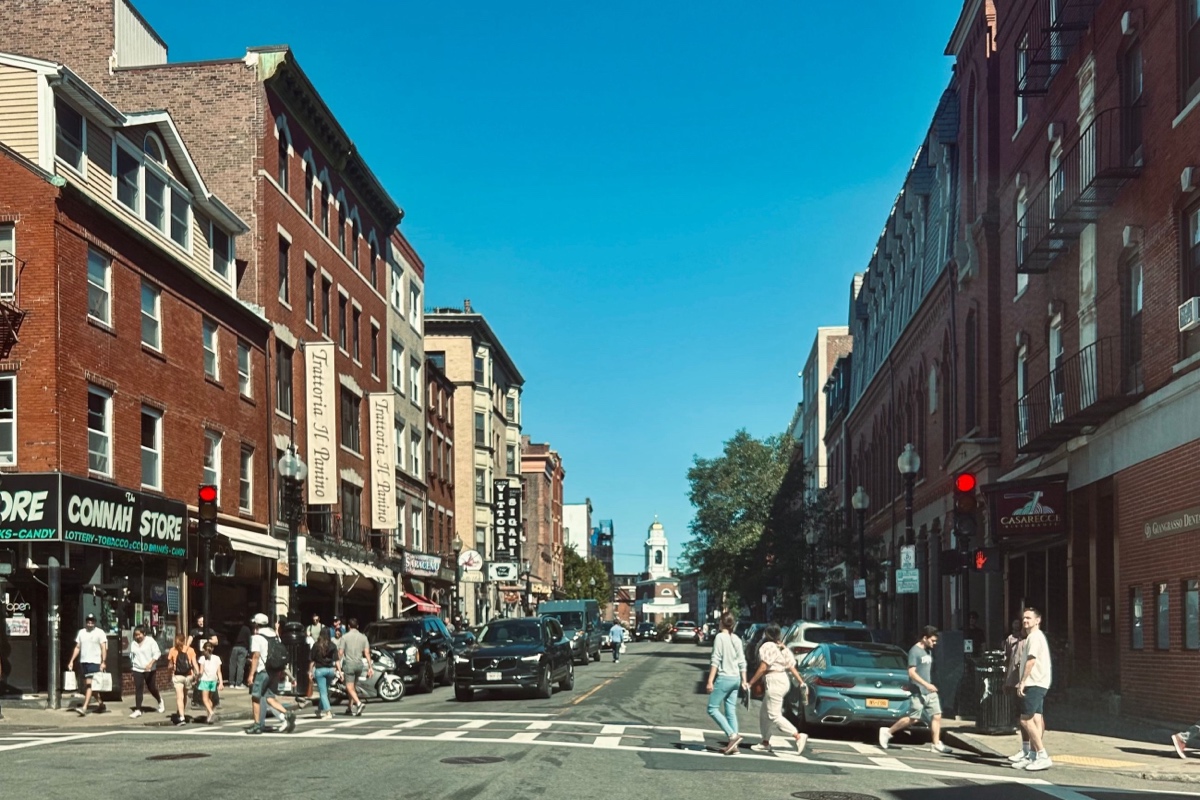
Carry on into the North End for Hanover Street, Salem Street and the smaller lanes around the Paul Revere House and Old North Church. Italian food and revolutionary landmarks occupy the same compact neighbourhood. Make a historic visit first, then give yourself time to look at menus rather than choosing the first queue you encounter.
A pasta lunch and an espresso suit a long walking day; a pastry can wait until you have wandered a little further. For dinner, have a second restaurant in mind if your first choice is full. Once you leave the busiest streets, keep the noise down and doorways clear: these are residential blocks as well as places people come to eat.
Beacon Hill and the Black Heritage Trail
Walk along Charles Street, then turn into Beacon Hill’s brick-lined side streets for a closer look at its doors, ironwork and gas lamps. The slopes are part of the experience, so avoid carrying your luggage around while sightseeing. A brief stop near Acorn Street fits into a longer neighbourhood walk; there is more to see here than a single photograph.
The Black Heritage Trail gives the neighbourhood essential historical depth. Its approximately 1.5-mile route explores Boston’s free Black community, abolitionism and the struggle for civil rights. Use the National Park Service’s self-guided material, or look for a ranger programme when available. The Museum of African American History provides a separate indoor visit; allow for its own admission and opening arrangements.

Boston Common and the Public Garden
Give the Common and the Public Garden a proper place in the day. They are neighbours with different characters: the Common is a broad civic park, while the Public Garden draws you around its lagoon, planted beds and curving paths. Walk through rather than skirting the edges on your way to another attraction.
Morning is a pleasant time to begin here before moving into Beacon Hill or Back Bay. In warm weather, sit for a while and watch the reflections in the water. In colder months, make this a shorter outdoor stretch between indoor visits. A family with a buggy or a traveller avoiding hills may find a park walk a more comfortable first outing than the steeper residential streets.
Copley Square and the Boston Public Library
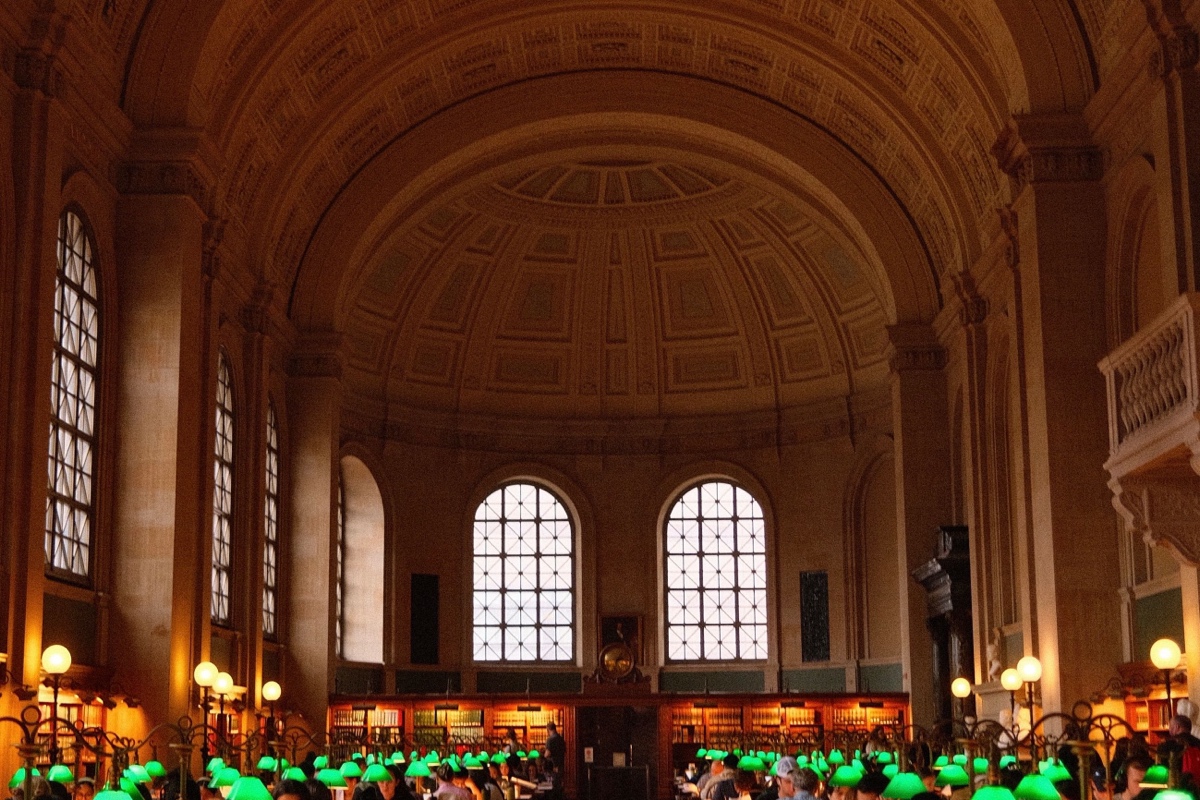
Copley Square is a useful introduction to Back Bay, with Trinity Church and the Boston Public Library framing the area. Go into the library’s historic McKim Building for its art and architecture, rather than treating it as a quick exterior photo. Its grand staircases, reading spaces and courtyard invite a slower visit.
This remains a working library. Move quietly through reading areas and respect any room restrictions or temporary closures. Afterwards, choose Newbury Street for shops and cafés, or Commonwealth Avenue for a walk past the brownstones. You do not need to cover both from end to end: a few blocks, a coffee and a return by a different street give a better feel for the neighbourhood than a shopping checklist.
The Museum of Fine Arts or the Gardner
Choose the MFA if you want the breadth of a large collection and the freedom to follow a particular period or medium. Pick two or three areas before you arrive, then leave time for something unexpected. A shorter, attentive visit is easier to enjoy than an attempt to see every gallery.
The Gardner Museum offers a different experience, with art arranged around a courtyard in an intensely personal setting. Reserve ahead for your preferred entry. Both museums currently close on Tuesdays, which matters when arranging a short stay. Most first-time visitors should choose one for their main museum session; art enthusiasts can give them separate half-days.
For a different afternoon, book a Fenway tour; consult the timetable before arranging the rest of your day.
The Waterfront and Charlestown
Walk towards the water around Christopher Columbus Park, then follow the waterfront as far as you feel like going. This is a good place to let a tightly planned morning loosen up. Sit with a drink, watch the boats or continue towards the wharves instead of booking another attraction simply because there is an empty hour.
Charlestown deserves a longer outing if naval history interests you. At the Navy Yard, USS Constitution is an active Navy ship with security screening and photo-ID requirements for adults. The ship and the nearby museum are separate visits, with their own arrangements. Check access before setting out, particularly if steep ladders or restricted mobility would affect your visit.

A Three-Day Boston Itinerary
These days group nearby places together, but swap their order to suit museum opening days and the weather. Keep a damp afternoon for a gallery or the library and use the clearest part of the trip for the harbour. If you have only two days, take the first two routes and choose one major indoor visit.
Day One: Downtown, the North End and the Water
Start at Boston Common, then follow the downtown historic route towards Faneuil Hall. Choose one indoor stop on the way and give it enough time. Have lunch in the North End, explore the streets around the Paul Revere House and Old North Church, then walk to Christopher Columbus Park for a change of pace. Return to the North End for dinner if you want a longer evening there.
If Charlestown is your priority, shorten the downtown interiors and make the Navy Yard your afternoon destination. Avoid putting every historic site, a full ship visit and a long dinner into the same fixed schedule. The route is more enjoyable when you can stop without calculating the next admission time.
Day Two: Beacon Hill, the Gardens and Back Bay
Begin with coffee near Charles Street and a Beacon Hill walk. Make time for the Black Heritage Trail or its museum if that is a main interest, then cross into the Public Garden. Continue towards Copley Square for the library and a late lunch. Spend the afternoon between Newbury Street and Commonwealth Avenue, with a break somewhere you would like to sit.
This day is easy to shorten. If the morning walk has been enough, stop after the library. If you still have energy, head towards the Charles River for an evening stroll before dinner. A return to one favourite street often adds more to a trip than travelling across town for one more landmark.
Day Three: Art, Fenway or More Time by the Harbor
Give the morning to your chosen museum, then have lunch nearby before deciding how much more you want to do. A second museum suits a dedicated art day, but a ballpark visit or a leisurely afternoon outside provides a different rhythm. If you missed the Navy Yard on day one, use this afternoon for Charlestown instead.
Keep your last evening close to somewhere you have already enjoyed. Boston does not require a different district for every meal. A familiar walk back to your accommodation is a good finish after two or three days of navigating new streets.
Add a Fourth Day in Cambridge
Cambridge is a separate city across the Charles and an easy extension by the T. Take the Red Line to Harvard Square and begin with a walk around the surrounding streets. For the university itself, use Harvard’s official visitor information to check campus access and student-led tours. University buildings are not generally open simply because you can walk past them.
The Harvard Art Museums make a substantial stop in their own right, and admission is free. They currently close on Mondays. Combine a few galleries with lunch around Harvard Square and a walk towards the river rather than trying to fit another complete Boston sightseeing day around the excursion.

For a more outdoors-focused alternative, consider the island ferries during their operating season. Choose an island and return sailing first, then plan the rest of the day around them. Pack water, food and weather protection appropriate to the outing. This is a substitute for Cambridge, rather than something to squeeze in afterwards.
Where to Stay in Boston
Choose your base by the walks you want to repeat and the transport you will use with luggage. A slightly less central room near a useful station can be easier than a cheaper address requiring a transfer every morning. Compare the full stay price, cancellation terms and room size, rather than the nightly headline alone.
- Back Bay. Our most straightforward starting point for a first visit centred on parks, architecture and museums. Look at the exact address: a room near Copley Square and one near the western end of the neighbourhood produce different walks.
- Downtown and the waterfront. Useful for the historic route, the North End and morning walks by the harbour. Decide whether being beside the water matters enough to pay for it, or whether a short walk from a nearby street would suit you.
- The North End. Appealing if dinner and a historic setting are priorities. Look carefully at room access, lift availability and the route from your arrival station before booking an older building.
- Cambridge. A good choice for time around Harvard or a different evening setting. Check the actual distance to a Red Line station; a Cambridge address alone does not mean a quick journey into central Boston.
What to Eat and Where to Pause
Leave room for seafood, but avoid turning the whole trip into a search for one celebrated lobster roll. A bowl of clam chowder makes an easy lunch, while oysters or a lobster roll can be the meal you choose to spend more on. Read the menu before sitting down, especially when a dish is listed at market price.
In the North End, Neptune Oyster on Salem Street is a specific option to investigate for a seafood stop; it takes walk-ins rather than reservations. If there is a wait that does not suit your day, move on to another meal and come back another time. A pastry or coffee stop nearby is enjoyable without being attached to a famous-name queue.
Plan an Italian meal in the North End, a café break during your Back Bay walk and an unhurried lunch on the Cambridge day. For a change from those routes, Chinatown offers another direction for dinner near downtown. Ask about portion sizes if you want to order several dishes and share them, and leave room for food you notice while walking.
When comparing menus, allow for tax and a tip where table service is involved; the number beside a dish is not necessarily your final spend. Choose a mixture of sit-down meals, bakery breakfasts and simpler lunches if you want to keep costs manageable without making every food decision about price.
Getting In and Getting Around
From Logan Airport. Check the airport’s transport options against your accommodation address. The Silver Line SL1 serves the terminals and South Station and is free when boarding at Logan. For the Blue Line, take the airport shuttle to Airport station. Those are different routes, so choose by your final connection rather than boarding the first vehicle with a familiar name.
Within the city. Walk within each sightseeing area and use the T for longer moves, particularly the Cambridge excursion or journeys towards the museums. Review the MBTA’s fare options before buying a pass, and check service alerts for the lines you will use. Work out the route back as well as the outward journey if you are planning a late dinner.
With luggage or limited mobility. Allow extra time for station entrances, lifts and uneven pavements. A central destination is not always a short or step-free walk from the platform. Use the transit operator’s station information and each attraction’s access guidance when those details affect your plans.
By car. For this guide’s central itinerary, we would collect a rental car when leaving for the next part of New England. If you arrive with one, compare parking costs with the convenience it provides, then leave it parked for the neighbourhood walks.
When to Go and How to Keep the Trip Flexible
Late spring and early autumn are attractive choices for a trip built around walking, with layers still useful for changing conditions. Summer allows long outdoor days, but leave breaks for shade and indoor visits. Winter suits a more compact itinerary of museums, the library and meals, with shorter walks between them.
Compare room prices before settling on dates, especially around major sporting occasions, university events and holiday weekends. Book the accommodation and the one visit you would be disappointed to miss, then leave some of the parks, waterfront and neighbourhood streets movable. Boston gives you enough to do without needing every hour reserved.
Plan the Rest of Your US Trip
Browse our United States coverage for other stops. For an East Coast extension, our New York guide is a useful next read; if you are planning a separate city break, compare Boston with our Chicago guide.
Disclaimer: TravelCapybara is an independent media brand owned and operated by NuvexMedia LLC, publishing travel news, destination guides, research, and insights. NuvexMedia LLC may invest in or collaborate with companies across the travel, hospitality, technology, and digital media sectors. These relationships do not influence TravelCapybara’s editorial coverage. While we strive for accuracy, travel requirements, prices, schedules, availability, and local conditions may change without notice. Readers should independently verify information before making travel or purchasing decisions. This content is for informational purposes only and does not constitute professional advice. © 2026 NuvexMedia LLC. All rights reserved.