Key Notes
- Budapest places tenth in the European-focused Google Street View comparison of city centres, while Paris leads the ranking for areas within two kilometres of the centre.
- The study assesses visual qualities of streets, including walkability and historical character, and Budapest’s position changes when researchers use a wider area or a different image dataset.
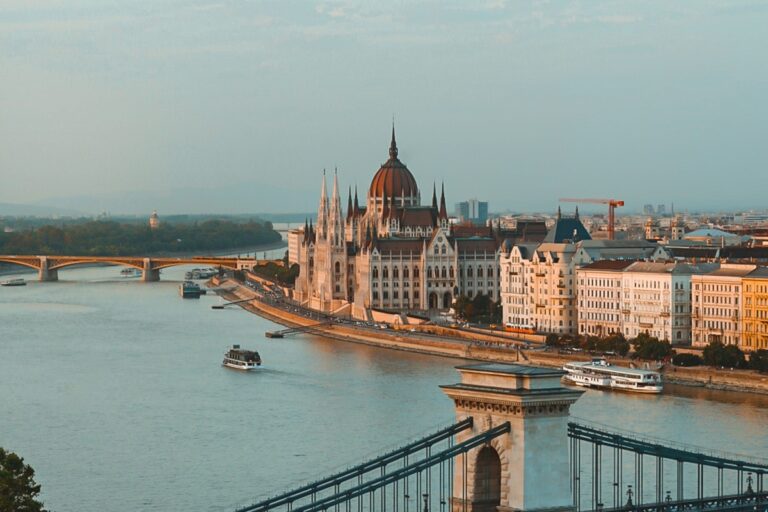
Budapest has placed tenth in an AI assessment of city-centre attractiveness, joining a European-focused comparison led by Paris. The result puts the Hungarian capital’s central streets in distinguished company, while showing how much a city ranking can change with the area and imagery being assessed.
The StreetPulse project, developed by researchers at Corvinus University of Budapest and the Toulouse School of Economics, evaluates street-level photographs. Its findings offer a different way to think about a city break: through the surroundings encountered between the headline attractions.
Paris Leads the City-Centre Comparison
For areas within two kilometres of city centres, the Google Street View comparison’s leading five were:
- Paris
- Amsterdam
- Saint Petersburg
- Barcelona
- Vienna
Budapest took tenth place with an average of 5.83 out of 10, according to the university’s research announcement. Its position fell to 15th within five kilometres and 42nd across the full urban area studied.
That change is useful context for travellers. A strong score for a compact central area should not be treated as a promise that every neighbourhood offers the same surroundings. It also makes the location of a hotel, and the walks connecting it with places to visit, more relevant than a city-wide headline alone.
What the AI Scores Actually Measure
The assessment covers beauty, perceived safety, vibrancy, walkability, historical character, comfort and perceived wealth. Those are visual judgements drawn from photographs, rather than measurements of crime, household income or visitor satisfaction.
The distinction between datasets matters, too. A separate global comparison using openly accessible imagery from Mapillary and Panoramax places Venice first and Budapest 26th. That is a different result from the European-focused Google Street View comparison; combining the two would give a misleading impression of Budapest’s standing.
For trip planning, treat an image-based ranking as a source of ideas. It cannot tell you whether a particular attraction is open, what your accommodation will cost or how crowded a street will feel when you arrive.
Turning the Ranking Into a Budapest City Break
Our Budapest travel guide connects the city’s architecture with the experiences that make a visit more than a sightseeing circuit: thermal baths, cafés, the Danube waterfront and ruin bars. Leave room to explore both hilly Buda and flatter Pest, rather than building the whole stay around a single viewpoint.
Start with the places you most want to see, then choose a base that makes those journeys comfortable. For a wider shortlist, our selection of European weekend breaks offers other ways to match a destination to the kind of trip you want.
Disclaimer: TravelCapybara is an independent media brand owned and operated by NuvexMedia LLC, publishing travel news, destination guides, research, and insights. NuvexMedia LLC may invest in or collaborate with companies across the travel, hospitality, technology, and digital media sectors. These relationships do not influence TravelCapybara’s editorial coverage. While we strive for accuracy, travel requirements, prices, schedules, availability, and local conditions may change without notice. Readers should independently verify information before making travel or purchasing decisions. This content is for informational purposes only and does not constitute professional advice. © 2026 NuvexMedia LLC. All rights reserved.