Key Notes
- Some airBaltic employees face departure, reduced roles or overseas assignments during restructuring, although the airline describes its Air Niugini secondments as voluntary and says it complies with employment law.
- Latvia’s parliament has backed legislation allowing a guarantee of up to €175 million to support private financing, while the government’s latest operational update says flights continue and existing tickets remain valid.
airBaltic has presented some staff with options including departure, demotion or a secondment to Papua New Guinea, Reuters reported on November 26, exposing the human cost of the Latvian carrier’s restructuring.
The choices differ by group: some cabin crew face termination or demotion, while some pilots have been offered Air Niugini assignments or departure. The airline says secondments are voluntary. A union disputes the consultation process; airBaltic says it complies with employment law.
Why Papua New Guinea Is Part of the Plan
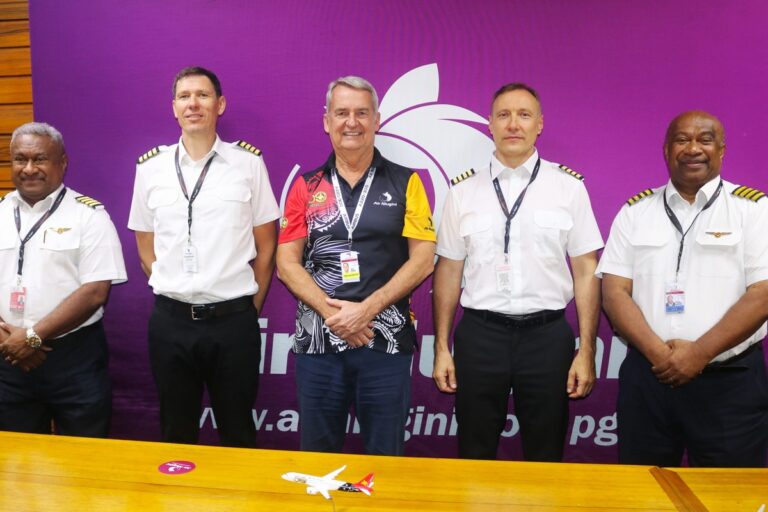
The overseas cooperation is already under way. In its own programme announcement, Air Niugini said it had welcomed its first two airBaltic Airbus A220 pilots to Port Moresby, with more expected to follow progressively.
The arrangement involves 30 experienced pilots over 12 months. They will work on 28-day rotations, with around 15 in Papua New Guinea at any given time, supporting flying operations and the training of local crews.
For Air Niugini, the partnership supplies experience for a growing fleet: the airline reported three A220-300s in service and eight A220-100s on firm order. Its stated aim is to build its own pilot capability alongside the temporary support. For airBaltic employees, however, that operational partnership now sits within a much wider employment and financial restructuring.
Latvia Backs a New Financing Route
The staffing report comes as Latvia advances another support measure. On November 26, the Latvian parliament backed amendments allowing a state guarantee of up to €175 million for airBaltic’s obligations, intended to help attract private financing during its Chapter 11 process.
That distinction matters: the legislation authorises a potential guarantee rather than an immediate cash transfer from the state budget. The government’s November 24 proposal said private lenders would provide the financing and that issuing a guarantee would require the necessary approvals, including from the European Commission.
The airline’s reset also includes a smaller fleet. Its previously announced business plan targeted 36 aircraft by the end of 2026, down from 54, as we explained in our fleet-restructuring coverage. These are planned changes, rather than confirmation that every reduction has already happened.
What It Means for Passengers
Employment changes and financing negotiations do not themselves announce a halt to flying. Latvia’s November 24 update said airBaltic was operating normally and that tickets and reservations remained valid, while the Chapter 11 reorganisation was expected to run until mid-2027.
Travellers should distinguish those ongoing operations from the broader Chapter 11 restructuring. The immediate story is a carrier attempting to secure financing and reshape its workforce while maintaining the connections on which Latvia’s tourism and businesses depend.
Disclaimer: TravelCapybara is an independent media brand owned and operated by NuvexMedia LLC, publishing travel news, destination guides, research, and insights. NuvexMedia LLC may invest in or collaborate with companies across the travel, hospitality, technology, and digital media sectors. These relationships do not influence TravelCapybara’s editorial coverage. While we strive for accuracy, travel requirements, prices, schedules, availability, and local conditions may change without notice. Readers should independently verify information before making travel or purchasing decisions. This content is for informational purposes only and does not constitute professional advice. © 2026 NuvexMedia LLC. All rights reserved.