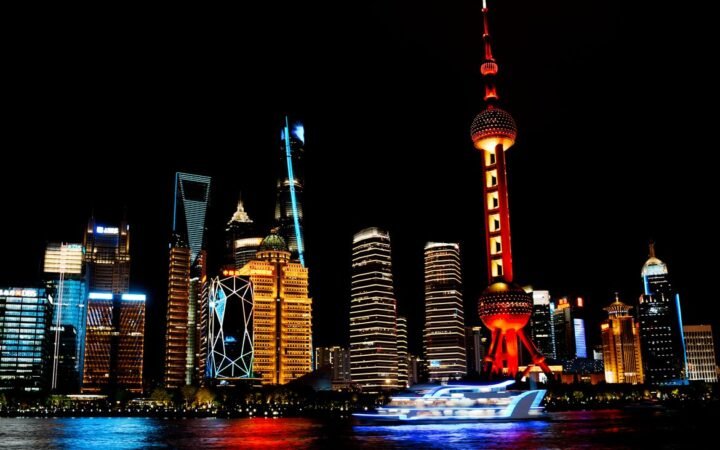
China has launched its first cruise-to-nowhere voyage, marking a new phase in the country’s fast-growing cruise tourism market. The Adora Magic City, China’s first domestically built large cruise ship, departed Shanghai Wusongkou International Cruise Terminal on June 6 for a three-day, two-night sailing that returns to Shanghai without calling at another port.
The format is different from a traditional cruise itinerary. Instead of moving between destinations, the ship itself becomes the destination. Passengers sail on the high seas, spend the full trip onboard and return to the same home port. For travelers in Shanghai and nearby cities, that makes the product closer to a short resort-style escape than a conventional sightseeing cruise.
The new route is designed for convenience. A two-night weekend-style voyage allows passengers to try a large cruise ship experience without taking a long vacation or organizing multiple shore excursions. That could be especially attractive to urban workers, families and first-time cruisers who want a relaxed break but may not be ready for a longer regional itinerary.
Adora Magic City’s operator adjusted the onboard experience for the new format. Entertainment was expanded to include stand-up comedy, magic performances, theme parties and late-night dining. The passenger load was capped at 80% to improve comfort, while the average passenger age was reported at 47, younger than the typical 55 on standard routes. That suggests the cruise-to-nowhere concept may be reaching a somewhat younger and more time-conscious audience.
The sailing also required regulatory changes. Shanghai issued China’s first entry-exit permit for this type of voyage shortly before departure, and customs and border inspection procedures were streamlined for passengers. Those operational steps are important because the cruise leaves Chinese waters but does not visit a foreign port, creating a different framework from both domestic travel and international cruising.
For Shanghai, the launch strengthens its role as China’s leading cruise gateway. The city already has the port infrastructure and local demand needed to support short sailings, and the cruise-to-nowhere model gives operators another way to fill ships between traditional itineraries. It also broadens the definition of cruise travel for Chinese consumers, emphasizing onboard dining, entertainment and relaxation rather than destination hopping.
The timing is favorable. China’s cruise tourism sector has been recovering and expanding, with total cruise passenger throughput in 2025 rising 25.3% year over year. As more Chinese-built ships enter service and more travelers become familiar with cruising, short no-port sailings could become a practical entry point for new customers.
The broader travel lesson is clear: cruises are no longer only about where the ship goes. Increasingly, they are also about what the ship can offer as a self-contained travel experience. China’s first cruise-to-nowhere shows how that idea is now entering one of the world’s most important outbound and domestic travel markets.
Disclaimer: TravelCapybara is an independent media brand owned and operated by NuvexMedia LLC, publishing travel news, destination guides, research, and insights. NuvexMedia LLC may invest in or collaborate with companies across the travel, hospitality, technology, and digital media sectors. These relationships do not influence TravelCapybara’s editorial coverage. While we strive for accuracy, travel requirements, prices, schedules, availability, and local conditions may change without notice. Readers should independently verify information before making travel or purchasing decisions. This content is for informational purposes only and does not constitute professional advice. © 2026 NuvexMedia LLC. All rights reserved.