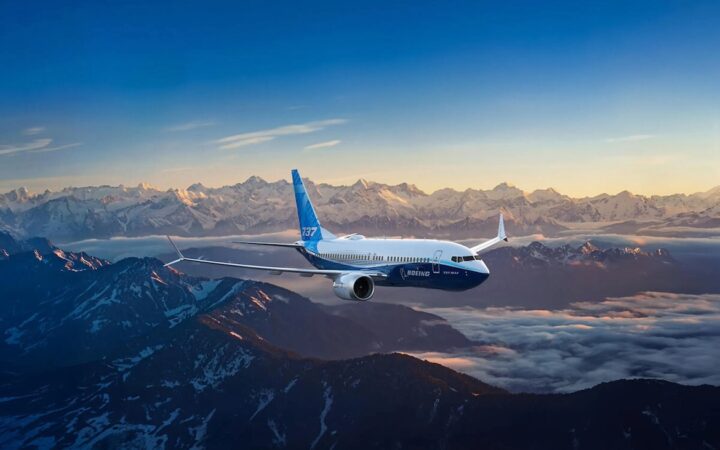
The Federal Aviation Administration has certified the Boeing 737 MAX 7, ending nearly a decade of testing and regulatory review for the smallest member of Boeing’s MAX family.
The approval gives Boeing an amended type certificate and an updated Production Limitation Record, allowing the company to begin formal production and prepare the aircraft for delivery. It is a major milestone for Boeing and the United States aviation industry after years of delays, technical changes and heightened scrutiny.
Testing of the MAX 7 began in 2018, but certification slipped far beyond Boeing’s earlier target of 2022. The FAA’s review became more demanding following the two fatal 737 MAX 8 crashes in 2018 and 2019, which killed 346 people and led to a worldwide grounding of the model. Boeing faced further production and safety scrutiny after a cabin panel separated from an Alaska Airlines MAX 9 operated by Alaska Air Group during a January 2024 flight.
Before approving the MAX 7, the FAA required changes to flight-control software, cockpit alerting and the engine anti-ice system. The redesigned anti-ice system is intended to prevent the engine inlet from overheating and potentially weakening surrounding structures, while updated alerts should provide pilots with clearer information during abnormal situations.
The FAA said its teams directly reviewed flight controls, human factors, system safety assessments and other safety-critical areas. Inspectors will remain at Boeing production facilities to monitor manufacturing, the company’s Safety Management System and its wider safety culture.
Southwest Airlines is expected to become the first carrier to operate the MAX 7. The airline welcomed the approval and said it was preparing with Boeing for the first delivery, although the aircraft does not yet appear in Southwest’s published schedule through March 2027.
The MAX 7 can carry approximately 135 to 160 passengers and offers up to 3,800 nautical miles of range. Boeing says that gives it about 10% more range potential than other MAX variants, making it suitable for thinner routes that require greater distance without the capacity of a larger aircraft.
Around 30 MAX 7 aircraft have already been built and are awaiting delivery. Approval should now allow Boeing to begin handing those jets to customers once final production and airworthiness requirements are completed.
The certification also turns attention to the larger 737 MAX 10, which remains under FAA review. Boeing executives have said lessons learned from the MAX 7 process are being applied to the MAX 10 and the delayed 777X program.
For travelers, the MAX 7 will look familiar, but its path into service has been anything but routine. Its approval represents progress for Boeing, while the FAA’s continuing factory presence shows that regulatory confidence is still being rebuilt.
Disclaimer: TravelCapybara is an independent media brand owned and operated by NuvexMedia LLC, publishing travel news, destination guides, research, and insights. NuvexMedia LLC may invest in or collaborate with companies across the travel, hospitality, technology, and digital media sectors. These relationships do not influence TravelCapybara’s editorial coverage. While we strive for accuracy, travel requirements, prices, schedules, availability, and local conditions may change without notice. Readers should independently verify information before making travel or purchasing decisions. This content is for informational purposes only and does not constitute professional advice. © 2026 NuvexMedia LLC. All rights reserved.