The U.S. hotel industry is having a stronger year than analysts expected, and one of the biggest reasons has little to do with tourists.
CoStar and Tourism Economics have upgraded their 2026 forecast twice, with revenue per available room now expected to rise 4.4%, compared with just 0.6% projected in February. Average daily rates are forecast to increase 3.1%, while occupancy is expected to edge up to 63.1%.
The surprise has come largely from secondary and industrial markets outside the major tourism hubs and World Cup host cities. Analysts say construction tied to AI data centers, transportation projects and other infrastructure is generating a steady stream of workers who need accommodation for weeks or months at a time.
Those guests typically stay in midscale, upper-midscale and extended-stay hotels rather than luxury properties. Their presence is boosting weekday occupancy in markets that historically relied on more limited corporate and leisure demand.
Data Centers Are Filling Hotels Far From Major Cities
The effect is particularly visible around large AI infrastructure projects.
Hotels near data-center developments in places such as Homer City, Pennsylvania, and Abilene, Texas, have recorded annualized occupancy increases of more than 15%. These projects are often built in suburban or exurban areas where land, electricity and infrastructure are available but hotel supply is relatively limited.
Wyndham has reported some of the strongest gains in the industrial Midwest. Second-quarter RevPAR rose 10% in Illinois and Indiana, 9% in Iowa, 7% in Wisconsin and 6% in Ohio.
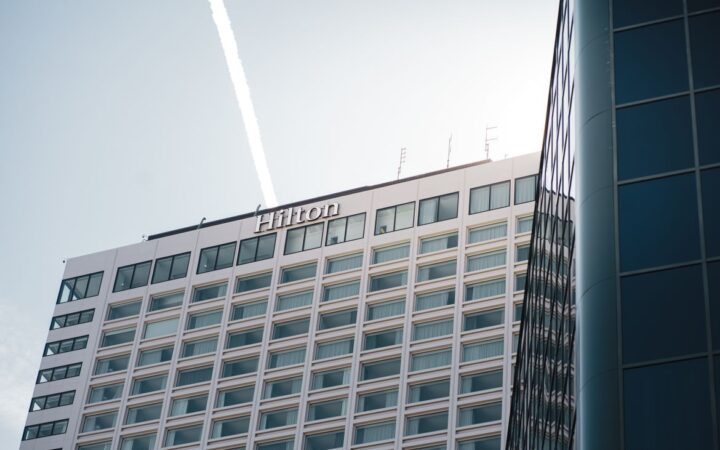
Hilton is seeing similar momentum. CEO Christopher Nassetta said workers involved in large infrastructure projects are helping lift demand at brands such as Hampton, Home2 Suites and Tru. Those midscale and upper-midscale categories, which were declining about 2% a year earlier, are now growing roughly 4% to 6%.
Marriott has also reported strength across its select-service brands, including Courtyard, Fairfield and SpringHill Suites.
The Hotel Boom Could Be Powerful but Temporary
AI-related construction is not the only factor behind the stronger market. Household wealth has improved, inflation has eased and the labor market has remained relatively stable. Spending from small and midsize businesses has also strengthened, while group travel has recovered after earlier uncertainty.
Still, data-center demand presents a unique opportunity for hotel owners because it can last throughout multi-year construction cycles.
At the same time, that demand carries a built-in expiration date. Data centers employ large construction crews while they are being built, but far fewer workers once they become operational. Hotels that become heavily dependent on project-related guests could therefore see demand drop sharply when construction ends.
For now, supply constraints are amplifying the upside. U.S. hotel inventory is expected to grow just 0.5% in 2026, well below the long-term average.
CoStar and Tourism Economics expect the market to keep growing in 2027, although more slowly, with RevPAR forecast to rise another 2.1%.
That means the current boom is not simply about record events or major tourist cities. Some of the strongest hotel markets in America are increasingly being created by construction crews working on the infrastructure behind the AI economy.
Disclaimer: TravelCapybara is an independent media brand owned and operated by NuvexMedia LLC, publishing travel news, destination guides, research, and insights. NuvexMedia LLC may invest in or collaborate with companies across the travel, hospitality, technology, and digital media sectors. These relationships do not influence TravelCapybara’s editorial coverage. While we strive for accuracy, travel requirements, prices, schedules, availability, and local conditions may change without notice. Readers should independently verify information before making travel or purchasing decisions. This content is for informational purposes only and does not constitute professional advice. © 2026 NuvexMedia LLC. All rights reserved.