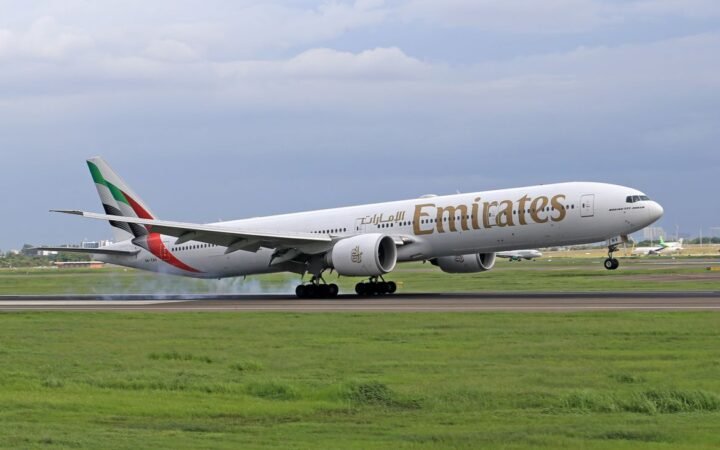
Gulf airlines are moving quickly to rebuild traffic after months of disruption linked to the Iran war, with Emirates, Qatar Airways and Etihad working to restore schedules, reassure passengers and regain market share lost to carriers operating outside the region.
The Middle East’s major aviation hubs were among the most exposed to the conflict. Drone and missile activity led to airspace closures, diversions and reduced operations across parts of the Gulf, forcing airlines to reroute flights and prompting many travelers to reconsider connections through Dubai, Doha and Abu Dhabi. European and Asian carriers also paused or reduced some services to the region, widening the impact far beyond the Gulf itself.
Flight data cited by Reuters shows that major Gulf carriers have recovered much of their pre-war activity. Emirates, Qatar Airways and Etihad are now above or near 90% of earlier flight levels, while some regional carriers have already exceeded their pre-conflict volumes. Qatar Airways has separately said it restored 85% of its pre-crisis network by mid-June and is operating 140 daily departures to more than 160 destinations.
Confidence Becomes the Main Product
The recovery is not only about adding flights back to the schedule. The bigger challenge is convincing passengers that Gulf connections are safe, reliable and worth booking again. For years, the region’s aviation model has depended on high-volume transfer traffic linking Europe, Asia, Africa, Australia and the Americas. When that confidence weakens, travelers can shift quickly to alternative hubs.
Emirates is addressing the issue directly with a new travel insurance product that includes conflict-related medical expense protection, airline-managed hotel stays during disruption and rebooking support on other airlines in certain cancellation scenarios. The policy is being positioned as an answer to a gap in the market, especially for travelers concerned that standard insurance may not cover conflict-related disruptions.
Etihad is also leaning on reassurance, offering complimentary medical travel insurance for international visitors to Abu Dhabi from July through December. At the same time, the airline is adding capacity and launching new routes, including Krakow, Palma de Mallorca, Damascus and Zanzibar, as it seeks to keep growth plans moving despite the recent disruption.
Qatar Airways is pairing network restoration with management changes, appointing new operations and customer leaders to support its next stage of recovery. That focus reflects how Gulf carriers now need both operational reliability and stronger customer communication.
Transit Hubs Face a Fast Rebuild
Industry analysts broadly expect Gulf airlines to recover quickly if regional airspace continues to stabilize. The carriers have large fleets, strong hub infrastructure and deep experience managing complex long-haul networks. They also have the pricing power to tempt travelers back if they offer competitive fares after a period of uncertainty.
Still, the recovery is not automatic. Some official aviation warnings remain in place, and regulators are watching whether the de-escalation becomes durable. For travelers, government advisories, insurance validity and airline disruption policies will continue to shape booking decisions, particularly for long-haul itineraries that depend on one connection point.
The war also affected the wider airline industry through higher fuel prices, route inefficiencies and aircraft repositioning costs. IATA cut its 2026 profit forecast sharply, showing how regional instability can quickly become a global aviation issue.
For the Gulf, the stakes are especially high. Dubai, Doha and Abu Dhabi are not only airline hubs. They are tourism, events, retail and investment centers whose growth strategies depend on global connectivity. Restoring flight volumes is the first step. Rebuilding trust may be the more important test.
Disclaimer: TravelCapybara is an independent media brand owned and operated by NuvexMedia LLC, publishing travel news, destination guides, research, and insights. NuvexMedia LLC may invest in or collaborate with companies across the travel, hospitality, technology, and digital media sectors. These relationships do not influence TravelCapybara’s editorial coverage. While we strive for accuracy, travel requirements, prices, schedules, availability, and local conditions may change without notice. Readers should independently verify information before making travel or purchasing decisions. This content is for informational purposes only and does not constitute professional advice. © 2026 NuvexMedia LLC. All rights reserved.