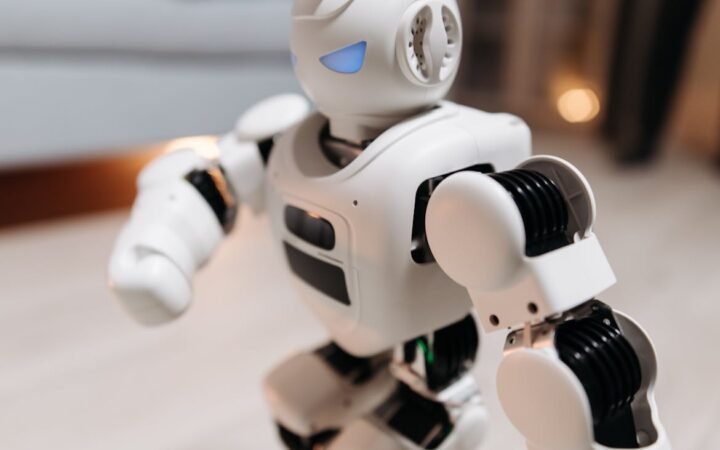
Southwest Airlines has banned humanoid and animal-like robots from its flights, introducing a new policy after viral incidents in which robotic devices were brought into aircraft cabins. The Dallas-based carrier now prohibits customers from transporting “human-like” or “animal-like” robots in the cabin or as checked baggage, regardless of size, purpose or whether the device has its own purchased seat.
The policy follows a widely shared episode involving Stewie, a 3.5-foot humanoid robot owned by Aaron Mehdizadeh, founder of The Robot Studio in North Dallas. Mehdizadeh bought the robot a passenger seat on a Southwest flight from Las Vegas to Dallas Love Field rather than checking it as cargo. Before boarding, Stewie was reportedly fitted with a smaller battery to clear airport security and then walked through the terminal and onto the aircraft, drawing attention from passengers and crew.
Southwest’s new rule defines human-like robots as devices designed to resemble or imitate human appearance, movement or behavior. Animal-like robots are treated similarly. Other robots, including toys, can still be carried if they fit inside a carry-on bag and comply with the airline’s existing battery rules.
Safety Rules Meet a New Kind of Carry-On
Southwest has framed the ban as a safety measure, citing concerns over lithium-ion batteries commonly used in advanced robotic devices. The airline said the size and fire risk of those batteries create a potential onboard hazard. Lithium-ion battery incidents have become a growing concern across aviation, as airlines and regulators manage risks tied to laptops, power banks, scooters, e-bikes and other battery-powered equipment.
The robot incidents also created a practical cabin problem. Because Stewie was classified as a carry-on item, crew members reportedly determined it could not occupy a passenger seat in the same way a person would. The robot was eventually moved to a window position and its battery was disconnected before the flight continued to Dallas.
A separate Southwest flight from Oakland to San Diego also faced disruption after another humanoid robot, Bebop, was brought onboard by a Dallas-based robotics company. That flight was delayed for nearly an hour after crew members raised concerns about where the robot was seated and whether its battery exceeded the airline’s size limits.
Robot owners have pushed back on the airline’s reasoning. Mehdizadeh said the battery used in Stewie was comparable to a laptop battery and argued that the robot did not create a meaningful safety issue. Still, Southwest’s position suggests the carrier wants clearer boundaries before similar situations become more common.
For airlines, the issue goes beyond one viral moment. As humanoid robots, robotic companions and event robots become more visible in public spaces, carriers may increasingly need policies that define how such devices can move through airports, security checkpoints and aircraft cabins.
The Southwest ban also highlights the challenge of applying existing baggage and battery rules to technology that does not fit traditional categories. A robot can be a device, a marketing tool, a piece of event equipment and, in some cases, something that moves like a passenger. Airlines are built around standardized assumptions: people sit in seats, bags go under seats or in overhead bins, and cargo follows separate rules. Humanoid robots complicate that system.
For now, Southwest has chosen a simple answer: no human-like or animal-like robots onboard. The decision may disappoint robotics companies and curious passengers, but it gives crews a clear rule to enforce. As consumer robotics becomes more common, other airlines may eventually face the same question – whether future robots belong in the cabin, in cargo or nowhere near the aircraft at all.
Disclaimer: TravelCapybara is an independent media brand owned and operated by NuvexMedia LLC, publishing travel news, destination guides, research, and insights. NuvexMedia LLC may invest in or collaborate with companies across the travel, hospitality, technology, and digital media sectors. These relationships do not influence TravelCapybara’s editorial coverage. While we strive for accuracy, travel requirements, prices, schedules, availability, and local conditions may change without notice. Readers should independently verify information before making travel or purchasing decisions. This content is for informational purposes only and does not constitute professional advice. © 2026 NuvexMedia LLC. All rights reserved.