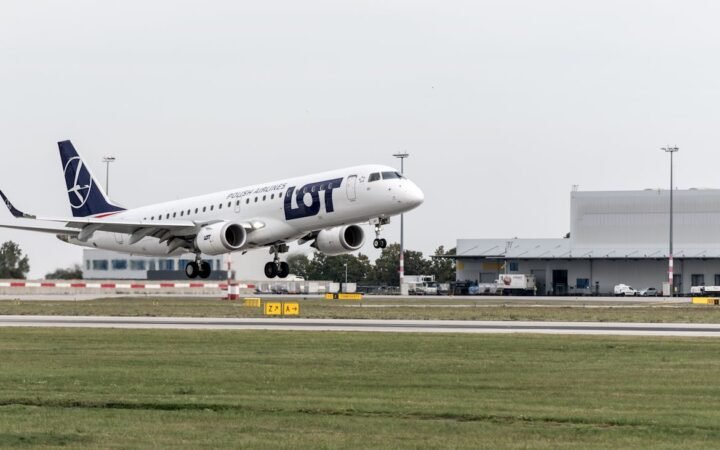
Warsaw Chopin Airport has been ranked the world’s second most reliable major airport for flight connections this summer, giving Poland’s busiest airport a strong position at a time when many larger hubs are struggling with seasonal pressure. The ranking places Warsaw ahead of several better-known global airports and highlights the growing importance of reliability in how travelers choose connecting routes.
The result comes from AirAdvisor’s Summer Connection Air Index 2026, which evaluated 20 of the world’s largest airports based on cancellation rates, average delays and flight volumes. Warsaw Chopin Airport received a score of 9.15 out of 10, finishing behind only Stockholm Arlanda Airport. The two airports were the only hubs in the study to earn the “safest” label for connecting passengers, meaning travelers face the lowest risk of missing onward flights because of delays or cancellations.
For passengers, that distinction matters. Summer has become one of the most difficult seasons for air travel, with crowded schedules, weather disruption, staffing constraints and air traffic congestion often creating cascading delays across major networks. A reliable connection hub can make the difference between a smooth itinerary and a missed flight that disrupts an entire trip.
Warsaw’s performance is notable because the airport does not have the same global profile as Heathrow, Amsterdam Schiphol or other major European transfer hubs. But that may be part of its advantage. According to the report, only about one in 30 flights departing Warsaw last summer experienced major delays. Analysts suggested that the airport benefits from being less exposed to Europe’s most overcrowded air corridors, giving airlines and controllers more room to absorb disruption when problems occur elsewhere.
The ranking also reflects the operational role Warsaw Chopin Airport plays for Poland and Central Europe. As the main hub for LOT Polish Airlines and the country’s key international gateway, it serves both point-to-point travelers and passengers connecting between Europe, North America, the Middle East and Asia. Strong reliability can help Warsaw compete for transit passengers who might otherwise route through larger but more congested hubs.
The airport credited the result to the work of its staff, noting that flight operations depend on teams working around the clock to keep schedules running smoothly. That operational consistency is increasingly valuable as travelers become more cautious about short connections and more aware of disruption risk.
The report also underlined challenges in the United States, where several airports ranked among the least reliable. Miami International Airport, John F. Kennedy International Airport, Chicago O’Hare International Airport and Dallas/Fort Worth International Airport were all listed near the bottom. Dallas/Fort Worth performed worst, with roughly one in six flights last summer delayed by at least an hour.
For Warsaw, the ranking offers both a reputational boost and a practical message. In a summer travel market defined by full flights and fragile schedules, reliability is becoming one of the most important airport advantages.
Disclaimer: TravelCapybara is an independent media brand owned and operated by NuvexMedia LLC, publishing travel news, destination guides, research, and insights. NuvexMedia LLC may invest in or collaborate with companies across the travel, hospitality, technology, and digital media sectors. These relationships do not influence TravelCapybara’s editorial coverage. While we strive for accuracy, travel requirements, prices, schedules, availability, and local conditions may change without notice. Readers should independently verify information before making travel or purchasing decisions. This content is for informational purposes only and does not constitute professional advice. © 2026 NuvexMedia LLC. All rights reserved.