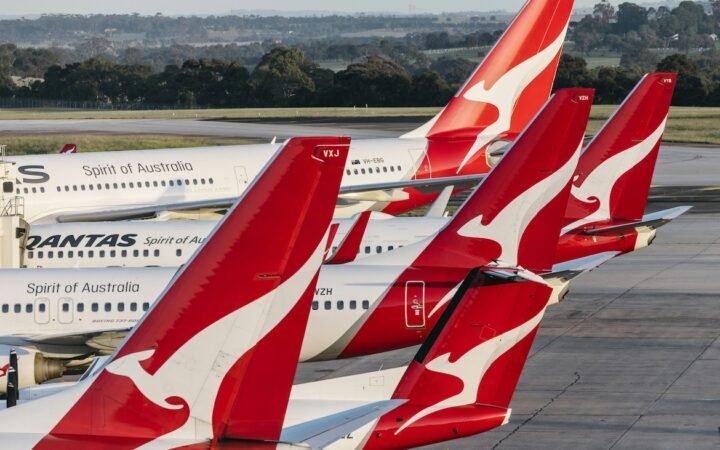
Qantas has confirmed that Sydney-London will be the first commercial route for its long-delayed Project Sunrise program, setting up a 20-plus-hour nonstop flight that will become the longest scheduled passenger service in the world. The airline plans to launch the route in October 2027, with bookings expected to open in February 2027.
The decision gives the historic Kangaroo Route a new chapter. What once took several days and multiple stops between Australia and the United Kingdom will be compressed into a single nonstop journey. Qantas says the direct Sydney–London service will save about four hours compared with current one-stop options, making time savings the central selling point for travelers willing to pay more for the convenience.
Project Sunrise has been in development since 2017 and has faced years of delays tied to the pandemic, aircraft development and supply chain constraints. The first aircraft, an Airbus A350-1000ULR built for Qantas, completed its maiden test flight from Toulouse on June 3, flying over France and the French Atlantic coast for nearly four hours.
A New Version of the Kangaroo Route
The Sydney-London route is symbolically important for Qantas because it connects directly to the airline’s international history. The original Kangaroo Route was once a five-day trip, with several refueling and overnight stops along the way. Turning that journey into a single flight is both an aviation milestone and a brand statement for Australia’s flag carrier.
The new aircraft are designed specifically for the extreme range required. Each A350-1000ULR will include an additional 20,000-liter rear center fuel tank and upgraded systems that allow flights of up to 22 hours. Qantas has ordered 12 of the aircraft, with the first now expected to arrive in April 2027. The next four are expected to follow quickly, though three aircraft are needed to operate a daily nonstop service.
Before the ultra-long-haul flights begin, Qantas plans to use the new aircraft on shorter trans-Tasman services between Australia and New Zealand. That will give pilots, cabin crew and operational teams time to build experience on the aircraft before the airline begins its most demanding missions.
Passenger Comfort Becomes the Real Test
Qantas is not only selling a new route. It is asking passengers to accept one of the longest periods ever spent on a commercial aircraft. To make that viable, the airline has configured the aircraft with just 238 seats, far fewer than many other A350-1000 layouts. The lower density is intended to create more space across cabins and support a more comfortable ultra-long-haul experience.
The aircraft will also include circadian-rhythm LED lighting, nutrition-led menus and a dedicated Wellbeing Zone where passengers can stretch and hydrate during the flight. These features reflect years of research into sleep, movement, hydration and jet lag, all of which become more important when a flight stretches beyond 20 hours.
The commercial challenge is pricing. Qantas expects Project Sunrise fares to be roughly 20% higher than one-stop alternatives, particularly in premium cabins. Aviation analysts say the airline is effectively selling time: fewer connections, less airport stress and a faster total journey between Australia and Europe.
Competition will still be intense. Middle Eastern and Asian hubs have built large businesses around connecting Australia with Europe, and carriers serving those markets are unlikely to give up traffic easily. Singapore Airlines currently operates the world’s longest flight between Singapore and New York, but Qantas will take the title once Sydney-London begins.
If Project Sunrise succeeds, it could reshape how high-value travelers think about distance. The flight will not make Australia closer to Europe, but it will make the journey simpler. For business travelers, premium leisure passengers and Australians visiting family abroad, that may be enough to turn one of aviation’s longest ambitions into a profitable new route.
Disclaimer: TravelCapybara is an independent media brand owned and operated by NuvexMedia LLC, publishing travel news, destination guides, research, and insights. NuvexMedia LLC may invest in or collaborate with companies across the travel, hospitality, technology, and digital media sectors. These relationships do not influence TravelCapybara’s editorial coverage. While we strive for accuracy, travel requirements, prices, schedules, availability, and local conditions may change without notice. Readers should independently verify information before making travel or purchasing decisions. This content is for informational purposes only and does not constitute professional advice. © 2026 NuvexMedia LLC. All rights reserved.