Slovenia’s Julian Alps: Beyond the Familiar Photograph of Lake Bled
Bohinj’s lakeshore, farming villages and the mountain views around Kranjska Gora reveal a different side of Slovenia’s Julian Alps beyond Bled’s island church.
Key Notes
- Bled, Bohinj and Kranjska Gora offer three different ways to experience Slovenia’s Julian Alps.
- Combine lakeside scenery with Bohinj’s dairy heritage, village stays and the wetlands at Zelenci.
- Choose dates around the experiences you want and check mountain access, seasonal services and local conditions.
The island church on Lake Bled has become such a familiar image that it can seem to stand for the whole of Slovenia’s mountain country. It is a beautiful introduction. Stay a little longer, though, and a more varied holiday starts to emerge: a broad lakeshore beneath wooded slopes, villages shaped by dairy farming, and clear water reflecting the sharp peaks above Kranjska Gora.
The attraction of Slovenia’s Julian Alps is that these experiences can belong to the same journey without every day becoming a mountain expedition. You can give Bled the time it deserves, then find a different mood around Bohinj or in the Upper Sava Valley. There is room for a good hotel, a local meal and an afternoon spent looking at the landscape rather than trying to reach its highest point.
This is a selection of places and experiences to build a holiday around, with three distinct bases to consider. The best choice depends less on which photograph you want to reproduce than on what you would enjoy doing after putting the camera away.
Bled: Enjoy the Familiar View, Then Give It More Time
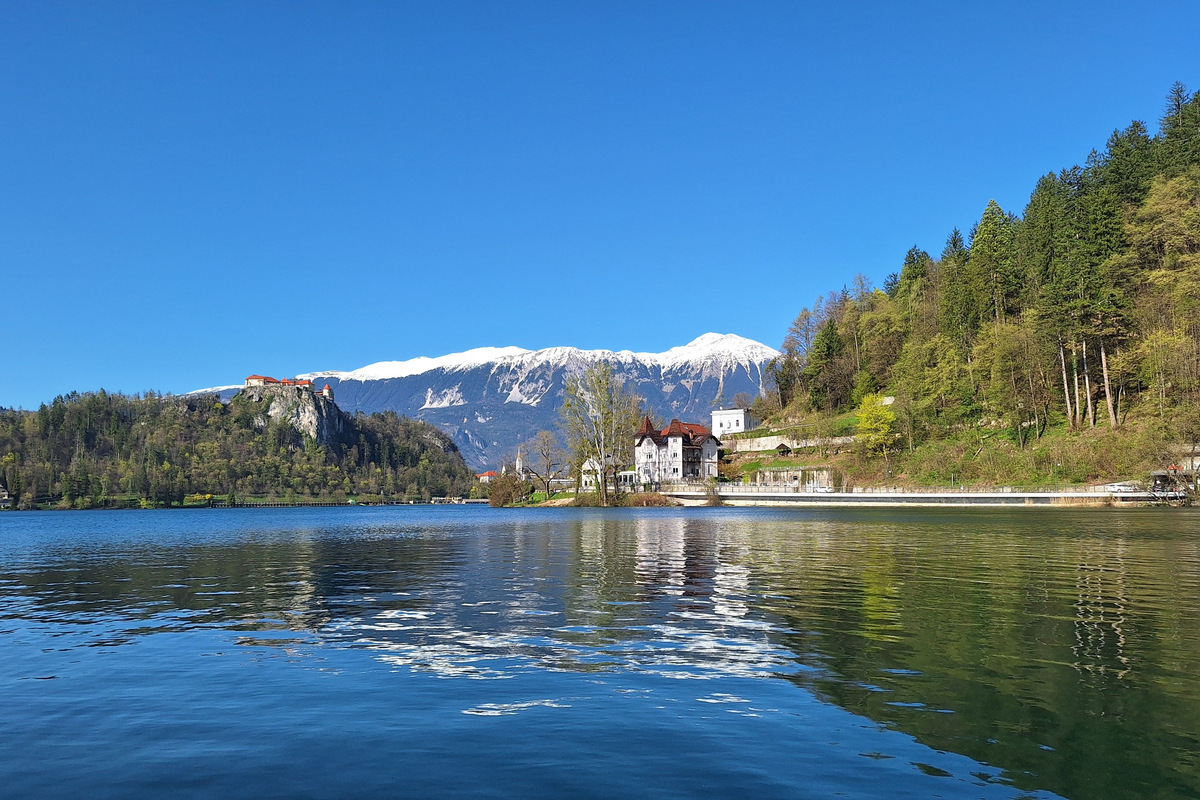
There is no need to avoid Bled simply because you recognise it. The island, the church tower and the castle above the shore are compelling in person, and the view changes as you move around the water. A longer stay gives you the chance to see those changes without making one viewpoint the entire purpose of the visit.
The local tourism board describes a 6km lakeside walk. You can walk a section or, when conditions suit, make a full circuit, stopping where the light or a bench persuades you to stay. It is a different experience from climbing to a high viewpoint, and often a more natural fit for a relaxed mountain holiday.
A pletna boat adds another perspective. These locally made wooden boats are part of Bled’s identity, with their colourful awnings and standing oarsmen. Check the service for your dates rather than treating the crossing as a guaranteed part of any season.
Leave time for something ordinary as well. The original Bled cream cake is served at Kavarna Park, and a coffee-and-cake stop is a perfectly respectable use of an afternoon. Bled suits the traveller who wants a recognisable lakeside setting, places to sit down and a holiday that includes scenery without being organised entirely around outdoor activity.
Bohinj: Let the Lake Set the Pace
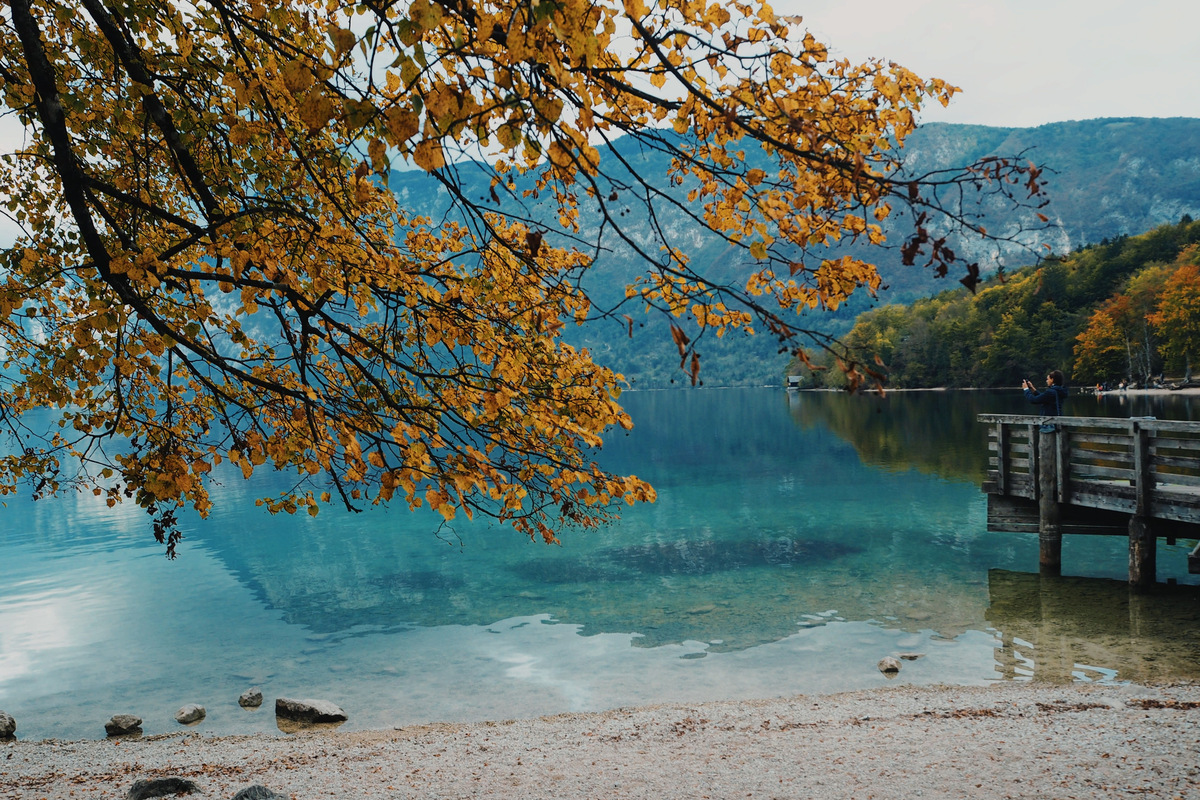
At Bohinj, the lake and the surrounding slopes do much of the work. The pleasure is in having enough time for the water: an autumn shore framed by yellow leaves, a morning reflection, or a stretch of lakeside walking that does not need to end at a famous attraction.
Lake Bohinj is Slovenia’s largest permanent natural lake, within Triglav National Park. Ribčev Laz provides a recognisable starting point beside the church and stone bridge at its eastern end, while the wider area gives you villages and countryside to explore beyond the shore.
It helps to understand the name before choosing somewhere to stay. Bohinj is a region of settlements and valleys, rather than one town called Bohinj. A room near the lake, an apartment in Stara Fužina and accommodation in Bohinjska Bistrica will create different mornings and different journeys back after dinner. Look at the actual location of a property, not just the destination attached to its listing.
For a hotel-based stay, Hotel Bohinj sits in Ribčev Laz close to the lake, with dining and wellness among its facilities. It offers a concrete option for pairing time outdoors with a comfortable place to return to. Compare room categories, views and what is included before deciding whether it fits your trip.
Bohinj is the choice here for travellers drawn to lake days and village life. We included it in our earlier selection of peaceful places; staying in the area allows that idea to become more than a brief stop beside the water.
Stara Fužina and Studor: Find the Life Behind the Landscape
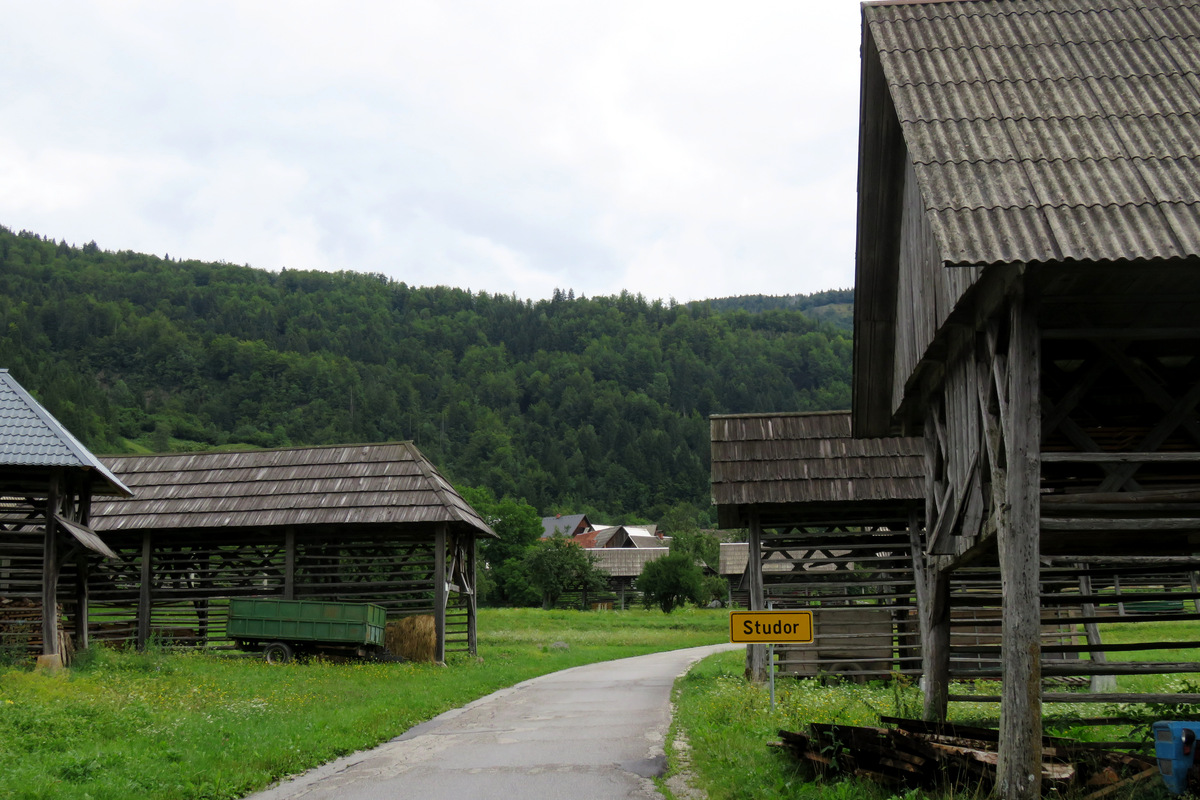
The villages around Bohinj give the mountains a human scale. Wooden structures, farm buildings and the shape of the fields are part of a working landscape, with a history that becomes more interesting once you know what you are looking at.
In Stara Fužina, the Alpine Dairy Museum explains the relationship between the valley and its mountain pastures. Original cheese-making equipment and a furnished herdsman’s hut help turn a distant Alpine scene into something more tangible: a place where people lived, worked and moved livestock with the seasons.
Nearby Studor adds another part of that story. Its hayracks are distinctive features of the village landscape, while Oplen House preserves a farmhouse where living and working spaces share a roof. Check the museums’ current opening arrangements before making a special journey.
Food provides a useful connection to the same traditions. Farm Gartner in Studor produces mohant cheese, a geographically protected Bohinj speciality with a distinctive flavour. The farm also lists apartments in Studor and Stara Fužina, offering an alternative to a hotel stay. Ask directly about shop or tasting arrangements rather than assuming you can drop in for every experience.
A village-based stay will appeal if you want the countryside to be part of daily life on holiday. It means choosing the place for more than a view, and leaving time to understand the buildings, food and communities around it.
Kranjska Gora and Lake Jasna: Big Mountain Views Close to the Valley
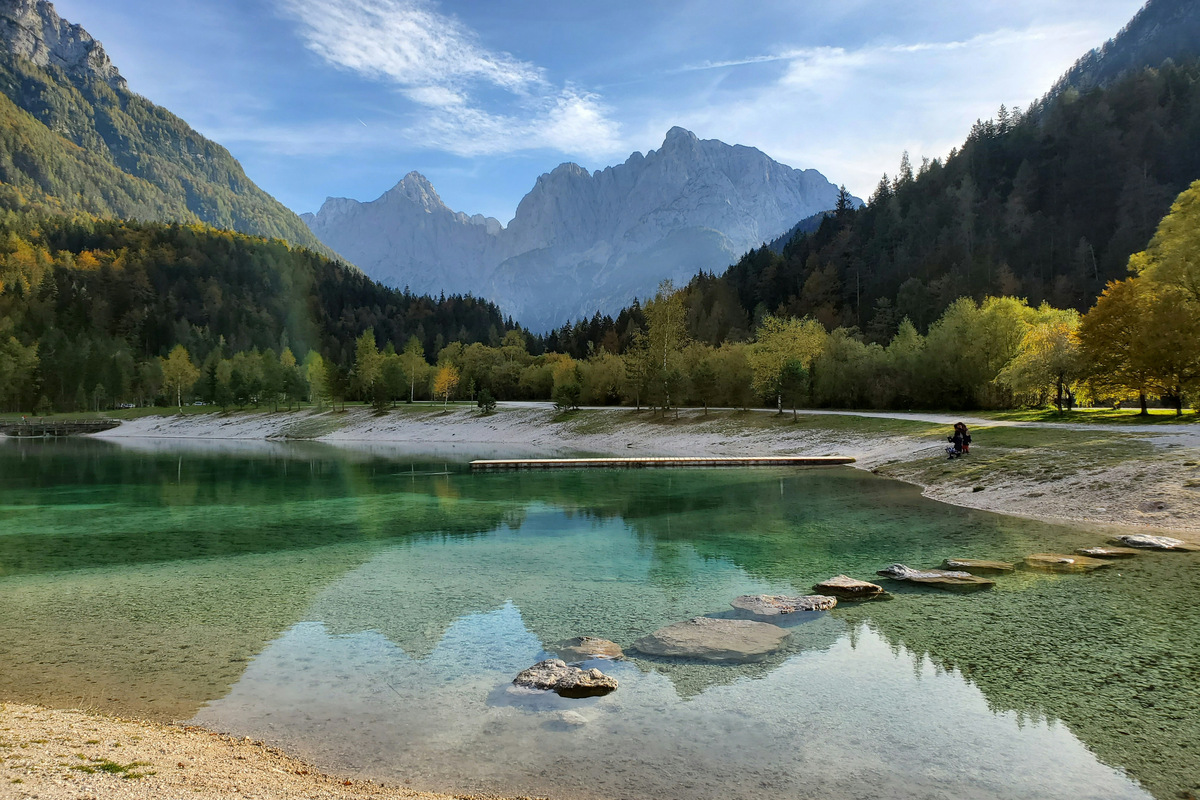
For another side of the region, look towards Kranjska Gora. Here the appeal is the proximity of the mountain scenery to a resort base, with Lake Jasna offering one of the clearest reasons to step outside and spend time looking up.
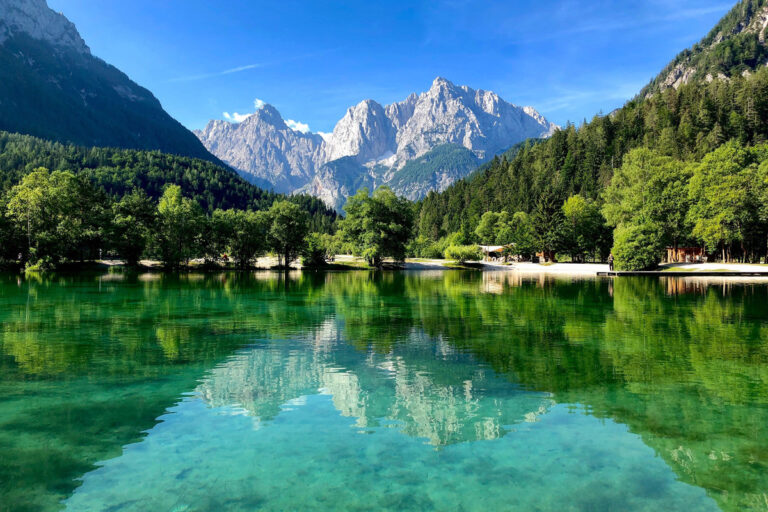
Lake Jasna consists of two connected artificial lakes near the meeting of the Velika and Mala Pišnica streams. The local tourism organisation describes a walking approach from Kranjska Gora’s centre, making the lakes a natural part of a stay rather than an excursion that requires a mountain ascent.
The water gives the peaks a foreground: pale rock above, changing reflections below, and paths where you can stop without needing to press on towards a summit. Razor and Prisank form part of the mountain backdrop. Choose a clear spell for the full effect, but allow the place more than the time it takes to take one photograph.
Kranjska Gora is worth considering if you like the idea of a mountain resort as your base, with valley outings shaping the days. Skiing can be part of a winter trip, but the landscape is also a reason to come at other times. Decide which activities matter to you, then check their season and access; a dramatic photograph alone does not tell you whether a particular path or mountain service will suit your dates.
Zelenci: A Different Kind of Alpine Water
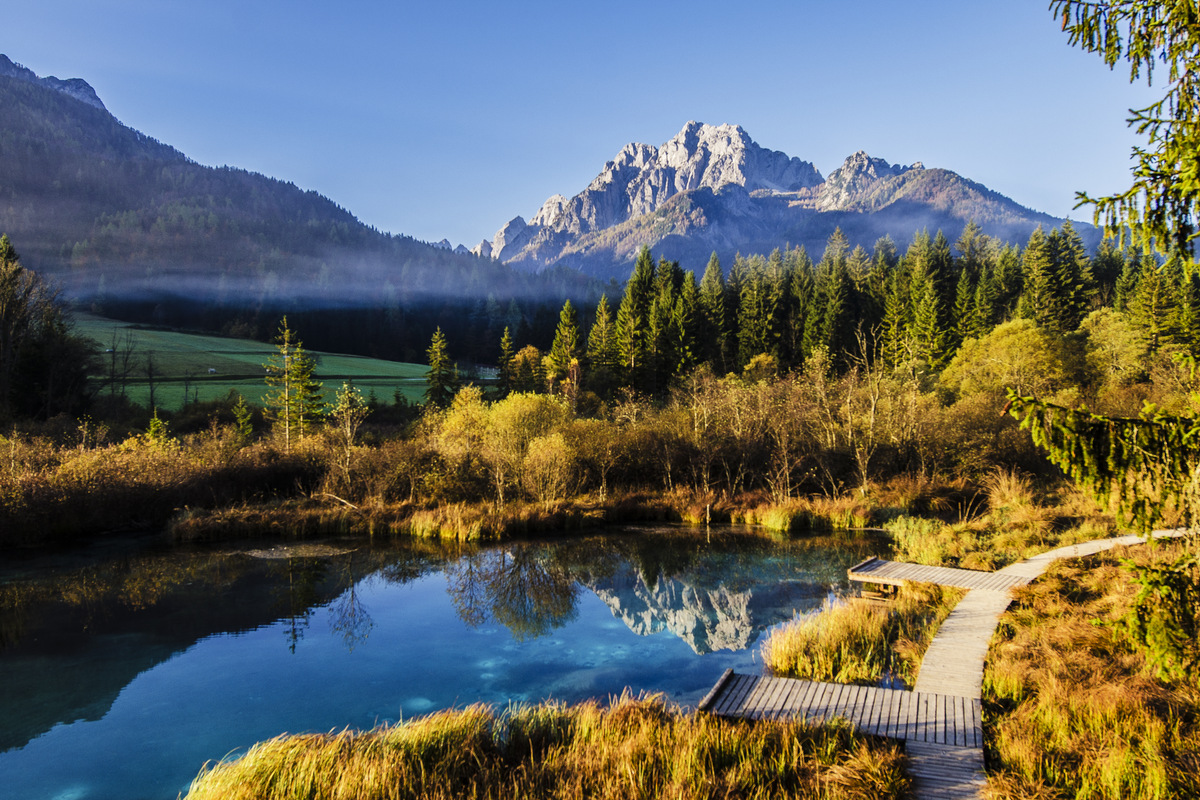
Near Podkoren, Zelenci changes the scale again. This is a spring and wetland landscape, with remarkably coloured water, reeds, trees and mountains sharing the view. After the larger lakes, its smaller details invite a closer look.
The official reserve information describes cold spring water rising through chalky material on the lake bed, giving it a blue-green appearance. A forest approach and wooden walkway provide a way to see the water while protecting the surrounding habitat.
Keep to those designated routes and give other visitors room on the walkway. The attraction is the reserve itself, including the marsh and its setting, rather than just the spot from which the most familiar image is taken.
Zelenci fits particularly well with a Kranjska Gora stay. It offers a different experience from Jasna without requiring the holiday to become a succession of long drives. The tourism board notes that the spring water remains unfrozen in winter, but that does not guarantee an ice-free approach: choose footwear and plans for the conditions on the day.
Choose the Season for the Experience You Want
The same places can produce very different holidays. For time beside the water and a wider choice of outdoor activities, look at the warmer part of the year. For autumn colour, plan around the foliage season while accepting that its timing and the weather vary. Winter shifts the emphasis towards snow, resort life and the places that remain accessible in the valleys.
Late autumn deserves particular thought. Bohinj’s seasonal information notes shorter autumn days, and its climate overview records that the first snow can fall as early as October. A November trip can therefore be appealing for lakes, villages, food and a well-chosen stay, but it should not depend on summer hiking conditions or guaranteed winter sports.
For mountain excursions, use Triglav National Park’s current conditions page, which brings together weather, trail and road information. Check any lift, gorge or museum that is central to your plans separately. A route being marked on a map does not establish that it is appropriate for a winter walk.
Our Dolomites November article explores a similar question about travelling between the main mountain seasons. In Slovenia, too, the most satisfying trip starts with choosing experiences that make sense for the month.
Let One Part of the Region Become Your Base
Choose Bled if a classic lakeside holiday, boat views and café stops are what you look forward to. Choose the Bohinj area if you want the lake, farming villages and local food to shape more of the stay. Choose Kranjska Gora if resort life and the landscapes around Jasna and Zelenci are the strongest draw.
You can combine areas, especially on a longer holiday, but there is no need to fit every lake into one day. Check the transport connections for your actual dates and leave enough time to enjoy the place you return to each evening.
Bled’s photograph can still be the beginning. The reward for going beyond it is finding which part of the Julian Alps makes you want to stay.
Disclaimer: TravelCapybara is an independent media brand owned and operated by NuvexMedia LLC, publishing travel news, destination guides, research, and insights. NuvexMedia LLC may invest in or collaborate with companies across the travel, hospitality, technology, and digital media sectors. These relationships do not influence TravelCapybara’s editorial coverage. While we strive for accuracy, travel requirements, prices, schedules, availability, and local conditions may change without notice. Readers should independently verify information before making travel or purchasing decisions. This content is for informational purposes only and does not constitute professional advice. © 2026 NuvexMedia LLC. All rights reserved.