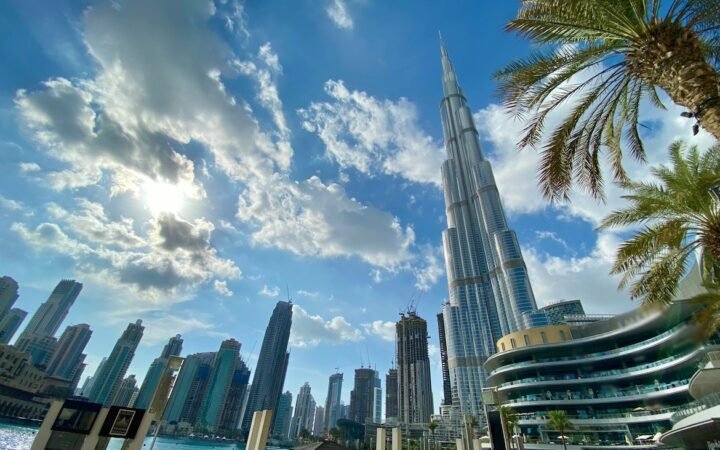
Dubai has been ranked among the world’s 10 most welcoming cities for expats, reinforcing its position as one of the most attractive relocation destinations for international professionals, entrepreneurs and families. The emirate placed seventh in a new global ranking by international insurance provider William Russell, earning a score of 7.61 out of 10.
The study looked at how easily newcomers can settle into major cities, using factors such as expat experiences, migrant population size, foreign-born employment, local attitudes toward immigrants, safety and visa openness. Dubai’s placement puts it ahead of Warsaw, Seoul and Hong Kong, while Zurich, Singapore, Tokyo, Copenhagen, Munich and Prague ranked above it.
The result reflects a broader shift in how global mobility is being measured. Expats are not only looking for jobs or tax advantages. They are also weighing safety, social connection, daily convenience, healthcare, schools, transport, bureaucracy and whether a city has enough international infrastructure to make relocation feel manageable.
The Top 10 Most Welcoming Cities for Expats
1. Zurich, Switzerland
2. Singapore, Singapore
3. Tokyo, Japan
4. Copenhagen, Denmark
5. Munich, Germany
6. Prague, Czech Republic
7. Dubai, United Arab Emirates
8. Warsaw, Poland
9. Seoul, South Korea
10. Hong Kong
Dubai’s strongest performance came in safety. The city recorded the highest safety score globally in the study, at 83.8 out of 100, well above the average benchmark of 60.04 across the cities analyzed. For newcomers, that matters because personal security shapes daily life almost immediately.
A high safety score affects more than perception. It influences how easily residents commute, socialize, explore neighborhoods, use public services and build routines without feeling restricted. For families, it can also affect decisions about where children go to school, how freely they move around the city and whether a temporary relocation starts to feel like a long-term home.
Dubai’s reputation for stability is also important because the city sits in a region that can experience wider geopolitical uncertainty. The ranking suggests that, at a city level, Dubai continues to stand out for public safety, infrastructure and a governance model designed around stability for residents, visitors and international businesses.
Dubai’s Expat Appeal Goes Beyond Business
Dubai’s score also reflects its large expatriate population. The city is home to residents from around the world, giving new arrivals access to established communities, familiar services and workplaces used to international teams. That can reduce the isolation many people feel during the first months after moving abroad.
The William Russell ranking also shows that global fame does not automatically make a city feel welcoming. London, Paris and New York scored much lower, with the study pointing to higher social friction and weaker safety indicators. Those cities remain powerful economic and cultural centers, but they may be harder places for newcomers to navigate day to day.
Dubai’s advantage is that it combines business opportunity with a clear international orientation. Visa reforms, long-term residency options, investor-friendly policies and a strong service economy have made it easier for professionals and entrepreneurs to consider the emirate as more than a short-term posting.
For travel and mobility, the ranking is another signal that Dubai’s global appeal is broadening. The city is no longer just competing for tourists, luxury shoppers and business events. It is also competing for residents who want a place where work, lifestyle, safety and international connection fit together.
That competition will only intensify as more cities try to attract skilled workers and mobile families. Dubai’s top-10 placement suggests that its formula – safety, infrastructure, connectivity and multicultural scale – continues to resonate with people looking for a new place to live.
Disclaimer: TravelCapybara is an independent media brand owned and operated by NuvexMedia LLC, publishing travel news, destination guides, research, and insights. NuvexMedia LLC may invest in or collaborate with companies across the travel, hospitality, technology, and digital media sectors. These relationships do not influence TravelCapybara’s editorial coverage. While we strive for accuracy, travel requirements, prices, schedules, availability, and local conditions may change without notice. Readers should independently verify information before making travel or purchasing decisions. This content is for informational purposes only and does not constitute professional advice. © 2026 NuvexMedia LLC. All rights reserved.