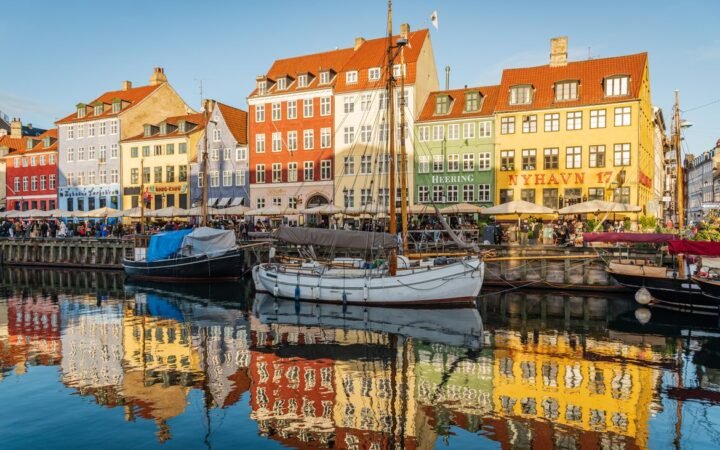
Copenhagen has been named the world’s most liveable city for 2026, holding the No. 1 position for the second year in a row in the Economist Intelligence Unit’s Global Liveability Index. The Danish capital again beat Vienna, which previously dominated the ranking, and reinforced its reputation as a city where infrastructure, public services and everyday quality of life work together unusually well.
The annual index ranks 173 cities around the world using categories such as stability, healthcare, culture and environment, education and infrastructure. Copenhagen received perfect scores in stability, infrastructure and education, while also performing strongly on culture and environment. For travelers, that helps explain why the city often feels easy to enjoy: it is compact, bike-friendly, clean, safe and built around public spaces that residents actually use.
The result also reflects a broader travel trend. Visitors are increasingly drawn to cities that feel manageable rather than overwhelming. Copenhagen’s appeal is not only about famous attractions, design hotels or restaurants. It is about the rhythm of the place: cycling to the waterfront, swimming in the harbor, walking through neighborhoods, using efficient public transport and moving between daily life and leisure without friction.
The Top 10 Most Liveable Cities in 2026
1. Copenhagen, Denmark
2. Vienna, Austria
3. Melbourne, Australia
4. Sydney, Australia
5. Zurich, Switzerland
6. Geneva, Switzerland
7. Osaka, Japan
8. Adelaide, Australia
9. Vancouver, Canada
10. Tokyo, Japan
The list shows the continued strength of European, Australian and Japanese cities in quality-of-life rankings. Vienna remains in second place, supported by strong healthcare, education, public transport and cultural life. Melbourne and Sydney both rank highly, reflecting Australia’s continued appeal through outdoor lifestyles, diverse neighborhoods, healthcare and education.
Switzerland also performs strongly, with Zurich in fifth place and Geneva in sixth. Both cities combine efficient services, access to water and mountains, and high standards of urban maintenance. Osaka and Tokyo keep Japan firmly in the top 10, while Adelaide gives Australia a third entry. Vancouver, at No. 9, is the only North American city to reach the global top 10.
For travel planning, the ranking is useful because liveability often overlaps with visitor experience. Cities that score well on infrastructure, safety and public services are usually easier to navigate, especially for short trips. Good transit, walkable districts, reliable healthcare and clean public spaces can make a city break feel smoother, even if travelers never think about those factors directly.
The ranking also points to destinations where local life can be part of the attraction. In Copenhagen, that might mean exploring Nørrebro, biking to Nordhavn, eating smørrebrød, or joining residents around the harbor on a summer afternoon. In Vienna, it could mean taking a tram along the Ringstraße, visiting a neighborhood market or slowing down in a coffeehouse.
Copenhagen’s repeat win does not mean it is the only city worth visiting. It does show that modern travel is not just about spectacle. Sometimes the best city breaks are the ones where daily life feels beautifully designed.
Disclaimer: TravelCapybara is an independent media brand owned and operated by NuvexMedia LLC, publishing travel news, destination guides, research, and insights. NuvexMedia LLC may invest in or collaborate with companies across the travel, hospitality, technology, and digital media sectors. These relationships do not influence TravelCapybara’s editorial coverage. While we strive for accuracy, travel requirements, prices, schedules, availability, and local conditions may change without notice. Readers should independently verify information before making travel or purchasing decisions. This content is for informational purposes only and does not constitute professional advice. © 2026 NuvexMedia LLC. All rights reserved.