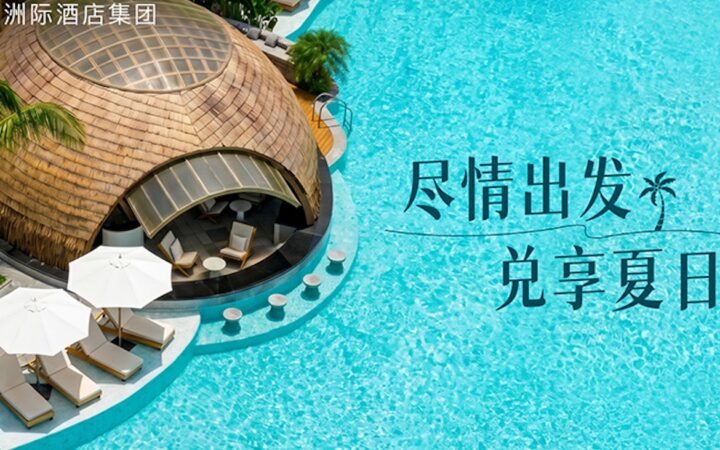
IHG Hotels & Resorts is sharpening its focus on younger travelers in Greater China with a new set of initiatives built around affordability, shared interests and easier trip planning. The strategy targets a large and influential consumer group: Greater China is home to more than 230 million Gen Z consumers, many of whom see travel as a way to express identity, connect with friends and mark life milestones.
The hotel group is using IHG One Rewards as the center of that push. Rather than treating loyalty only as a points program, IHG is trying to make membership feel more relevant to younger travelers’ daily interests, budgets and trip occasions. That includes esports perks, student hotel discounts and curated travel ideas across major Chinese city clusters.
The timing reflects a broader shift in hospitality. Younger guests are often more price-sensitive than older business travelers, but they are also highly engaged when brands connect with their interests. Graduation trips, friend getaways, short urban escapes and career-break travel all create opportunities for hotel companies to reach guests early and build long-term loyalty.
Esports Gives IHG a Youth Culture Entry Point
One of IHG’s most visible moves is the expansion of its partnership with the King Pro League, one of Greater China’s major esports competitions. Through IHG One Rewards, the company is offering exclusive perks during the KPL Summer Season, using gaming culture as a way to make loyalty benefits feel more immediate and lifestyle-driven.
That matters because esports is not a niche interest among younger Chinese consumers. It is part of a wider entertainment ecosystem that includes livestreaming, social media, fandom and offline events. By tying hotel rewards to KPL, IHG is positioning itself closer to the places where younger travelers already spend attention.
The partnership also stretches the idea of hotel loyalty beyond room nights. For younger guests, membership value may come from access, recognition, discounts or event-related benefits, not only from future free stays. IHG is betting that those touchpoints can make its brands feel more familiar before a traveler is ready to become a frequent hotel guest.
Student Discounts and City Routes Build the Travel Funnel
IHG is also offering a 20% student accommodation discount through the IHG One Rewards WeChat mini-program. The discount applies across brands including Holiday Inn Hotels & Resorts, Holiday Inn Express Hotels, EVEN Hotels, Atwell Hotels and Garner Hotels.
The brand mix is important because it gives younger travelers different price points and stay styles. Holiday Inn and Holiday Inn Express support practical city trips and group travel, EVEN Hotels can appeal to wellness-minded guests, Atwell Hotels brings a more social and flexible lifestyle angle, and Garner Hotels focuses on efficient, value-led stays.
IHG is pairing those offers with eight curated itineraries across major city clusters. The destinations include Xi’an, Chengdu, Chongqing, Xiamen, Quanzhou, Fuzhou, Beijing, Tianjin, Qingdao, Shanghai, Hangzhou and Nanjing. The itineraries combine hotel stays with local culture, neighborhood discovery and destination highlights, giving younger travelers more structured inspiration for summer trips.
That approach solves a real planning problem. Young travelers may be eager to travel but still want help deciding where to go, what to do and how to keep the trip affordable. By packaging destination ideas around local experiences and accessible hotels, IHG can move from simply selling rooms to shaping the trip itself.
The strategy also supports IHG’s longer-term goal in China. If the company can connect with younger travelers through WeChat, esports, student offers and culturally relevant itineraries, it may build loyalty before those guests age into higher-spending leisure, family and business travel. In a competitive hotel market, that early relationship could matter as much as the next booking.
Disclaimer: TravelCapybara is an independent media brand owned and operated by NuvexMedia LLC, publishing travel news, destination guides, research, and insights. NuvexMedia LLC may invest in or collaborate with companies across the travel, hospitality, technology, and digital media sectors. These relationships do not influence TravelCapybara’s editorial coverage. While we strive for accuracy, travel requirements, prices, schedules, availability, and local conditions may change without notice. Readers should independently verify information before making travel or purchasing decisions. This content is for informational purposes only and does not constitute professional advice. © 2026 NuvexMedia LLC. All rights reserved.