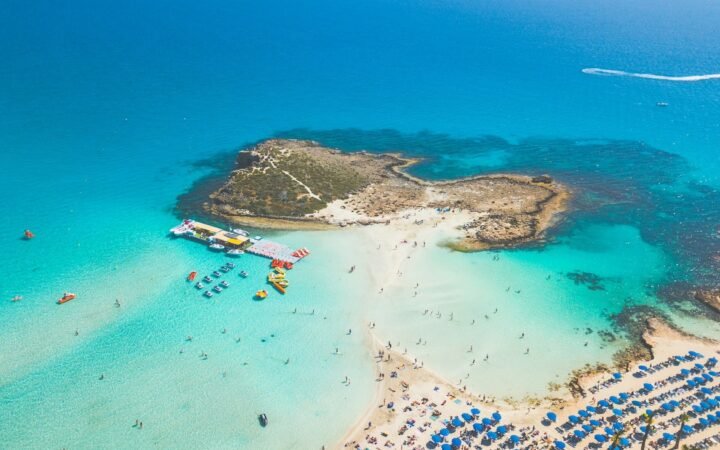
Cyprus and Greece have emerged as two of Europe’s strongest performers for bathing water quality, giving summer travelers another reason to look toward the eastern Mediterranean. The latest European bathing water assessment found that Cyprus achieved a perfect result, with all 123 monitored bathing sites rated “excellent” in 2025, while Greece ranked close behind with 97.1% of its monitored sites receiving the same top classification.
The findings come from the European Environment Agency’s annual bathing water report, which reviewed more than 22,200 coastal and inland swimming locations across the European Union, along with Albania and Switzerland. Across Europe, 85% of monitored bathing waters were rated excellent, while 96% met at least the minimum quality standards required for safe swimming. Only 1.5% were classified as poor.
For travelers, the data is more practical than it may first appear. Bathing water quality affects beach choice, family travel confidence and destination reputation, particularly during the peak summer season. The ratings are based on levels of E. coli and intestinal enterococci, bacteria used to indicate possible fecal contamination. Poor water quality can increase the risk of gastrointestinal illness, ear infections, eye irritation and respiratory discomfort.
Mediterranean Beaches Keep a Strong Advantage
Coastal waters generally outperformed inland lakes and rivers in the report, which helps explain the strong showing from island and coastal destinations. In 2025, 88% of coastal bathing waters in the EU were rated excellent, compared with 78% of inland bathing waters. Coastal areas often benefit from stronger natural circulation and self-purification, while rivers, lakes and ponds can be more sensitive to heavy rainfall, drought and agricultural runoff.
Cyprus’ 100% excellent rating is especially valuable for a country whose tourism economy is closely tied to beaches, resort stays and clean coastal access. From family-friendly swimming areas to resort beaches and more remote coves, the island’s water quality record supports its image as a reliable summer destination.
Greece’s performance is equally significant because of the scale of its coastline and the number of monitored sites. With more than 1,700 swimming locations assessed, the country’s 97.1% excellent rating confirms that its islands and mainland beaches remain among Europe’s cleanest. The absence of any poor-rated sites also gives travelers added confidence when choosing between better-known islands, smaller coastal towns and lesser-visited beach regions.
Clean Water Becomes a Travel Selling Point
The report also highlights the role of long-term environmental policy in shaping travel appeal. EU bathing water rules, wastewater treatment investment, improved sewage systems and regular monitoring have helped raise standards across the region. For destinations such as Cyprus and Greece, those improvements are not only environmental gains. They are also tourism assets.
Other strong performers included Bulgaria, Austria and Croatia, all of which had at least 95% of bathing sites rated excellent. Austria stood out for inland water quality, while countries such as Finland, Denmark, Luxembourg and Germany also scored well for lakes and rivers. At the lower end of the table, Albania recorded the weakest overall performance, with a far smaller share of sites rated excellent and a higher proportion classified as poor.
For travelers, the main takeaway is that Europe remains broadly safe for swimming, but local checks still matter. Water quality can change after storms, heatwaves or local pollution events, especially at rivers and lakes. Before planning beach days, families and tour operators may still want to review individual bathing sites rather than relying only on national rankings.
For Cyprus and Greece, however, the latest results strengthen an already powerful travel message. Their beaches are not only scenic and culturally connected to the Mediterranean summer. They are also among the cleanest and safest places to swim in Europe.
Disclaimer: TravelCapybara is an independent media brand owned and operated by NuvexMedia LLC, publishing travel news, destination guides, research, and insights. NuvexMedia LLC may invest in or collaborate with companies across the travel, hospitality, technology, and digital media sectors. These relationships do not influence TravelCapybara’s editorial coverage. While we strive for accuracy, travel requirements, prices, schedules, availability, and local conditions may change without notice. Readers should independently verify information before making travel or purchasing decisions. This content is for informational purposes only and does not constitute professional advice. © 2026 NuvexMedia LLC. All rights reserved.