Key Notes
- Croatia Airlines’ revised January schedule replaces ETF Airways’ leased ATR 72-600 with its own Q400s, changing the aircraft assigned to regional services rather than announcing route closures.
- The switch comes during an unfinished fleet renewal, with the airline’s planned 15-aircraft A220 fleet due to be completed in 2027.
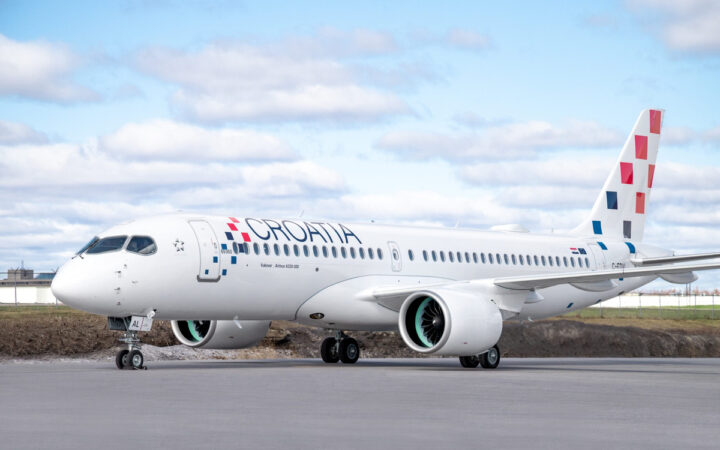
Croatia Airlines is set to end its ETF Airways wet lease from January 1, 2027, with its own Dash 8 Q400s replacing the leased ATR 72-600 in the revised schedule. The change comes as Croatia’s flag carrier approaches the final stage of its Airbus A220 fleet renewal.
EX-YU Aviation identified the change, which follows the start of ETF-operated flights on April 13. No official explanation for ending the cooperation has been announced.
What Changes on Regional Flights
The 70-seat ATR had been listed for 809 flight sectors in January–March, with Vienna, Munich, Sarajevo and Zurich among its planned destinations. Under the wet lease, ETF provides the aircraft, crew, maintenance and insurance.
For passengers, replacing one aircraft with another does not itself mean a route is being cancelled. The immediate change described in the schedule is the substitution of Croatia Airlines’ Q400s for the ATR. It also means that booking an early-2027 flight does not necessarily guarantee an A220.
The A220 Renewal Is Nearing Completion
The broader fleet programme has a different destination: a single family of Airbus jets. An October fleet update distributed by the Croatian National Tourist Board confirmed that two arrivals had brought the A220 total to 13. The aircraft, named Karlovac and Sisak, each have 149 seats.
That update outlined one further delivery before the end of 2026 and completion of the programme during 2027. The planned fleet comprises 13 A220-300s and two smaller A220-100s. Keeping Q400s assigned to some winter services therefore sits within a transition that is still under way.
The project began with the first A220 delivery in July 2024. In its delivery announcement, Airbus described the programme as the largest in the airline’s history. It said the aircraft would offer lower fuel consumption per seat than previous-generation models, alongside wider seats, larger windows and more cabin baggage space.
The operational change also arrives during a management handover. As we covered in our earlier report, chief executive Jasmin Bajić is due to leave on December 5.
What Travellers Should Check
If a particular aircraft or cabin layout matters to your trip, check the equipment and operating-carrier information for your exact flight before booking, then review it again before departure. Passengers who have selected seats or arranged special assistance should also confirm those details if their booking shows an aircraft change.
Disclaimer: TravelCapybara is an independent media brand owned and operated by NuvexMedia LLC, publishing travel news, destination guides, research, and insights. NuvexMedia LLC may invest in or collaborate with companies across the travel, hospitality, technology, and digital media sectors. These relationships do not influence TravelCapybara’s editorial coverage. While we strive for accuracy, travel requirements, prices, schedules, availability, and local conditions may change without notice. Readers should independently verify information before making travel or purchasing decisions. This content is for informational purposes only and does not constitute professional advice. © 2026 NuvexMedia LLC. All rights reserved.