Key Notes
- The study assesses 2,588 regions and classifies 36% as squeezed by 2050 under moderate emissions, rising to 62% under a high-emissions stress test.
- Mediterranean destinations face changing holiday seasons, while longer-term projections show fewer climatically suitable beach months in Southeast Asia and natural-skiing months in the Alps.
- The results measure climate pressures and activity suitability, leaving local adaptation capacity and several coastal hazards outside the current global assessment.
More than a third of the tourism regions assessed in a new global study could face a double squeeze by 2050: greater exposure to climate hazards and less comfortable conditions for the activities that bring visitors there. Under a moderate-emissions pathway, 36% fall into that category. Under high emissions, the share rises to 62%.
The first Destination Climate RiskScan results, released on November 18, cover 2,588 subnational regions across 263 countries and territories. Developed by Travel Forward, Risklayer and the Centre of Expertise Leisure, Tourism and Hospitality, the global report examines how changing climate conditions could reshape tourism seasons and investment decisions.
What a “Squeezed” Destination Means
The researchers use “destination” to mean an administrative region, such as a province or state. Each counts once, regardless of its size. The headline percentage therefore describes the regions studied, rather than the proportion of individual resorts or holidays affected.
A region is classified as squeezed when its climate-hazard exposure score rises by at least five points on a 100-point scale, alongside either a five-point decline in activity suitability or the loss of at least one suitable month. Changes are measured against a 2010 baseline.
The two emissions pathways also need to be kept separate. The high-emissions case is a high-end stress test, rather than a prediction of the most likely outcome. Neither figure means that those destinations will close or become impossible to visit.
The Mediterranean Faces a Shift in Seasons
Within the Mediterranean grouping, 63% of assessed regions meet the squeezed definition by 2050 under moderate emissions. The region also records the largest projected increase in climate-hazard exposure among the report’s 14 tourism groupings by 2080, with heat and drought among the pressures.
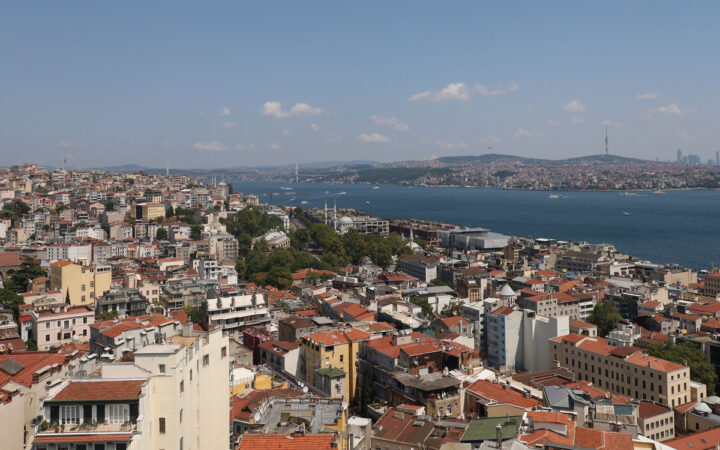
Antalya, in Turkey, illustrates how the timing of a holiday could change. Its hazard-exposure score rises from 52 in 2010 to 58 by 2050 under moderate emissions, while its overall activity-suitability score falls by 11 points.
Looking further ahead to 2080 under high emissions, the model finds less favourable beach and swimming conditions in Antalya during July and August, while April and October become more suitable. That points towards a possible shift in appealing travel periods, rather than a uniform decline across the year.
Beach and Ski Seasons Could Shorten
The longer-term projections show substantial changes elsewhere. In Southeast Asia, the median number of climatically suitable months for beach and swimming activities falls from eight in 2010 to three in 2080 under high emissions. In the Caribbean, it falls from ten to six.
For natural skiing in the Alps, the median falls from two suitable months to less than one under moderate emissions, and to zero under high emissions, by 2080. These calculations exclude snowmaking and differences in elevation, so they do not establish whether an individual ski resort will remain viable.
Some northern regions gain more favourable conditions for certain activities. Under moderate emissions, 75% of assessed regions in Northern Europe and the Nordics fall into the study’s gaining category by 2050. That does not necessarily translate into lower overall climate risk.
What the Findings Mean for Travel
The commercial stakes of weather disruption are already visible. As we reported in our coverage of Viking’s low-water disruption, the cruise company attributed about $100 million in lost third-quarter revenue to low water on European rivers. That episode shows the operational exposure of tourism businesses; it does not, by itself, establish climate change as the cause of a particular event.
RiskScan is a screening tool, and its first global results leave out important factors. The current hazard set excludes sea-level rise, coastal flooding and erosion, tropical cyclones and marine temperatures. Local vulnerability and the capacity to adapt are also absent from these global scores. The methodology is undergoing independent scientific review.
For travellers, the findings make the season and the activity increasingly important parts of choosing a destination. For tourism businesses, they raise questions about water supply, infrastructure and operating calendars. An early-testing version of the RiskScan platform is available now, with a formal free launch planned for early 2027.
Disclaimer: TravelCapybara is an independent media brand owned and operated by NuvexMedia LLC, publishing travel news, destination guides, research, and insights. NuvexMedia LLC may invest in or collaborate with companies across the travel, hospitality, technology, and digital media sectors. These relationships do not influence TravelCapybara’s editorial coverage. While we strive for accuracy, travel requirements, prices, schedules, availability, and local conditions may change without notice. Readers should independently verify information before making travel or purchasing decisions. This content is for informational purposes only and does not constitute professional advice. © 2026 NuvexMedia LLC. All rights reserved.