Key Notes
- The CE-25A carried two pilots and a flight-test engineer on its first crewed flight in Binzhou on November 14.
- The 19-seat design lists a 400-kilometre range, while this test covered 60.4 kilometres in 16 minutes and 38 seconds.
- China’s aviation regulator has accepted the type-certificate application, with commercial-service approval still pending.
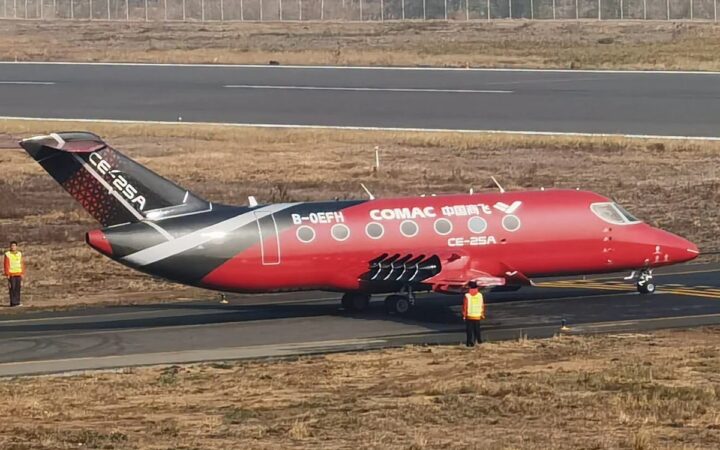
COMAC’s 19-seat CE-25A electric aircraft has completed its first flight with people aboard, advancing a programme aimed at short journeys between cities. Two pilots and a flight-test engineer were on board for the November 14 mission in Binzhou, in eastern China.
The aircraft remained airborne for 16 minutes and 38 seconds and covered 60.4 kilometres, according to test details reported by China News Service from COMAC. The complete test activity, including time on the ground, lasted 57 minutes and 46 seconds. The manufacturer said the aircraft operated normally and met its expected indicators.
Designed for Short Flights Between Cities
The CE-25A is COMAC’s first electric commercial-aircraft project. Its published specifications include a maximum takeoff weight of 10 tonnes, a cruise speed of 300 km/h, a cruising altitude of 2,400 metres and a range of 400 kilometres, Xinhua reported.
Those figures describe the programme’s intended capabilities. The first crewed flight covered a shorter test route; it did not demonstrate a 400-kilometre passenger journey.
The aircraft uses distributed electric propulsion, with ducted fans positioned along the wings. COMAC developed it with partners including battery manufacturer CATL and Shanghai Jiao Tong University.
A Test Crew Follows 19 Uncrewed Flights
The programme had already completed 19 uncrewed flight-verification tests before this milestone. The CE-25A made its first autonomous flight on February 2, 2026, establishing a test history before people boarded the aircraft.
The presence of two pilots and an engineer is central to understanding the latest announcement. This was a crewed test of an aircraft with autonomous-flight capabilities; it was not a commercial passenger service.
Certification Comes Before Bookable Flights
China’s Civil Aviation Administration has accepted the application for a CE-25A type certificate. Acceptance starts the certification process and does not mean the aircraft has been approved to enter commercial service. The reports announcing the test did not identify a confirmed passenger-service launch date.
For travelers, the project points toward a potential future option for short regional routes. Airline schedules, fares and an operating network have yet to be set out in the announcement, so the milestone does not create a new flight that customers can book today.
Electric regional aviation is also progressing elsewhere. We previously covered Heart Aerospace’s X1 demonstrator flight in New York, a test programme supporting development of a future regional airliner. Both stories show why a successful demonstration and the start of passenger operations are separate milestones.
Disclaimer: TravelCapybara is an independent media brand owned and operated by NuvexMedia LLC, publishing travel news, destination guides, research, and insights. NuvexMedia LLC may invest in or collaborate with companies across the travel, hospitality, technology, and digital media sectors. These relationships do not influence TravelCapybara’s editorial coverage. While we strive for accuracy, travel requirements, prices, schedules, availability, and local conditions may change without notice. Readers should independently verify information before making travel or purchasing decisions. This content is for informational purposes only and does not constitute professional advice. © 2026 NuvexMedia LLC. All rights reserved.