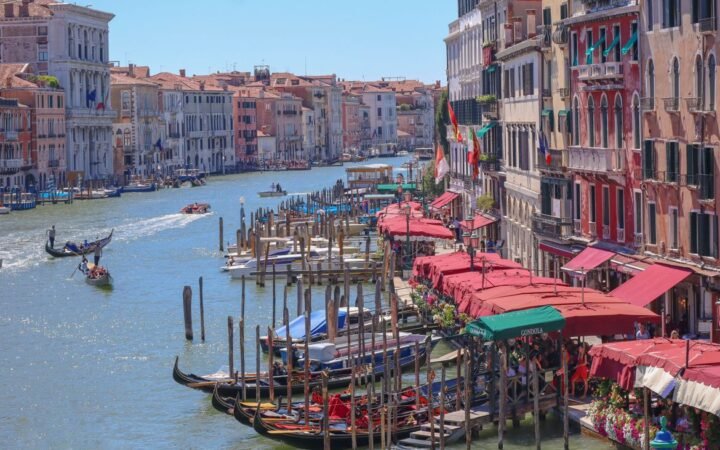
Venice may move toward one of the most aggressive visitor-fee models in Europe, with newly elected mayor Simone Venturini preparing to ask Italy’s national government for permission to raise the city’s day-tripper access charge to as much as €50 on selected dates. The proposal would mark a sharp escalation from the current system, which charges €5 for advance reservations and €10 for last-minute day visitors during peak periods.
The access fee was first introduced in 2024 as an experiment aimed at managing overtourism in the historic lagoon city. In 2026, the levy applies on 60 high-demand days between April and July, generally during daytime peak hours. Overnight guests, residents, workers, students and other exempt groups do not pay, though visitors still need to register through the city’s platform and obtain a QR code.
Venturini’s proposed change would create a sliding fee that could reach €30 to €50 on the most crowded days, based partly on demand and booking levels. City officials argue that the current price difference between €5 and €10 is too small to influence traveler behavior. If the charge were significantly higher, they believe some visitors might choose less crowded dates or decide to stay overnight instead of visiting for only a few hours.
The idea is already dividing Venice. Supporters in the hospitality sector say a higher fee could push travelers toward longer, more considered visits and help fund cleaning, maintenance and public services used by millions of tourists. Venice’s hotel association has backed the idea of a stronger, flexible charge, arguing that people who use the city should contribute more directly to its upkeep.
Critics say the measure has failed to solve the deeper problems facing Venice. Opposition figures argue that the access fee has not reduced visitor flows, improved local quality of life or produced meaningful net revenue once operating costs are considered. Some also warn that a €50 charge would turn Venice into a destination filtered by income, favoring wealthier tourists while doing little to address housing pressure, short-term rentals and the loss of everyday neighborhood life.
The legal path may also be complicated. Italy’s current framework links the access contribution to the maximum tourist tax, which is €10. Raising the fee to €50 would likely require new national legislation, meaning the proposal cannot be implemented by Venice alone.
For travelers, nothing changes immediately. Day visitors should still follow the current booking rules, check whether their travel date requires payment and register any exemption in advance. Those who fail to pay or register can face fines ranging from €50 to €300.
The debate shows how far Venice is willing to go as it searches for tools to manage crowding without closing itself off. The city remains one of the world’s most fragile and desirable destinations, but its future increasingly depends on whether it can balance visitor demand with the needs of residents who live inside the postcard.
Disclaimer: TravelCapybara is an independent media brand owned and operated by NuvexMedia LLC, publishing travel news, destination guides, research, and insights. NuvexMedia LLC may invest in or collaborate with companies across the travel, hospitality, technology, and digital media sectors. These relationships do not influence TravelCapybara’s editorial coverage. While we strive for accuracy, travel requirements, prices, schedules, availability, and local conditions may change without notice. Readers should independently verify information before making travel or purchasing decisions. This content is for informational purposes only and does not constitute professional advice. © 2026 NuvexMedia LLC. All rights reserved.