Barcelona’s Sagrada Familia has reached one of the most important milestones in its 144-year construction history, with Pope Leo XIV blessing the new Tower of Jesus Christ during a major ceremony attended by Spanish leaders, church officials and large crowds. The tower rises to 172.5 meters, making the basilica the tallest church in the world and giving Antoni Gaudí’s most famous project its final height.
The ceremony marked the centenary of Gaudí’s death and brought renewed global attention to a monument that is already one of Europe’s most visited landmarks. About 120,000 people gathered around the basilica for the event, which included Mass, music, lights, fireworks and the blessing of the illuminated cross crowning the central tower.
A Landmark Reaches Its Final Height
The Tower of Jesus Christ is surrounded by 17 other towers dedicated to the apostles, evangelists and the Virgin Mary. Its completion is a defining architectural moment, even though several years of decorative and non-structural work are still expected before the wider project is fully finished.
The new central cross, weighing about 100 tons, was manufactured in sections and assembled with modern materials and engineering methods. The work reflects the delicate balance behind the Sagrada Familia’s long construction: remaining close to Gaudí’s original vision while using contemporary tools, digital modeling and modern safety standards.
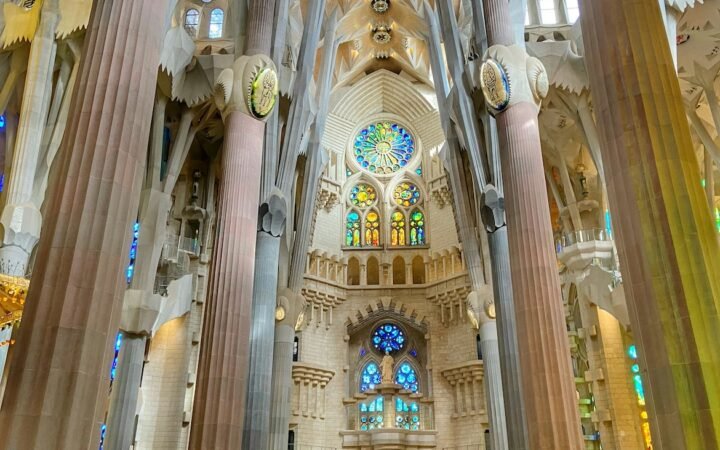
Inside the basilica, the building remains one of the most distinctive religious spaces in the world. Its branching columns evoke a stone forest, while stained glass transforms the interior through shifting blue, green, red, orange and gold light. For travelers, the latest milestone adds another reason to visit, especially for those interested in architecture, religious heritage and urban design.
Gaudí’s Legacy Becomes a Travel Draw
Gaudí devoted much of his professional life to the Sagrada Familia and is buried in the basilica’s crypt. He died in 1926 after being struck by a tram, long before the project could be completed. The destruction of many original plans and models during the Spanish Civil War later forced generations of architects to interpret his design logic from surviving fragments, drawings and photographs.
That complicated history has become part of the attraction. Visitors come not only to see the church but also to understand how a single architectural idea has continued across more than a century. The basilica’s symbolism, facades, towers, crypt, hidden details and rare construction story make it one of Barcelona’s strongest cultural tourism assets.
The Vatican’s recognition of Gaudí’s heroic virtues in 2025 has also added a religious dimension to the site’s global profile. His possible path toward sainthood may deepen interest among Catholic pilgrims as well as architecture travelers.
Barcelona’s Tourism Challenge Remains
The milestone also arrives at a tense moment for Barcelona. Sagrada Familia welcomed nearly five million visitors last year, and millions more viewed it from outside. Its popularity supports the basilica’s funding model, which relies heavily on ticket sales, but it also intensifies pressure on the surrounding neighborhood.
Residents have raised concerns about overtourism, high rents, short-term rentals and the replacement of local shops with souvenir stores and food outlets aimed at visitors. Some locals protested during the papal visit, using black ribbons to draw attention to the social cost of living beside one of the world’s most visited monuments.
A further dispute involves the planned Glory Facade entrance and a proposed monumental staircase, which could require the demolition of nearby apartments and businesses. For residents, the question is not only whether Gaudí’s vision should be completed, but who pays the price for that completion.
For Barcelona, Sagrada Familia remains both a gift and a challenge. It is a landmark of global significance, a major tourism engine and a symbol of the city’s artistic identity. But as the basilica moves closer to completion, the city must balance architectural legacy with the everyday needs of people living in its shadow.
Disclaimer: TravelCapybara is an independent media brand owned and operated by NuvexMedia LLC, publishing travel news, destination guides, research, and insights. NuvexMedia LLC may invest in or collaborate with companies across the travel, hospitality, technology, and digital media sectors. These relationships do not influence TravelCapybara’s editorial coverage. While we strive for accuracy, travel requirements, prices, schedules, availability, and local conditions may change without notice. Readers should independently verify information before making travel or purchasing decisions. This content is for informational purposes only and does not constitute professional advice. © 2026 NuvexMedia LLC. All rights reserved.