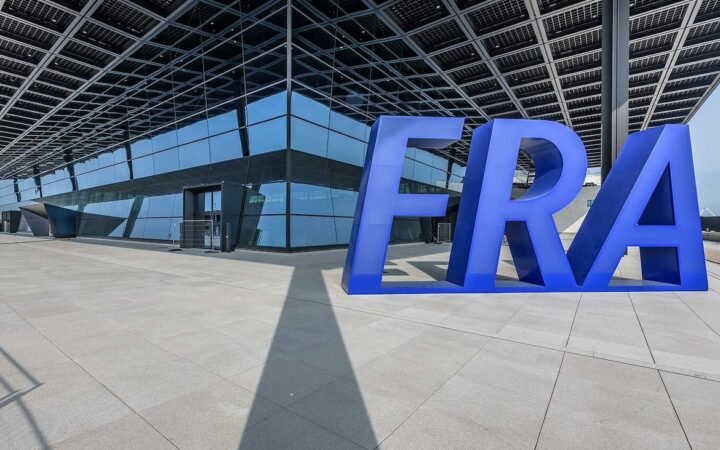
Frankfurt Airport has officially opened Terminal 3, marking one of the biggest infrastructure upgrades at a European hub in recent years. The new terminal arrives as Frankfurt looks to strengthen its role as one of the continent’s most important international gateways, adding capacity for up to 19 million passengers a year in its first phase.
For an airport that handled more than 57.5 million passengers last year, the launch is not only about creating more space. It is about redesigning how airlines, transfers, retail, and passenger services work inside a more modern airport environment.
The transition will happen in stages. Airlines currently operating from Terminal 2 are set to move to Terminal 3 over the coming months, with 57 carriers expected to shift in phases through early June. Among the first airlines moving are Cathay Pacific, China Airlines, Emirates, Etihad Airways, Korean Air, and Qatar Airways.
Lufthansa Group and its Star Alliance partners, including Air Canada and United, will remain in Terminal 1. Condor is scheduled to move later, in summer 2027. That means Terminal 3 will quickly become a major base for non-Lufthansa international flying, especially on routes tied to Asia and the Gulf.
A New Passenger Flow for Frankfurt
Terminal 3 has been designed as far more than an overflow building. Its seven-level main terminal and the first two piers, H and J, are meant to create a more complete airport district, one that feels more like a self-contained urban space than a standard terminal corridor. The architecture and passenger layout are intended to support the idea that airports now function not only as transit points but as destinations in their own right.
Connectivity is central to that vision. The new Sky Line people mover links Terminal 3 with the rest of the airport system, allowing passengers to travel between terminals in just a few minutes. For Frankfurt, this is critical because transfer traffic remains one of the airport’s biggest strengths. Terminal 3 is also built with direct road access, substantial parking capacity, and public transport links that support both local and connecting demand.
The early operating schedule is modest, with only a limited number of arrivals and departures on the first day, but the significance lies in what comes next. As more airlines relocate from Terminal 2, the passenger experience at Frankfurt will become more spread out but potentially more efficient, especially for long-haul international travelers.
Technology, Retail, and the Premium Push
Fraport is also using Terminal 3 to modernize the airport experience. The terminal includes automated luggage drop systems and security lanes equipped with CT scanners, intended to speed up screening and reduce passenger friction. One major traveler-facing improvement is that electronics such as laptops can remain inside hand luggage during checks, and larger liquid allowances are expected to make the process smoother than in older terminals.
Commercially, Terminal 3 is designed to raise the airport’s premium profile as well. The building includes dozens of shops, restaurants, and service outlets, covering everything from quick food options to higher-end dining and fashion retail. SkyTeam has also opened a major new lounge in the non-Schengen area, complete with showers, workstations, relaxation zones, and upgraded food service, signaling that Terminal 3 is being positioned as a premium international facility rather than a secondary building.
For Frankfurt Airport, Terminal 3 is ultimately a long-term bet on growth. It expands capacity now, with room to eventually rise to 25 million annual passengers in a future phase, and gives the hub a stronger platform to compete for global airlines and high-value travelers. In a European market where airports are increasingly judged on efficiency, retail quality, and transfer experience, Terminal 3 is meant to show that Frankfurt is planning for a much bigger future.
Disclaimer: TravelCapybara is an independent media brand owned and operated by NuvexMedia LLC, publishing travel news, destination guides, research, and insights. NuvexMedia LLC may invest in or collaborate with companies across the travel, hospitality, technology, and digital media sectors. These relationships do not influence TravelCapybara’s editorial coverage. While we strive for accuracy, travel requirements, prices, schedules, availability, and local conditions may change without notice. Readers should independently verify information before making travel or purchasing decisions. This content is for informational purposes only and does not constitute professional advice. © 2026 NuvexMedia LLC. All rights reserved.