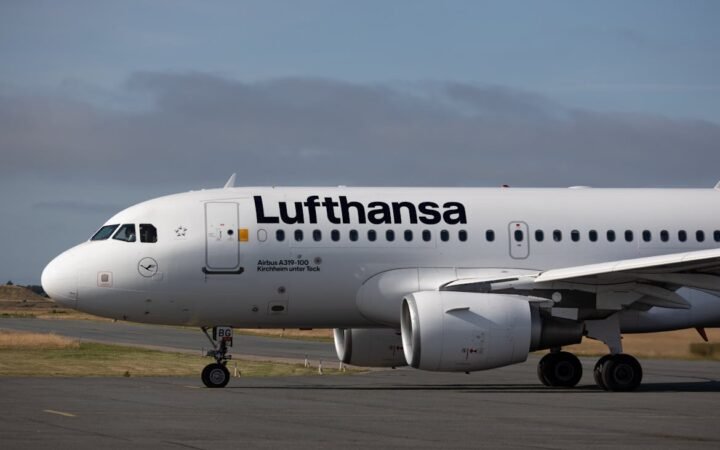
Lufthansa Group is making one of the clearest statements yet about how sharply rising fuel costs are changing aviation economics in Europe. The airline group said it will remove around 20,000 short-haul flights from its summer schedule through October, a move designed to cut uneconomic flying and save more than 40,000 metric tons of jet fuel.
The reduction amounts to less than 1% of group capacity in available seat kilometers, but the message is bigger than the number itself. Lufthansa is signaling that even large network airlines with multiple hubs, broad route maps, and fuel management tools are no longer willing to keep weaker short-haul services in place simply to preserve volume.
The cuts come as the price of jet fuel has surged since the outbreak of the Iran conflict, putting renewed pressure on European carriers already dealing with fragile margins on regional flying. Lufthansa said its fuel supply is secured for the coming weeks and that it is using a mix of physical procurement and price hedging to manage the situation.
Even so, the airline has decided that schedule efficiency now matters more than maintaining every marginal route. The first 120 daily cancellations have already been implemented through May 31, with affected passengers notified, and a broader update for the rest of the summer is expected in late April or early May.
A Smaller Schedule With a More Selective Focus
The biggest impact will be felt in Frankfurt and Munich, where unprofitable short-haul routes are being trimmed as part of a wider consolidation across Lufthansa Group’s six hubs: Frankfurt, Munich, Zurich, Vienna, Brussels, and Rome. Rather than retreating from the market entirely, the company is reshaping traffic flows within the group. That means some connections will disappear from specific hubs while others are redirected through different parts of the network, allowing Lufthansa to protect long-haul feed while reducing the cost of operating thinner regional services.
At least three destinations, Bydgoszcz and Rzeszow in Poland and Stavanger in Norway, have been temporarily removed from the current schedule. Ten other connections, including routes linked to Gdansk, Ljubljana, Rijeka, Sibiu, Trondheim, Tivat, and Wroclaw, are being consolidated through alternative group hubs. At the same time, Lufthansa says it plans to expand selected existing routes in Zurich, Vienna, and Brussels, showing that this is less a blanket retreat than a network rebalance.
The move also fits into Lufthansa’s broader strategic direction. The company has already accelerated the shutdown of CityLine, grounded older aircraft, and continued shifting more short-haul flying toward lower-cost units. In that sense, the latest cuts are not just a response to a temporary fuel shock. They also reflect a longer-term attempt to build a leaner European operation that can still support the group’s global network without relying on routes that no longer make financial sense.
For travelers, the headline number may sound dramatic, but the practical effect will likely be uneven rather than systemwide. Lufthansa is keeping its wider route system intact, especially on long-haul services, while using its multi-hub structure to absorb some of the disruption. Still, for regional airports and passengers on thinner European routes, this summer will offer another reminder that in today’s airline market, frequency and convenience are increasingly tied to fuel economics.
Disclaimer: TravelCapybara is an independent media brand owned and operated by NuvexMedia LLC, publishing travel news, destination guides, research, and insights. NuvexMedia LLC may invest in or collaborate with companies across the travel, hospitality, technology, and digital media sectors. These relationships do not influence TravelCapybara’s editorial coverage. While we strive for accuracy, travel requirements, prices, schedules, availability, and local conditions may change without notice. Readers should independently verify information before making travel or purchasing decisions. This content is for informational purposes only and does not constitute professional advice. © 2026 NuvexMedia LLC. All rights reserved.