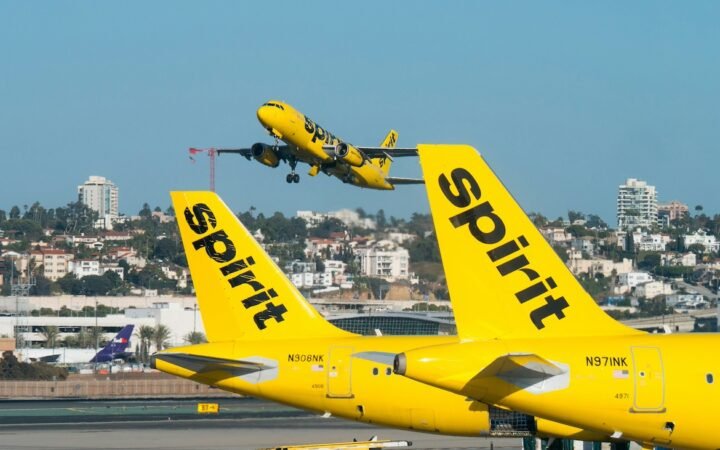
Spirit Airlines has become the latest flashpoint in the U.S. aviation crisis, with President Donald Trump now signaling that the federal government could step in as the carrier fights for survival. In remarks that immediately raised the stakes for the industry, Trump said he would like to see someone buy Spirit and suggested that government support should be considered because of the airline’s 14,000 jobs.
The comment lands at a delicate moment for the ultra-low-cost carrier, which had been working toward an early summer exit from its second Chapter 11 restructuring in less than two years.
Spirit’s problems were already severe before the latest fuel shock. The airline has struggled with weak domestic demand, years of losses, failed merger attempts, and a business model that has become harder to sustain as larger competitors rolled out their own stripped-down fare products.
The recent surge in oil and jet fuel prices following the Iran war appears to have made the situation dramatically worse. Reports in recent days have suggested liquidation is now a real possibility, even as Spirit and labor groups continue to say efforts are ongoing to keep the airline operating.
A Political Lifeline for a Troubled Budget Carrier
Trump did not provide details on what form any federal help might take, but his willingness to publicly raise the idea is notable. U.S. airline support has precedent in extraordinary periods, most notably after the September 11 attacks and again during the pandemic. This time, however, the case is more complicated. Spirit is not facing a system-wide shutdown but a business crisis that has been deepened by an external energy shock.
Transportation Secretary Sean Duffy said the administration would review possible options after Trump’s comments. That came as Duffy was also scheduled to meet with executives from Spirit and several other discount airlines, including Frontier, Allegiant, Sun Country, and Avelo. Those carriers, through the Association of Value Airlines, have urged Congress to temporarily suspend the 7.5% federal excise tax on airline tickets and the $5.30 segment tax. Their argument is that such relief would offset part of the fuel spike without forcing even higher prices onto travelers.
For Spirit, the urgency is greater than for most. Analysts cited in recent coverage estimate that higher fuel prices could add hundreds of millions of dollars to the airline’s costs this year, threatening the restructuring framework it had presented to lenders.
Why Spirit Matters Beyond Spirit
Spirit’s fate matters not only because of jobs, but because it has long played an outsized role in the U.S. fare structure. As one of the country’s most aggressive low-cost airlines, it helped pressure larger carriers to keep some routes affordable. If it disappears, ticket prices could rise in many leisure markets, especially where competition is already thin.
At the same time, Trump made clear he does not want to see broader consolidation among stronger airlines. He said he opposed a potential United-American combination, arguing that both carriers are already doing well and should not merge. That creates a sharp contrast in Washington’s thinking: aid or rescue for a weak carrier may be acceptable, while more concentration among dominant airlines may not be.
For now, Spirit remains in limbo. But Trump’s intervention has transformed the discussion from a bankruptcy story into a national aviation policy question.
Disclaimer: TravelCapybara is an independent media brand owned and operated by NuvexMedia LLC, publishing travel news, destination guides, research, and insights. NuvexMedia LLC may invest in or collaborate with companies across the travel, hospitality, technology, and digital media sectors. These relationships do not influence TravelCapybara’s editorial coverage. While we strive for accuracy, travel requirements, prices, schedules, availability, and local conditions may change without notice. Readers should independently verify information before making travel or purchasing decisions. This content is for informational purposes only and does not constitute professional advice. © 2026 NuvexMedia LLC. All rights reserved.