A new boutique hotel has opened in Los Angeles’ Koreatown, and it is aiming to do something slightly different from the city’s usual luxury playbook. The Ivory, a 48-room property on South Mariposa Avenue, has launched as a design-led urban retreat built around the idea of “home, but better,” combining the intimacy of a private residence with the polish of a boutique hotel. In a city where hospitality often leans either heavily lifestyle-driven or heavily transactional, The Ivory is trying to position itself somewhere more personal and quietly refined.
Founded by developer and hospitality operator Rachel Gerstein, the hotel was conceived as a response to what she saw as a gap in the Los Angeles market: a property that feels elevated without becoming cold, and exclusive without losing warmth. That intention shapes almost every part of the hotel. The Ivory uses warm oak herringbone floors, layered materials, soft tonal guestrooms, and more expressive public spaces to create a mood that feels calm rather than performative. International influences are present, from Mexico City and Lima to London, the South of France, and Portofino, but the overall effect is meant to feel distinctly tied to Los Angeles.
A Small Hotel With a Residential Point of View
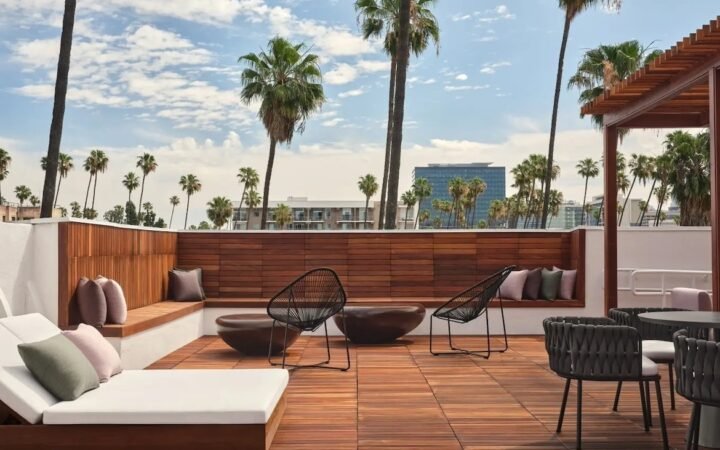
The Ivory’s scale is central to the pitch. With just 48 rooms, the property can lean into a more intimate service model than many larger lifestyle hotels. Guests can choose between a digital self-guided check-in or a more traditional arrival with staff, reflecting the hotel’s attempt to balance flexibility with personal hospitality. The public spaces include a lobby lounge, courtyard, pool, rooftop deck, and 24-hour fitness center, all designed to encourage a sense of ease and connection without sacrificing privacy.
The hotel also uses small daily rituals to reinforce that residential feeling. Morning bread and coffee delivery and evening cookie service are part of the guest experience, making the property feel less like a transient stop and more like a place with its own rhythm. Rates start at $375 a night, placing it in a higher-end boutique bracket but still within reach of travelers looking for a more character-led alternative to the city’s larger luxury brands.
Food and beverage play into what the hotel calls a “high-low” philosophy. That means a mix of refined indulgence and approachable comfort, from Kaluga caviar service to small plates, rare artisanal cheeses, bruschetta, cocktails, champagne, and California wines. The menu appears designed less as a full restaurant concept and more as a curated extension of the property’s overall identity.
Art and Cultural Programming Will Help Define the Brand
The Ivory is also making a strong cultural play from the start. Its launch includes an art program led by art director Matt Scheele, with works by Los Angeles-based or Los Angeles-connected artists such as Urs Fischer, Richard Misrach, Rafa Esparza, Rebecca Morris, and Ruby Neri. The standout piece is Daydream, a site-specific lobby installation by New York artist Rob Wynne, which greets guests on arrival and helps define the tone of the main public space.
That focus on art is meant to extend beyond static display. The hotel says it plans to build out a wider cultural program in the coming months, including tastings, chef collaborations, pop-ups, panel discussions, intimate performances, and rotating exhibitions. That could prove especially important in Koreatown, where the surrounding neighborhood already offers one of the city’s densest mixes of nightlife, food, and cultural energy.
In that sense, The Ivory is not trying to compete by being louder than Los Angeles. It is trying to offer something many travelers may value more: a quieter, more considered place to land in the middle of it.
Disclaimer: TravelCapybara is an independent media brand owned and operated by NuvexMedia LLC, publishing travel news, destination guides, research, and insights. NuvexMedia LLC may invest in or collaborate with companies across the travel, hospitality, technology, and digital media sectors. These relationships do not influence TravelCapybara’s editorial coverage. While we strive for accuracy, travel requirements, prices, schedules, availability, and local conditions may change without notice. Readers should independently verify information before making travel or purchasing decisions. This content is for informational purposes only and does not constitute professional advice. © 2026 NuvexMedia LLC. All rights reserved.