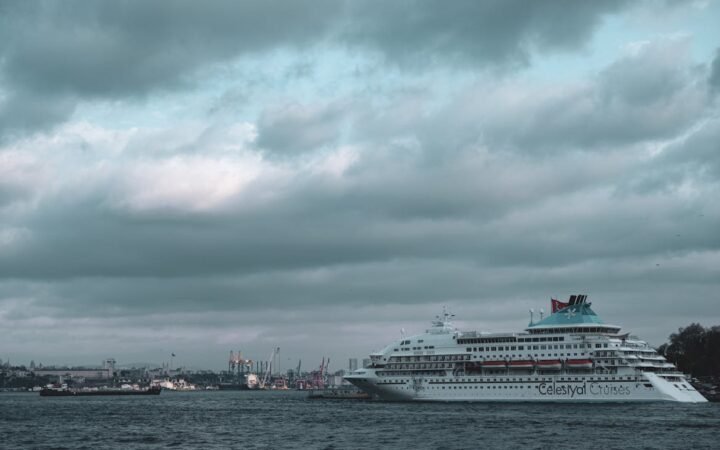
Celestyal is moving from crisis management to commercial recovery after both of its ships safely returned to the Mediterranean, clearing the way for the line to restart Athens departures at the start of May.
The return ends a 49-day operational stoppage tied to the Iran war and the closure of the Strait of Hormuz, a disruption that left the small Greek cruise line effectively stranded in the Gulf and forced it to cancel all of its March and April sailings. In a sector that has spent the past few years rebuilding from the pandemic, Celestyal’s shutdown stands out as the longest cruise interruption since that era.
The line’s two ships, Celestyal Discovery and Celestyal Journey, had been operating in the Arabian Gulf when the war began on February 28. One was in Doha and the other in Dubai on a turnaround day, meaning guests were due both to disembark and embark. According to executives, some passengers were able to get on and off the ships on that first day, with disembarking guests placed in hotels before a much larger repatriation effort began.
Over the next 10 days, the company coordinated with dozens of embassies to help return passengers from 27 countries home, while also working to move as much crew as possible out of the region or position them to rejoin later.
That effort bought time, but not certainty. For weeks, Celestyal did not know when its ships would be able to leave the Gulf and head west through the Suez Canal. The brief window that opened on April 17 and 18 allowed both vessels to transit the Strait of Hormuz and return to the Mediterranean, where they are now set to begin new sailings from Athens on May 1 and May 2.
A Summer Restart With Work Still to Do
The immediate operational crisis may be over, but Celestyal’s commercial challenge is only beginning. The company says business has more than doubled week over week since the ships escaped the Gulf, a sign that consumer confidence is returning now that there is more certainty. Still, executives have acknowledged that the disruption has left gaps in the summer program, especially in June, July, and August.
That means the line is now preparing promotional activity and price action to rebuild momentum, while also re-engaging the travel trade that had been helping drive strong growth before the war. Before the shutdown, Celestyal said its wave season had been especially strong, with advisor bookings rising sharply and May departures still relatively well booked even during the crisis. September through November are also reportedly looking stronger than peak summer, suggesting that the market has not rejected the brand, but that it may need help converting late-booking customers into summer guests.
For a small operator, that matters. Celestyal’s niche has been destination-led Mediterranean and Gulf cruising rather than large-scale, volume-heavy deployment. When disruption hits a company of that size, the commercial effect can be magnified quickly.
The Bigger Question Is Winter 2026-27
The more strategic issue now is what Celestyal does next in the Arabian Gulf. The region had become an important winter niche for the company and, by its own account, a successful one. But after the events of the past two months, the line is reviewing its Gulf itineraries for winter 2026-27, with a decision expected soon.
Executives have suggested that Celestyal cannot simply jump into a new region for one season and then shift again. As a smaller brand, it needs multiyear visibility to build awareness and confidence in a destination. That makes the next decision especially consequential. Returning to the Gulf would signal faith in the long-term market. Moving elsewhere would require a careful repositioning effort.
For now, the line’s message is that it is back, stable, and operating at full strength from May. But the real test will be whether it can fill ships this summer and define a winter strategy that turns a highly disruptive chapter into something sustainable.
Disclaimer: TravelCapybara is an independent media brand owned and operated by NuvexMedia LLC, publishing travel news, destination guides, research, and insights. NuvexMedia LLC may invest in or collaborate with companies across the travel, hospitality, technology, and digital media sectors. These relationships do not influence TravelCapybara’s editorial coverage. While we strive for accuracy, travel requirements, prices, schedules, availability, and local conditions may change without notice. Readers should independently verify information before making travel or purchasing decisions. This content is for informational purposes only and does not constitute professional advice. © 2026 NuvexMedia LLC. All rights reserved.