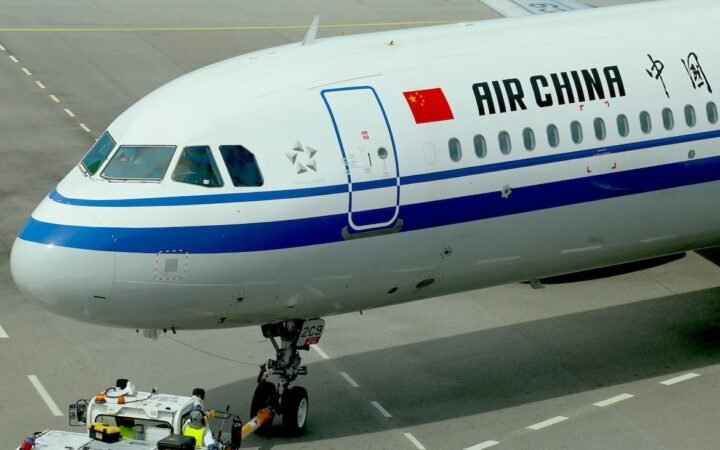
Air China is set to launch a new nonstop route between Beijing and Venice this summer, adding another major China-Europe link at a time when Chinese carriers continue to expand aggressively across the continent. The new service will begin on July 2, 2026, and operate four times a week between Beijing Capital International Airport and Venice Marco Polo Airport using Airbus A330-200 aircraft.
For Venice, the route is significant because it becomes the city’s second direct mainland China connection, following China Eastern’s Shanghai-Venice service, which launched in 2024.
The new route also gives Air China a unique position on the Beijing-Venice sector, where it will be the sole operator. That matters because Venice is not just a leisure destination. It is one of Italy’s strongest internationally recognized gateways, combining tourism demand with broader commercial and cultural appeal.
For Chinese travelers, it offers direct access to one of Europe’s best-known cities. For Venice and the surrounding region, it opens another high-value long-haul link into a market that remains strategically important for inbound travel.
Venice Is Part of a Much Bigger Europe Push
Air China’s Venice launch is only one part of a much broader summer expansion across Europe. The airline is expected to serve 22 European destinations across 42 nonstop routes during peak summer 2026, with additional growth also planned in Brussels, Frankfurt, London Gatwick, and Milan Malpensa. That wider buildout reflects how strongly Chinese airlines have recovered and expanded in the Europe-China market compared with many of their European counterparts.
By summer 2026, Air China is expected to offer 4.53 million two-way seats between mainland China and Europe, up from 3.63 million in summer 2025 and well above the 2.86 million seats offered in 2019. Those numbers underline not just recovery, but expansion beyond pre-pandemic levels. Air China is on track to become the largest airline in the Europe-mainland China market this summer, holding the biggest share of capacity among all carriers.
The competitive backdrop is important. Chinese airlines continue to hold structural advantages on Europe-Asia flying because they have been able to operate more direct routings than European carriers, many of which still face restrictions and longer detours linked to Russian airspace. That difference lowers operating costs and helps Chinese airlines restore and grow routes faster, especially in secondary European markets where marginal economics matter more.
Italy is one of the clearest examples of that growth. China-Italy capacity is projected to rise 13% year over year this summer, supported not only by the new Venice route but also by wider expansion in Milan and Rome. Venice, in this context, is not an isolated addition. It is part of a broader reshaping of China-Europe air service in which Chinese airlines are becoming more dominant, more visible, and more willing to invest in direct links beyond the largest primary gateways.
For Venice Airport operator SAVE Group, the route is being framed as a new bridge between Italy and China and as another step in building out Marco Polo Airport’s long-haul network. That is likely the real long-term significance of the launch. It gives Venice another direct intercontinental connection, strengthens the airport’s strategic relevance, and reinforces the idea that secondary European destinations are playing a larger role in the next phase of China-Europe aviation growth.
Disclaimer: TravelCapybara is an independent media brand owned and operated by NuvexMedia LLC, publishing travel news, destination guides, research, and insights. NuvexMedia LLC may invest in or collaborate with companies across the travel, hospitality, technology, and digital media sectors. These relationships do not influence TravelCapybara’s editorial coverage. While we strive for accuracy, travel requirements, prices, schedules, availability, and local conditions may change without notice. Readers should independently verify information before making travel or purchasing decisions. This content is for informational purposes only and does not constitute professional advice. © 2026 NuvexMedia LLC. All rights reserved.