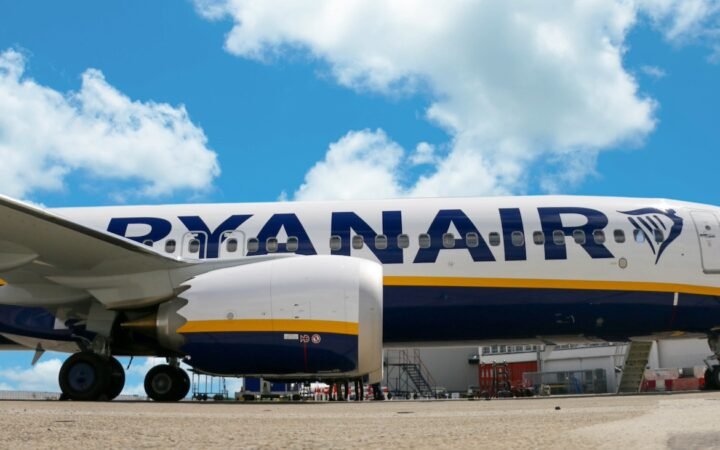
Ryanair is planning a major retrenchment in Berlin, announcing that it intends to close its seven-aircraft base there on October 24, 2026, and reduce its flight schedule to and from the German capital by 50 percent.
The move would cut Ryanair’s Berlin traffic from around 4.5 million passengers to roughly 2.2 million in 2027 and remove more than 2 million seats a year from the market. For one of Europe’s biggest low-cost carriers, it is a sharp statement about what it sees as Germany’s growing lack of competitiveness in aviation.
The airline says the decision is a direct response to rising costs at Berlin Airport and in the German aviation market more broadly. According to Ryanair, Berlin’s airport fees have risen by 50 percent since the pandemic, with another 10 percent increase scheduled between 2027 and 2029.
At the same time, the airline argues that Germany’s aviation tax, security fees, and air traffic control charges have all moved sharply higher. In Ryanair’s telling, that combination has made Berlin structurally unattractive compared with other European airports and countries that are lowering costs or abolishing aviation taxes entirely.
Berlin Flights Cut, Aircraft Reassigned Elsewhere
Ryanair says all seven aircraft currently based in Berlin will be reallocated to lower-cost airports in other European markets, including countries such as Sweden, Slovakia, Albania, and Italy. The carrier will still serve Berlin, but with aircraft based outside Germany. That means Berlin will remain on the map, just with far less capacity and weaker frequency than before.
The cuts are expected to affect UK links as well, including routes involving London, Manchester, Birmingham, and Edinburgh. For travelers, the practical effect will likely be fewer options, less schedule flexibility, and potentially firmer fares on remaining services. For Berlin, the move is more symbolic. Ryanair has called the airport one of Europe’s weakest performers, pointing to traffic that remains well below pre-pandemic levels.
The airline also says staff consultations are beginning, though it added that Berlin-based pilots and cabin crew would be offered opportunities elsewhere in its network. That softens the labor message somewhat, but the commercial point remains clear: Ryanair no longer sees Berlin as a place where it can profitably base aircraft under the current cost structure.
A Wider Warning About Germany’s Aviation Model
The Berlin decision also fits a bigger Ryanair narrative about Germany. The airline says it has already closed bases in Frankfurt, Dusseldorf, and Stuttgart since 2019, while also ending flights to Dresden, Leipzig, and Dortmund. In its view, Germany has failed to reform a high-tax, high-cost aviation model that is costing the country traffic, jobs, connectivity, and investment.
Whether one agrees with Ryanair’s rhetoric or not, the move highlights a real tension in the European airline market. Low-cost carriers are highly mobile and increasingly willing to shift aircraft to airports and countries offering better economics. Berlin, despite its size and political importance, is not immune to that logic.
For Ryanair, the base closure is framed as network discipline: aircraft will go where costs are lower and growth prospects are better. For Berlin, it is a reminder that in today’s aviation market, airport relevance depends not just on demand, but on whether airlines believe the math still works.
Disclaimer: TravelCapybara is an independent media brand owned and operated by NuvexMedia LLC, publishing travel news, destination guides, research, and insights. NuvexMedia LLC may invest in or collaborate with companies across the travel, hospitality, technology, and digital media sectors. These relationships do not influence TravelCapybara’s editorial coverage. While we strive for accuracy, travel requirements, prices, schedules, availability, and local conditions may change without notice. Readers should independently verify information before making travel or purchasing decisions. This content is for informational purposes only and does not constitute professional advice. © 2026 NuvexMedia LLC. All rights reserved.