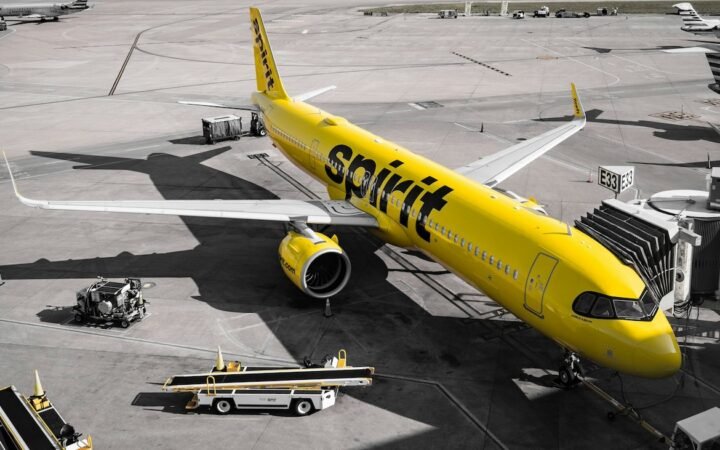
A viral online campaign to buy and revive Spirit Airlines is quickly becoming about much more than one failed carrier. What began as a TikTok pitch from content creator and voice actor Hunter Peterson has turned into a surprisingly large public reaction to the loss of one of the country’s last true low-cost airlines.
In the days after Spirit announced it was shutting down, Peterson proposed a crowd-backed “Spirit 2.0” owned by ordinary people rather than Wall Street investors. The idea was half joke, half provocation at first, but the response has been serious enough to reveal something deeper: many American travelers feel they are running out of affordable ways to fly.
Peterson’s argument is simple and intentionally populist. Inspired by the Green Bay Packers’ fan-ownership model, he says Spirit could be rebuilt as an airline owned “by the people,” with each verified member getting one vote on major decisions regardless of how much they pledged. Profit sharing, under his proposal, would still scale with investment, but control would not. That framing has clearly resonated. Within days, his site drew well over 100,000 people willing to make non-binding pledges, with totals climbing into the tens and then hundreds of millions of dollars, depending on when the figures were cited.
The campaign remains highly unlikely to succeed in any practical sense. Spirit is already in the formal liquidation process, and aviation analysts have pointed out that the airline’s assets will be handled through bankruptcy court rather than handed to an internet movement. Even supporters of the idea acknowledge that reviving an airline is a very different task from rallying online attention. But the scale of the response still matters, because it shows how many consumers feel emotionally attached to the idea of low fares, even when those fares came with a rough-edged product and a famously stripped-down experience.
Why the Campaign Took Off So Fast
Spirit had plenty of critics, but it also served a real purpose in the U.S. market. For many travelers, it represented the last semi-reliable way to get somewhere quickly and cheaply without turning every trip into a major financial decision. That made it easy for the airline to become a symbol after it collapsed. Social media users described it as the “Costco of the sky,” a “sky bus,” and “the airline for the people.” Those phrases are simplistic, but they capture what many budget-conscious travelers feel they are losing.
That loss comes at a moment when the largest U.S. carriers are leaning harder into premium travel, more upselling, and higher fares. Even where cheap tickets still exist, they often feel more conditional and less abundant than they once did. Spirit’s disappearance sharpens that anxiety, especially for families and leisure travelers who relied on the gap between Spirit pricing and the fares offered by legacy airlines.
A Fantasy Buyout With a Real Message
Peterson’s site argues that Spirit did not fail because people stopped flying, but because debt, private ownership pressures, and poor management pushed the airline into a position it could not escape. That interpretation may oversimplify the collapse, but it reflects a broader public distrust of how the airline industry is run. The enthusiasm behind the campaign is less a sign that Americans believe a crowdfunded airline takeover is around the corner and more a sign that they want a different model from the one they see now.
In that sense, the “buy Spirit” movement is best understood as a protest wrapped in a startup fantasy. It may never produce an airline, but it has already succeeded in exposing a real gap in the market: people still want cheap, simple air travel, and they are increasingly worried that nobody is left to provide it.
Disclaimer: TravelCapybara is an independent media brand owned and operated by NuvexMedia LLC, publishing travel news, destination guides, research, and insights. NuvexMedia LLC may invest in or collaborate with companies across the travel, hospitality, technology, and digital media sectors. These relationships do not influence TravelCapybara’s editorial coverage. While we strive for accuracy, travel requirements, prices, schedules, availability, and local conditions may change without notice. Readers should independently verify information before making travel or purchasing decisions. This content is for informational purposes only and does not constitute professional advice. © 2026 NuvexMedia LLC. All rights reserved.