AlUla has become one of Saudi Arabia’s most ambitious tourism bets, but its next challenge is increasingly practical: building enough hotel rooms to meet demand without turning a heritage destination into another high-volume resort market. The northwest Saudi region drew 320,000 visitors in 2025, up 15% year over year, and is aiming for 1 million visitors by 2030.
That target is achievable only if accommodation supply expands quickly. The Royal Commission for AlUla currently operates a hospitality base of about seven hotels and roughly 1,000 keys, with plans to reach close to 3,000 keys by 2030. New supply is expected from brands including Hyatt Place, Autograph Collection, Aman and Six Senses, giving the destination a mix of broader market access and luxury positioning.
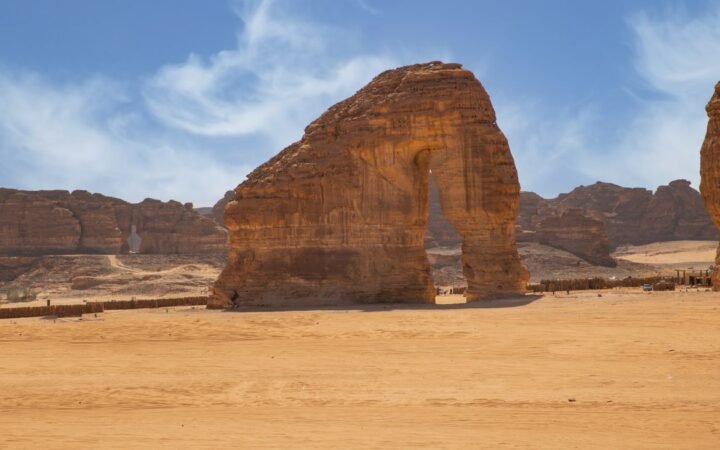
The hotel race is important because AlUla is not built around conventional tourism volume. Its appeal is tied to archaeology, desert landscapes, cultural programming and a carefully managed sense of remoteness. Hegra, Saudi Arabia’s first UNESCO World Heritage Site, sits at the center of the destination’s international identity, while AlUla’s wider landscape includes oases, sandstone canyons, ancient inscriptions and thousands of years of human history.
A Different Kind of Saudi Tourism Project
AlUla occupies a specific place inside Saudi Arabia’s Vision 2030 strategy. It is not the futuristic statement of NEOM or the coastal luxury promise of the Red Sea. Instead, it is a heritage-led project designed to show that Saudi Arabia has deep cultural and archaeological assets capable of competing globally.
That difference shapes the hotel strategy. AlUla needs rooms, but not at any cost. Too much supply in the wrong form could weaken the destination’s identity, strain sensitive heritage sites and undermine the premium positioning that supports higher visitor spending. Too little supply, however, could hold back international airlift, tour operator interest and repeat visitation.
The destination has tried to walk that line through low-rise design, landscape-sensitive architecture and hospitality that is meant to sit within the environment rather than dominate it. Properties such as Banyan Tree AlUla and Habitas AlUla helped define that approach, while future openings are expected to widen the market without shifting the destination into mass tourism.
Geopolitical uncertainty has complicated the timeline. Regional conflict has already slowed some projects, according to destination executives, adding pressure to a pipeline that must deliver within a tight 2030 window.
Hotel Growth Must Match Heritage Protection
The larger question is whether AlUla can grow while preserving the qualities that made it valuable. That means coordinating hotel openings with airport capacity, water and waste systems, skilled labor, local community development and carrying limits at archaeological sites.
Cultural programming is central to the demand strategy. AlUla Moments, Maraya, Wadi AlFann and events across art, wellness, music and sport are designed to give travelers reasons to visit beyond a single heritage tour. This matters because a destination built only around monuments risks low repeat visitation. A destination with a changing cultural calendar can support higher hotel occupancy across more of the year.
The hospitality pipeline also needs investor confidence. AlUla has signaled a larger shift toward public-private partnerships, with hospitality, mobility, retail, food and creative industry assets all part of the investment conversation. Converting that interest into built hotels will be a key test.
If AlUla reaches close to 3,000 hotel keys by 2030 while maintaining its conservation-led identity, it could become the Middle East’s clearest example of luxury heritage tourism at scale. If delays continue, the destination may remain admired but capacity-constrained.
For now, the demand story is real. The harder part is turning that demand into a sustainable tourism economy without overwhelming the desert, the archaeology or the visitor experience.
Disclaimer: TravelCapybara is an independent media brand owned and operated by NuvexMedia LLC, publishing travel news, destination guides, research, and insights. NuvexMedia LLC may invest in or collaborate with companies across the travel, hospitality, technology, and digital media sectors. These relationships do not influence TravelCapybara’s editorial coverage. While we strive for accuracy, travel requirements, prices, schedules, availability, and local conditions may change without notice. Readers should independently verify information before making travel or purchasing decisions. This content is for informational purposes only and does not constitute professional advice. © 2026 NuvexMedia LLC. All rights reserved.