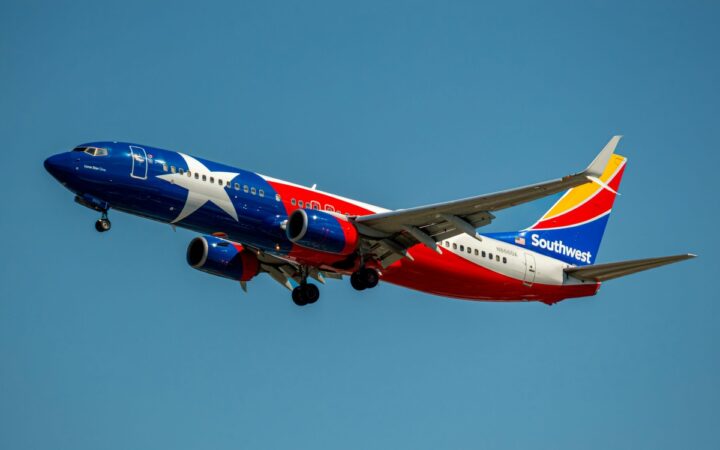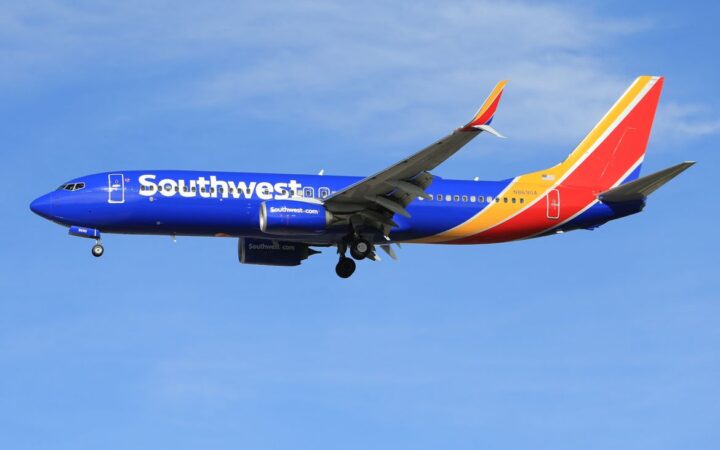
Southwest Airlines has put its first Starlink-equipped aircraft into service, marking the start of a major onboard connectivity upgrade for one of the largest domestic carriers in the United States. The first aircraft, a Boeing 737-800 with tail number N8543Z, entered service on June 22 on a flight from Dallas Love Field to Albuquerque.
The launch gives Southwest a more visible answer to a fast-changing airline Wi-Fi market, where carriers are increasingly treating high-speed internet as a core part of the passenger experience rather than a paid convenience. Starlink, operated by SpaceX, uses low-Earth orbit satellites to deliver faster, lower-latency internet than many legacy inflight systems, with performance closer to what travelers expect at home.
Southwest says Starlink will allow customers to stream content at 4K speeds, play live games, watch live sports, share and edit documents, upload large files, shop, make reservations and book flights while in the air. The airline is promoting the service as an “at-home” internet experience at 35,000 feet, a message that puts productivity and entertainment at the center of the rollout.
Free Wi-Fi Becomes a Loyalty Play
The Starlink upgrade is especially important because Southwest is tying free Wi-Fi access to Rapid Rewards membership through its partnership with T-Mobile. Rapid Rewards members can access free Wi-Fi where available on designated Wi-Fi-enabled aircraft. Customers who are not members can join the loyalty program to unlock free access, making connectivity another incentive to move travelers into Southwest’s customer ecosystem.
That strategy mirrors a broader trend across the airline industry. Free or low-cost Wi-Fi is increasingly being used to support loyalty sign-ups, improve customer satisfaction and create more digital engagement during the flight. For Southwest, which has historically differentiated itself through simplicity, domestic scale and customer-friendly policies, faster Wi-Fi gives the airline another tool as competitors upgrade their own onboard products.
The first aircraft is only the beginning. Southwest previously said it expects to have more than 300 planes equipped with Starlink by the end of 2026. The rest of its roughly 800-aircraft fleet will continue to use existing Wi-Fi providers, including Viasat and Anuvu, during the transition.
The rollout also gives Southwest a way to modernize the onboard experience without changing the basic structure of its operation. Unlike airlines focused heavily on premium cabins or long-haul international service, Southwest’s value proposition depends on short- and medium-haul convenience across a large domestic network. Reliable gate-to-gate-style connectivity can matter even on shorter flights, especially for business travelers, families and passengers who want entertainment without downloading content in advance.
Starlink’s low-latency network could also improve what passengers can realistically do in the air. Video calls, cloud-based work, gaming and live streaming all require more stable upload and download performance than traditional browsing or messaging. If the service performs consistently at scale, Southwest passengers may begin to expect a more connected experience across routine domestic trips.
The competitive stakes are clear. Hawaiian Airlines, United and other carriers have already moved aggressively with Starlink or next-generation Wi-Fi plans. Southwest’s first Starlink flight from Dallas to Albuquerque may look modest, but it signals a bigger shift: inflight internet is becoming part of the airline product travelers judge before they book.
Disclaimer: TravelCapybara is an independent media brand owned and operated by NuvexMedia LLC, publishing travel news, destination guides, research, and insights. NuvexMedia LLC may invest in or collaborate with companies across the travel, hospitality, technology, and digital media sectors. These relationships do not influence TravelCapybara’s editorial coverage. While we strive for accuracy, travel requirements, prices, schedules, availability, and local conditions may change without notice. Readers should independently verify information before making travel or purchasing decisions. This content is for informational purposes only and does not constitute professional advice. © 2026 NuvexMedia LLC. All rights reserved.