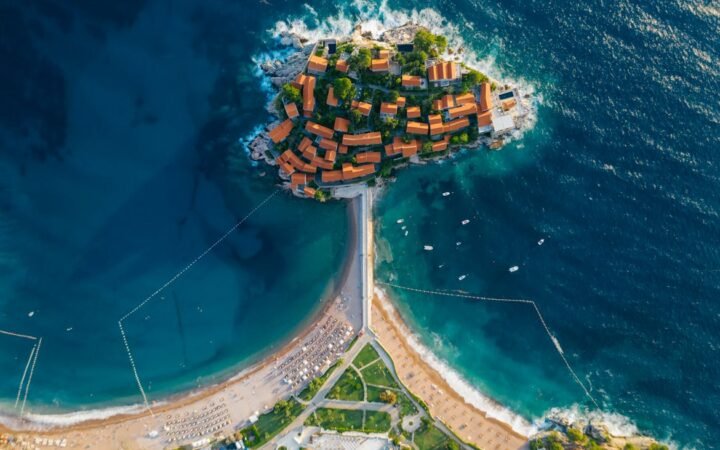
Aman Sveti Stefan, one of Montenegro’s most recognizable luxury resorts, is set to reopen this summer after a five-year closure that turned a postcard-perfect island into a flashpoint over public access, coastal development, and the future of high-end tourism on the Adriatic.
The resort’s mainland Villa Miločer is scheduled to welcome guests from May 22, while the island of Sveti Stefan is expected to reopen for the summer season from July 1.
The reopening brings back a property long associated with old-world glamour and exclusivity. Set on the Budva Riviera, Sveti Stefan is a small stone-built island connected to the mainland by a narrow isthmus, with terracotta roofs, fortified lanes, and the sea on nearly every side.
Before it became an Aman resort, the former fishing village had already built an international reputation as a retreat for prominent guests, including Elizabeth Taylor and Marilyn Monroe.
A Landmark Returns to Montenegro’s Coast
The site’s modern luxury chapter began after Aman transformed the island into a resort, pairing restored stone cottages with a mainland estate at Villa Miločer.
For Montenegro, the property became more than a hotel. It helped position the country as a serious player in the European luxury travel market, alongside destinations such as the Amalfi Coast, the Greek islands, and the French Riviera.
Its closure in 2021, however, exposed a deeper tension familiar across popular coastal destinations. Local residents objected to restrictions around beach access, arguing that parts of the shoreline should not become effectively reserved for high-paying hotel guests. The dispute centered on beaches near the resort, including areas historically used by the public before the luxury redevelopment changed how the site operated.
Under the new arrangement, local residents will retain access to two beaches, while Queen’s Beach will remain reserved for Aman guests. That compromise appears to have cleared the way for the phased reopening, beginning with Villa Miločer and followed by the island itself in July.
A Test Case for Luxury Travel and Public Access
The return of Sveti Stefan is likely to draw strong interest from luxury travelers, but it also arrives at a moment when destinations are facing closer scrutiny over how tourism benefits are shared. Montenegro has spent years building its profile as a high-end Mediterranean alternative, supported by new hotels, marina developments, and growing international air links.
For Aman, reopening Sveti Stefan restores one of the brand’s most distinctive European properties. For Montenegro, it revives a landmark that carries both tourism value and cultural symbolism.
The bigger question is whether the new access agreement can hold. If it does, Sveti Stefan could become a more balanced model for luxury hospitality in a destination where the coastline remains central to both the visitor economy and local life.
Disclaimer: TravelCapybara is an independent media brand owned and operated by NuvexMedia LLC, publishing travel news, destination guides, research, and insights. NuvexMedia LLC may invest in or collaborate with companies across the travel, hospitality, technology, and digital media sectors. These relationships do not influence TravelCapybara’s editorial coverage. While we strive for accuracy, travel requirements, prices, schedules, availability, and local conditions may change without notice. Readers should independently verify information before making travel or purchasing decisions. This content is for informational purposes only and does not constitute professional advice. © 2026 NuvexMedia LLC. All rights reserved.