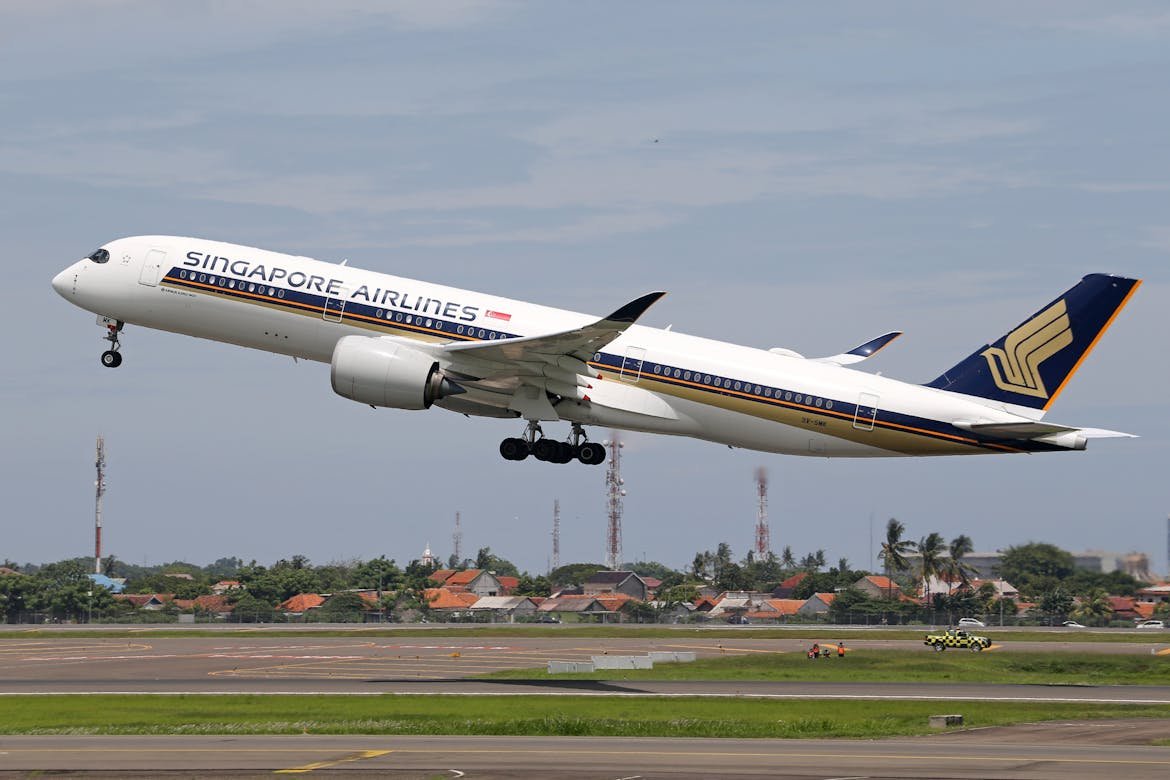
Singapore Airlines is preparing to deepen its presence in Australia by adding daily service to Western Sydney International Airport from November 23, 2026. The route will make the carrier the first international airline at the new airport and lift its total daily passenger departures from Australia to 23, a new high for the airline in the market. The service is scheduled to operate with Airbus A350-900 aircraft, adding a second Sydney-area gateway alongside the airline’s established operations at Kingsford Smith.
The move matters because Australia is more than just a point-to-point market for Singapore Airlines. It is a core source of long-haul traffic flowing through Changi to destinations across Asia, Europe, India, and the Middle East. By adding Western Sydney rather than simply increasing frequencies at the existing Sydney airport, the airline is broadening its catchment while also giving itself a more flexible operating window.
One of the clearest advantages is timing. Western Sydney’s curfew-free setup allows a late-night departure to Singapore that would not be possible at Sydney Kingsford Smith under existing restrictions. That matters for network planning because an overnight departure can feed into early-morning connections at Changi, improving onward options without adding pressure to slot-constrained times at Sydney’s main airport.
A Deeper Hold on the Australian Market
Singapore Airlines already has one of the most extensive international networks between Australia and Asia. Melbourne remains its largest Australian destination by frequency, while Sydney, Brisbane, and Perth each support multiple daily flights. Adelaide and Darwin are served twice daily, while Cairns adds another daily link. The result is a network that covers both the major east coast gateways and several secondary markets that matter for connecting traffic.
That breadth gives the airline a competitive advantage. High frequency helps attract premium travelers, but it also improves resilience when schedules change. In markets like Sydney and Melbourne, multiple same-day departures make it easier to rebook passengers and preserve connection flows through Singapore.
The Western Sydney addition strengthens that strategy rather than changing it. Once the route begins, Singapore Airlines will effectively have five daily flights across the wider Sydney market. That gives the carrier more flexibility in how it sells Sydney, both to travelers starting in Australia and to inbound passengers arriving from overseas.
Why Western Sydney Could Matter Beyond One Route
The new airport is also a commercial bet on geography. Western Sydney serves a fast-growing part of the city that has long depended on Kingsford Smith despite distance, traffic congestion, and curfew restrictions. For passengers in Greater Western Sydney and nearby regional areas, a direct long-haul option closer to home could shift booking behavior, particularly for trips that rely on one-stop connections through Asia.
For Singapore Airlines, that makes Western Sydney more than a symbolic first-mover move. It creates an opportunity to capture demand earlier, before the airport develops a broader mix of long-haul competitors. It also allows the airline to grow in Sydney without relying entirely on the limitations of the older airport.
The larger significance is that Singapore Airlines is treating Australia as a market where schedule depth still matters. In an environment where many carriers are reshaping networks around fuel costs, fleet constraints, and geopolitical disruption, adding a new gateway signals confidence. Western Sydney may begin as one daily flight, but for Singapore Airlines it represents a wider effort to lock in network strength where it already knows demand runs deep.