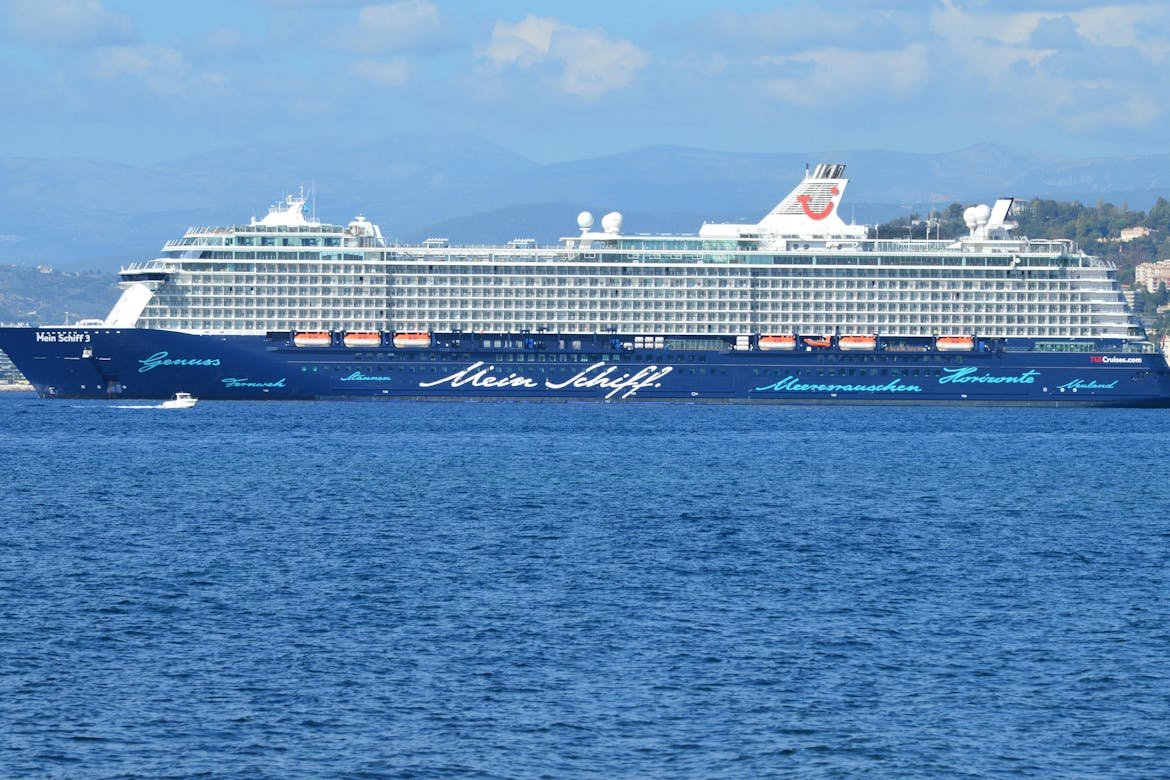

TUI Cruises has widened its 2026 cruise cancellations after continued instability in the Middle East left two ships unable to return to their scheduled operating areas. The latest changes affect the Mein Schiff 4 and Mein Schiff 5, both of which were due to reposition from the Arabian Gulf ahead of the European summer season. The company said its decisions were guided by security advice and ongoing coordination with authorities and external experts.
The new cancellations show how a regional conflict can quickly disrupt itineraries far beyond the immediate area. What began as a safety issue in Gulf waters has now spilled into cruise schedules in South Africa, the Mediterranean, and parts of Western Europe. For operators, repositioning voyages are not just one-off trips between seasons. They are the logistical bridge that connects winter deployment with summer revenue in core markets.
The most immediate impact is on passengers booked for sailings in April. TUI canceled a 20-night voyage on the Mein Schiff 4 that was scheduled to depart Cape Town on April 11 and end in Palma de Mallorca. The itinerary had included calls in Walvis Bay, Praia, Gran Canaria, Arrecife, Tangier, and Barcelona before the ship was due to settle into its Mediterranean program.
The company also canceled two Mein Schiff 5 sailings scheduled for April 17 and April 24. The first was set to run from Palma de Mallorca to Heraklion, with planned stops including Palermo, Valletta, Piraeus, and Chania. The second was scheduled as a roundtrip cruise from Heraklion with calls in Greek and Turkish ports, including Mykonos, Piraeus, Chania, and Istanbul.
Repositioning Problems Spread Across Regions
The underlying issue is that both vessels remain stranded in the Gulf region, with the company citing unchanged safety guidance linked to the conflict. Mein Schiff 4 had already lost earlier scheduled voyages, and the latest move means all cruises planned for that ship from late February through April 11 will no longer operate. Mein Schiff 5 had also seen prior cancellations tied to its inability to begin its transfer back toward Europe.
This creates a wider commercial problem than the loss of a few isolated departures. Cruise lines build seasonal deployment around precise timing, crew rotations, port slots, and follow-on itineraries. When one vessel misses a repositioning window, the effect can cascade across multiple markets and several weeks of planned operations.
TUI has said its priority remains the safety and well-being of crew on both ships. It also said its crisis team is working with the German Foreign Office, embassies, security specialists, and internal teams to assess scenarios for returning the ships to regular service. That language suggests the company is still seeking an operational path back to schedule rather than committing to a fixed restart date.
For the broader cruise sector, the episode is another reminder that geopolitical risk has become a more direct planning variable. Operators can reroute around some trouble spots, but ships already positioned inside a disrupted region have fewer options. In this case, the operational challenge is no longer limited to itinerary redesign. It is now affecting capacity, timing, and confidence in a key part of the 2026 deployment calendar.